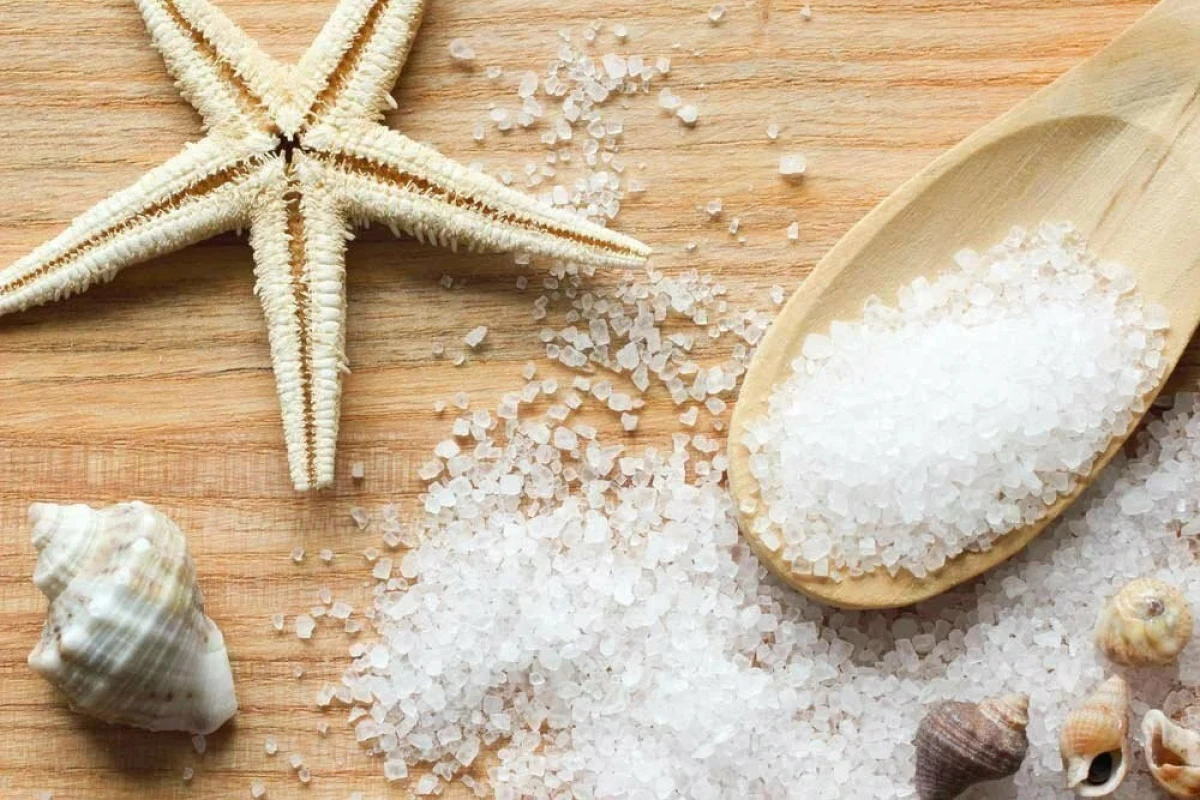
Salt remains one of the most common products in the kitchen, yet not everyone knows that different types vary not only in origin but also in composition. Specialists explained how sea salt differs from regular salt and whether it is indeed healthier.
The main difference between the two types of salt lies in the method of extraction. Sea salt is obtained through the natural evaporation of seawater under the influence of the sun and wind. Due to minimal processing, it retains some natural minerals, including magnesium, calcium, and potassium.
"Sea salt does contain natural minerals; however, their amount is too small to significantly impact human health," note experts from Santa Prisca and Co.
Regular table salt, or rock salt, is extracted from underground deposits formed from ancient seas millions of years ago. After extraction, it typically undergoes additional purification and processing, resulting in a more homogeneous composition that is almost entirely made up of sodium chloride.
"For most people, the choice between sea salt and regular salt is a matter of taste preference rather than medical necessity," the experts believe.
According to experts, it is the presence of natural minerals that gives sea salt a milder and richer flavor. However, their quantity is so small that they do not have a significant impact on health.
The specialists also emphasize the importance of iodine. Iodized salt helps prevent a deficiency of this trace element, which is necessary for the normal functioning of the thyroid gland. Therefore, in terms of preventing iodine deficiency, it may be more beneficial than unrefined sea salt.
"It is much more important to control overall salt intake than to choose between its varieties. Excessive sodium consumption increases the risk of hypertension and cardiovascular diseases regardless of the product's origin," the specialists remind us.
Sea salt is also widely used in cosmetic and wellness procedures. It is added to baths, used for rinsing, and for skin care, as it helps relax muscles and reduce swelling.
Experts note that it cannot be definitively stated that sea salt is more beneficial. It has a more natural origin and contains a small amount of natural minerals, while iodized salt helps replenish iodine deficiency. In any case, the main factor for health remains not the type of salt, but the moderation of its consumption.