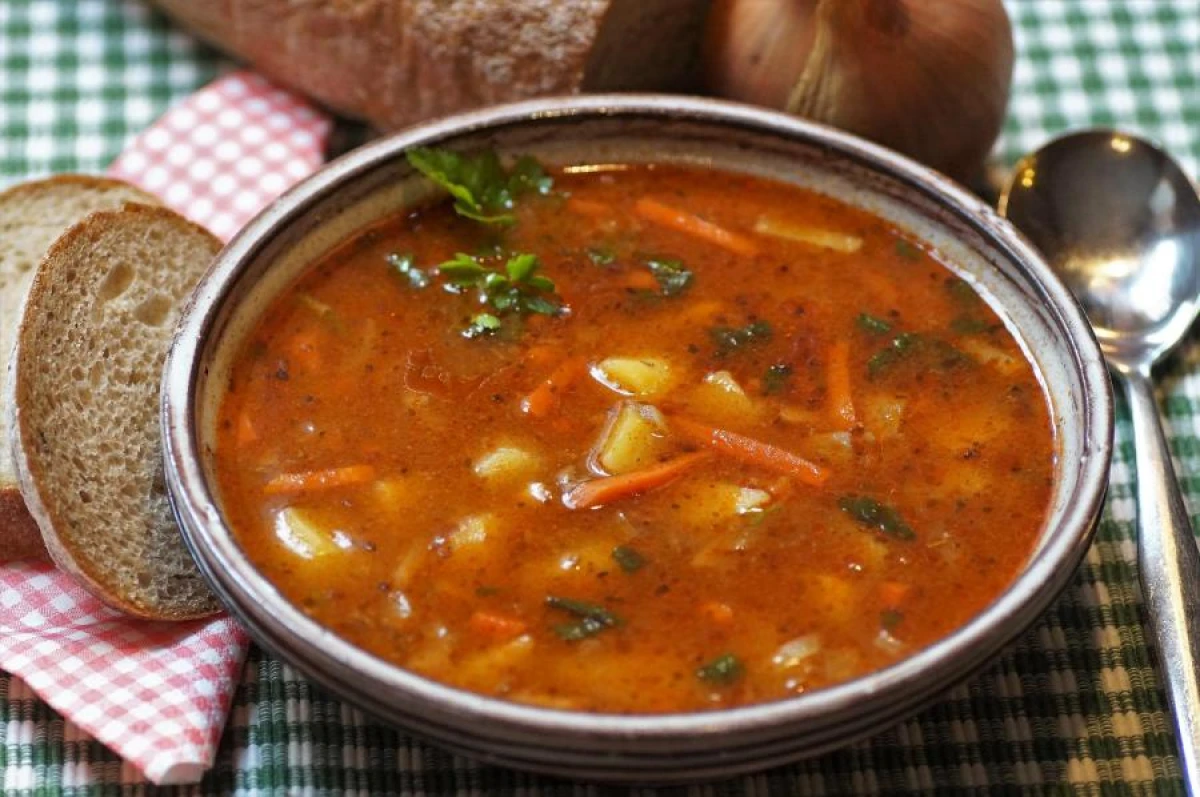
Modern rassolnik is presented in various recipes and cooking options. Let's consider the most popular ones.
Rassolnik (from the word “rassol”) is one of the main hot dishes of Russian cuisine. It is characterized by a variety of ingredients and is a thick soup. Its classic base includes pearl barley or rice, offal, cucumber brine, and pickled cucumbers.
History of the Dish
Rassolnik is rightly considered an authentically Russian dish, which for centuries has been one of the most famous in Russia. Initially, rassolnik referred to a pie, mentioned in the notes of Gogol. This pie contained chicken, buckwheat porridge, eggs, and brine.
Rassolnik was also the name of a type of dishware in which various dishes were served. Samples of such silver pots from the 17th century can be found in the Moscow Kremlin, in the Armory Chamber.
References to rassolnik as a soup date back to the 15th century. At that time in Russia, it was called kalya.
To prepare kalya, ingredients such as chicken meat, red caviar, and sometimes fish or mushrooms were used. Sauerkraut, pickled cucumbers, or brine were often added. Wealthy people could replace cucumber brine with lemon juice.
The very term “rassolnik” appeared in cookbooks in the 18th-19th centuries, despite the earlier use of the recipe in households. D’Alembert described the term: “Rassolnik is a hot soup made with cucumber brine, with offal, with meat or fish, with spices, seasonings, and pickled cucumbers.”
Recipe
Ingredients:
Pearl barley — 100 grams;
Chicken hearts — 300 grams;
Chicken thigh — 1 piece;
Potatoes — 2 pieces;
Pickled cucumbers — 2 pieces;
Cucumber brine — 70 milliliters;
Onion — 2 pieces;
Butter — 60 grams;
Garlic — 1 clove;
Bay leaf — 1 piece;
Salt, black pepper — (to taste).
Cooking Method:
* Thoroughly rinse the pearl barley, transfer it to a pot, and cover with cold water (500 milliliters).
* Cook the barley until ready (35 minutes after boiling). Next, prepare the chicken broth.
* Peel the onion and garlic clove.
* In a pot, place the chicken thigh, onion, bay leaf, and garlic. Pour water over the contents and place on the stove.
* Once the pot boils, skim off the foam. Cook the broth on low heat for about 30 minutes without covering.
* When the broth is ready, strain it, we only need the liquid.
* Rinse and clean the chicken hearts. Cover with cold water and heat. Once it boils, skim off the foam and continue to cook the broth from the chicken hearts for 30 minutes.
* Peel the onion and chop it into small pieces, also chop the cucumbers.
* Sauté the onion in butter. Add the chopped cucumbers to the onion and sauté for a couple more minutes.
* Transfer the sauté to the pot, add the brine, and simmer everything together for a few minutes.
* Peel the potatoes, cut them into cubes, and add them to the pot.
* Pour three cups of chicken broth and two cups of broth from the hearts into the pot. Also add the chicken hearts to the pot. Cook the rassolnik for about 15 minutes.
* Add the cooked pearl barley and cook the soup with the barley for a couple more minutes. Season with salt and pepper to taste, and the delicious rassolnik is ready!
Types of Rassolnik
Depending on the type of broth (bone, chicken, fish, or mushroom), rassolniks are divided into meat and vegetarian.
Classic rassolnik with offal is usually made either with hearts or with kidneys. In rassolniks, offal is sometimes replaced with beef. Rassolniks are also made with pickled mushrooms or green tomatoes.
In fish-based rassolniks, not only fresh fish is added but also a bit of pre-cooked salted fish.
How Rassolnik is Prepared in Different Countries
The recipe for the dish varies depending on where it is prepared. Depending on the country, region, or even city, the composition of ingredients and the method of preparation may differ.
Rassolnik can be Polish, Kuban, Suzdal, Moscow, Rossoshansky, Leningrad — there are many varieties. You just have to choose which variation you like best.
In Russia, rassolnik is prepared using pearl barley, pickled or marinated cucumbers. In other countries, the recipe differs slightly, but the general cultural traits remain.
Interesting fact: in Russia, rassolniks were prepared with various brines, not only cucumber but also cabbage, apple, watermelon, pear, and even cherry.
Polish Rassolnik
The main highlight of this soup, as in the classic recipe, is pickled cucumbers. In the Polish recipe, unlike the Russian rassolnik, pearl barley is absent, and the soup is based on beef broth. Not only pickled cucumbers are used, but also carrots, onions, and potatoes. Additionally, flour and sour cream are added.
Kuban Rassolnik
Another variant of the soup differs by the addition of beans, celery, and tomato paste.
As you can see, even behind such an apparently ordinary soup lies a centuries-old history that gives it special value.