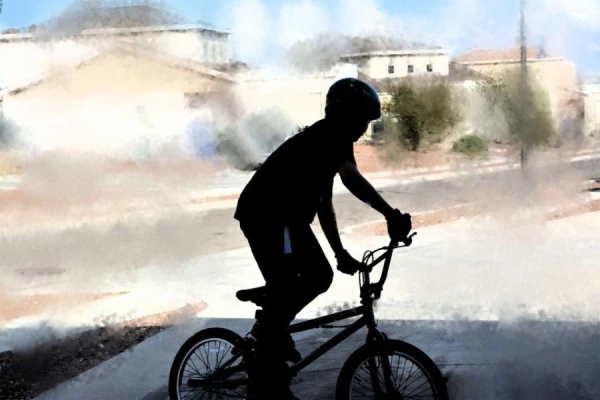
Modern parents strive to protect children from any difficulties; however, research shows that excessive control can have the opposite effect. According to scientists, it is freedom of action, independent decisions, and even moderate risks that helped children of past generations develop psychological resilience, self-confidence, and the ability to cope with stress.
New scientific research proves that self-regulation skills and low anxiety levels in past generations were formed thanks to freedom of action.
Parents of that time did not control every step of their child but set clear boundaries, such as "be home by 8 PM." Children managed themselves independently. Today, however, excessive parental control and the desire to shield a child from any difficulties have the opposite effect, provoking depressive states and social withdrawal.
What is "overparenting"
Scientists analyzed 52 works related to child-rearing and compared parenting processes with modern methods. As noted by UNIAN, modern parenting often crosses the line between ordinary parental care and total control, which hinders a child's development. Overparenting manifests itself in adults intervening even when risks are minimal.
Parents try to resolve their child's conflicts with friends, rewrite school letters for them, or argue with a coach over benching.
According to Mark Brackett from the Yale Center for Emotional Intelligence, self-regulation is a set of skills for managing feelings. They are successfully formed only when adults are nearby but do not rush to help at every minor problem.
Why Free and Risky Play is the Foundation of Psychological Resilience
Scientific experiments confirm that ordinary outdoor play without clear rules plays a key role in the development of a child's psyche.
In 2022, Australian researchers observed 2,213 children. The results showed that the more unstructured free play a child had in preschool, the stronger their self-regulation became two years later. Additionally, an analysis by specialists from the University of British Columbia recorded a generally positive impact on health and socialization from so-called "risky play" — climbing trees, active recreation, and independently exploring space without supervision.
Why the Modern Generation of Children is Locked Inside
The restriction of children's freedom and independent walks is a complex issue driven by societal changes and new safety rules.
According to a comprehensive report from the Nuffield Institute, which covered 18,303 children from 16 countries, parents consider high traffic intensity to be the main barrier to independent walks. Educational institutions also contribute to the creation of artificial restrictions: a 2024 study confirmed that modern school policies are primarily aimed at completely avoiding risks rather than encouraging active and free play.
The Secret of Productivity for Children of the 60s and 70s
An important factor in parenting in past decades was the absence of constant choices and prolonged emotional settings at the start of the day.
The generation of the 60s and 70s began their mornings in exactly the same way for many years. At that time, no one was interested in the child's psychological state upon waking. This strict yet stable approach taught people to act automatically and to start performing daily duties without prolonged internal preparation or seeking additional motivation.
True psychological resilience in a child is achieved through daily small moments of independence. Scientists urge modern moms and dads to give children more age-appropriate opportunities: to allow them to make choices independently, experience minor life disappointments, and seek solutions to everyday problems without parental hints. A child who faces moderate risks and mistakes grows into a strong, independent, and self-confident individual.
Experts emphasize that psychological resilience does not arise on its own and is not formed under constant parental safety nets. It develops through everyday experiences of independence, decision-making, overcoming small difficulties, and learning to cope with the consequences of one's mistakes.
According to the editorial team of bb.lv, the task of parents is not to eliminate all risks from a child's life but to create safe conditions for gradually acquiring life experience. This approach helps raise a confident, independent, and emotionally resilient adult.