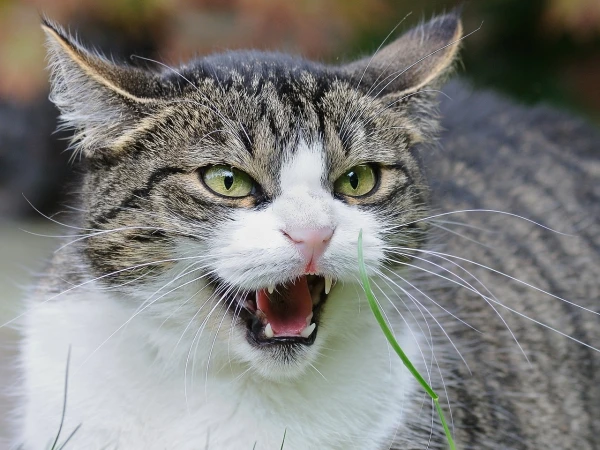
Hissing is one of the most understandable signals that cats use to express their emotions. If a pet starts hissing, it is almost always a warning: it is uncomfortable, and it is better not to invade its boundaries. This behavior has been inherited by domestic cats from their wild ancestors — as a way to avoid conflict without fighting.
Territorial Defense
Cats are territorial animals, and any intrusion into their space can provoke a sharp reaction.
A pet may start hissing if someone occupies its favorite spot, approaches its food bowl, or if a new person or animal appears in the house. Even an unfamiliar scent can cause irritation and wariness.
Fear and Irritation
Loud noises, sudden movements, or unexpected touches often frighten cats. A vacuum cleaner, loud music, or a large number of guests can trigger a defensive reaction.
In such situations, hissing is a way to say "stop" and warn of potential aggression.
Stress
Changes in the usual environment also affect a pet's behavior. Moving, renovations, changes in routine, or the arrival of new family members can cause anxiety in cats.
Hissing in this case is a reaction to confusion about what is happening and an attempt to protect themselves.
Protection of Offspring
Cats are particularly sensitive during pregnancy and after giving birth to kittens. They may actively defend their offspring and territory.
Sometimes a cat hisses even at its own kittens — this is how it regulates their behavior and sets boundaries.
Hissing is not a sign of a "bad character," but an important signal. Understanding the reasons for this behavior helps to interact better with the pet and create a comfortable and safe environment for it.