
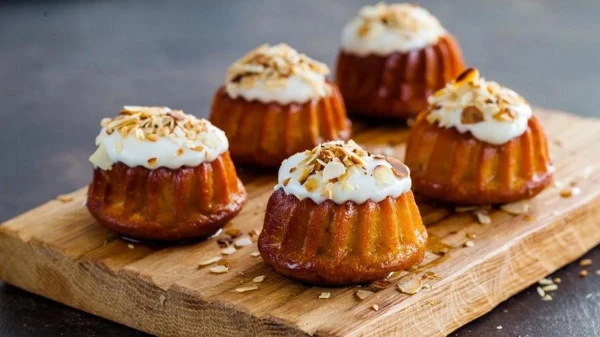
Almost every European country can boast its signature Easter pastry. In Italy, it is panettone, colomba, and torta pasqualina; in England, hot cross buns and simnel cake; in Poland, mazurek; in Greece, Easter braid with painted eggs; and in Malta, figolli. At the same time, Italy, France, and Poland dispute the authorship of the traditional Easter dish "rum baba."
A hefty pastry, soft and moist from soaking, with a sugary top, first appeared in the 17th century due to the bad mood of the Polish king. Shortly thereafter, in France, the recipe was refined. The situation is further complicated by the fact that only Italians consider the rum baba to be their own.
Let’s take a look at how the dessert is prepared in Poland, France, and Italy and what stories preceded the emergence of their 'own' recipe.
From the Heavy Royal Hand
Stanisław Leszczyński, king of Poland in the 17th century. One day, a festive kugelhopf bread, a very popular sweet dessert from Austria at that time, was presented to the king. The king was in a bad mood and threw the dessert off the tray. Nearby was either a bottle of rum or Madeira. It tipped over and soaked the kugelhopf. To the surprise of the king and the courtiers, the rum-soaked pastry acquired an unusual taste. It became softer and juicier. It was after this that the dessert for the king began to be soaked with Madeira and sage and raisins were added to the dough.
Ingredients: 650 g of flour, 200 ml of room temperature milk, 50 g of fresh yeast, 150 g of sugar, 120 g of melted butter, 10 egg yolks, 25 ml of rum, 1/2 tsp of salt, zest of 1 orange.
For soaking: 200 ml of water, 60 g of sugar, zest of 1/2 lemon, 100 ml of rum.
Preparation: Mix the flour with the salt. In a separate bowl, whisk the yolks with the sugar. Add the cooled melted butter, rum, and zest to the yolks. Whisk again and add the flour. Dissolve the yeast in the milk and pour it into the flour.
Knead an elastic but slightly sticky dough - 6-8 minutes in a mixer on medium speed, 10-12 minutes by hand. Cover the dough with a slightly damp cloth and leave it for 1.5 hours. Grease the molds with vegetable oil and fill them halfway with the softened dough. Leave to rise for 1 hour, then brush the surface of the risen cakes with milk. Place in a preheated oven at 180 degrees and bake for about 15-20 minutes.
During this time, prepare the soaking syrup. In a small saucepan, bring the water with sugar and zest to a boil. Let cool to room temperature, remove the zest, and add the rum. Soak the surface of the cooled cake with the syrup. Leave for 30 minutes, then decorate with icing.
How the Baba Became a Mademoiselle
The recipe for rum baba was brought to the capital of France by Stanisław Leszczyński's heiress – his daughter Maria. In Paris, the baba became more refined, that is, not round but elongated, resembling a mushroom more. Here, the legendary pastry chef Jean Anthelme Brillat-Savarin perfected the recipe. The dessert began to be filled with whipped cream, topped with apricot jam and berries. From now on, the name of the rum baba became – Baba Au Savarin – in honor of the pastry chef.
Ingredients
For the cream: 50 ml of milk, 1 vanilla pod, 100 g of sugar, 4 egg yolks, 50 g of flour, 3 tbsp of wine, rum, or cognac.
For the syrup: 600 g of sugar, 2 l of water, 20 ml of wine.
For the dough: 500 g of flour, 8 eggs, 10 g of salt, 45 g of sugar, 25 g of yeast, 125 g of butter, 25 g of raisins.
Preparation: For the cream, heat the milk with the vanilla pod (cut lengthwise into 2 halves), without bringing it to a boil, and remove the vanilla. Mix the yolks, flour, and sugar, and add the hot milk. Stirring, bring to a boil. Add the alcohol and whisk with a mixer.
For the dough, mix the flour, sugar, and salt. Slowly whisk, adding the eggs one by one. Knead the dough, add the yeast and softened pieces of butter. After the dough rises, add the raisins.
Grease the baking molds generously with butter, fill them with the dough, and bake for 15 minutes at 180 degrees. Once cooled, place the pastries in the refrigerator overnight. For the syrup, combine water and sugar, melt over heat. When the syrup cools, add the alcohol. Dip the pastries in the syrup and decorate with cream.
Italian Anger
The history of the rum baba would be smooth if it weren't for the hot temper of the Neapolitans. They claim that the rum baba "was born" in their city, and an unknown Italian chef brought its recipe to Poland. But there is another version: in 1768, Maria Carolina, sister of Marie Antoinette, became the wife of King Ferdinand IV of Sicily. She brought the recipe for this dessert. Since 1836, the rum baba has been called a symbol of Naples, and it is included in textbooks for pastry chefs. In southern Italy, it is soaked in limoncello, dipped in syrup, squeezed, and eaten by hand. Often, the dessert is stored in a container with soaking liquid, thus prolonging the "life" of the baba.
Ingredients: 250 g of flour, 125 ml of vegetable oil, 4 eggs, 50 ml of milk, 20 g of fresh yeast, 30 g of sugar, 100 ml of rum, 300 g of brown sugar, a pinch of salt and vanilla.
Preparation: Heat the milk, add a teaspoon of sugar, a bit of flour (from the total amount), and the yeast. Once the yeast starts to "work," mix all the ingredients with a mixer or whisk. The desired consistency of the dough is like that for yeast pancakes. Leave the dough for 1.5 hours, then mix again (the dough will noticeably settle).
Grease the molds with butter and dust with flour. Fill halfway and leave for 30 minutes in a warm place. Then bake at 200 degrees. After 5 minutes, reduce the temperature to 160 and bake for another 25 minutes.
For the syrup, dissolve the brown sugar in 100 ml of water. Place over low heat and boil for 2 minutes. When the syrup cools slightly, add the rum. Dip the pastries in the syrup and leave to soak.












Leave a comment