
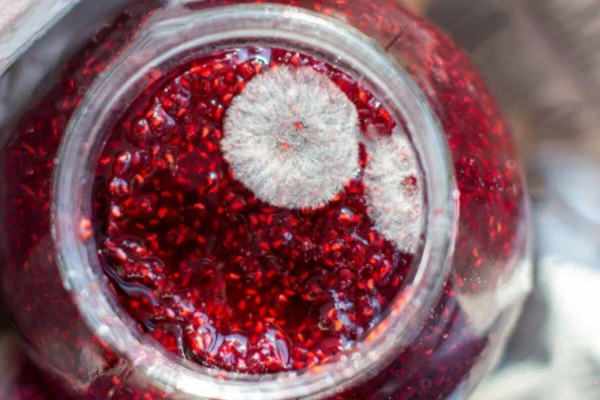
Mold on jam is a situation many have faced. It often seems that nothing serious is happening: just remove the top layer, and the product can be eaten again. But in practice, it is much more complicated and, importantly, dangerous. Let’s figure out why mold appears, how dangerous it is, and what you really need to do.
Why Mold Appears
Mold is not just a fluffy coating on top. It is a fungus that grows inside the product with invisible threads. Even if only a small spot is visible on the surface, the inside of the jar may already be completely infected.
Mold most often appears due to:
- poorly sterilized jars and lids
- airtight sealing issues
- using a dirty or wet spoon
- storage in warmth and high humidity
- insufficient sugar content
Even a single drop of water or accidentally introduced spores can trigger the process.
Why This is Dangerous
The main problem is not the coating itself, but the toxins released by the fungi.
They can:
- cause poisoning
- disrupt liver and kidney function
- provoke allergic reactions
- accumulate in the body
At the same time, mold does not always change the taste or smell. Jam may seem normal but can already be dangerous.
Can Jam Be Saved?
The short answer is no.
Even if you remove the top layer:
- spores are already inside
- toxins remain in the product
- boiling does not destroy harmful substances
Therefore, reboiling or "cleaning" the jam is pointless and unsafe.
What to Do If You Find Mold
The only correct solution is to throw the jar away completely.
It is also important to:
- not taste the jam "for flavor"
- keep the jar away from other preserves
- check neighboring jars
- thoroughly wash and sterilize the container if you plan to use it again
Mold spreads easily, so it’s better to be safe.
How to Prevent Mold from Appearing
To avoid this problem, it is important to follow a few simple rules:
- sterilize jars and lids before sealing
- use only dry and clean utensils
- do not reduce the amount of sugar in the recipe
- seal jars tightly
- store jam in a cool and dry place
And one more important point: always use a clean and dry spoon to take jam. This is one of the most common causes of mold appearing after opening a jar.
How to Properly Store Jam
Optimal conditions:
- temperature from +4 to +15 °C
- humidity up to 70%
- absence of heat and sunlight
After opening, it is better to keep the jar in the refrigerator and consume it within 2–3 weeks.
The ideal option is to make preserves in small jars: this way they are used up faster and spoil less often.
The Main Thing
If mold appears on the jam, this is not the case where you can "cut off the excess."
It is better to lose one jar than to risk your health.











Leave a comment