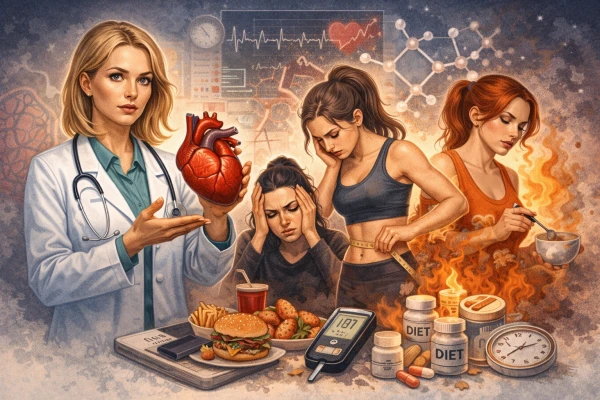
Some common habits related to lifestyle and the desire for quick weight loss can negatively affect the health of the cardiovascular system in women.
Women's Heart and Hormonal Protection
Physiologically, the female heart is considered more resilient; however, it reacts more strongly to hormonal changes and stress factors. Before menopause, the hormone estrogen plays a certain protective role, contributing to the maintenance of vascular and heart health.
Studies show that after menopause, the risk of cardiovascular diseases in women significantly increases as estrogen levels decline. This is noted in materials from the American Heart Association and the World Health Organization.
Stress and Nutrition — Key Risk Factors
Doctors traditionally identify chronic stress, poor nutrition, excess sugar and fats, and lack of physical activity as the main risk factors for cardiovascular diseases. According to the WHO, cardiovascular diseases remain the leading cause of mortality worldwide.
The Danger of Strict Diets
Experts note that excessively strict diets can pose a particular threat to the female body. A complete refusal of carbohydrates can lead to a decrease in glycogen levels — one of the energy sources for the body.
The heart muscle uses glucose as an important energy resource. In cases of severe carbohydrate deficiency, the body begins to break down protein, which can also affect muscle tissues. In medical practice, such disturbances are sometimes associated with the development of metabolic problems, arrhythmias, and other complications.
Specialists also pay attention to popular dietary regimes, including intermittent fasting. Some studies show that such schemes in women can be accompanied by fluctuations in blood sugar levels and changes in metabolism. Therefore, doctors recommend approaching weight loss gradually and maintaining a balanced diet.
Balance Instead of Extremes
Cardiologists and nutrition specialists emphasize that safe weight loss should occur without extreme restrictions. The diet should include complex carbohydrates, vegetables, protein, and healthy fats. This approach helps maintain stable metabolism and reduces the burden on the cardiovascular system.
Doctors also advise focusing on stress management, regular physical activity, and preventive medical check-ups — these are key measures for maintaining heart health.