
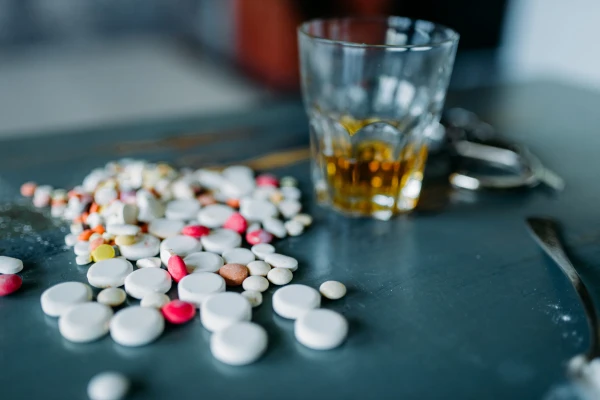
Not all medications are the same — just as alcoholic beverages differ in strength and composition. In some cases, a random sip of wine while taking a pill may not affect well-being at all, while in others, the combination can lead to serious complications.
For example, taking a spasmolytic drug with a small amount of wine is unlikely to pose a life threat. However, the combination of anticoagulants, such as Warfarin, with strong alcohol can provoke dangerous bleeding.
To understand why reactions vary so much, it is important to consider three key factors:
-
the type of medication;
-
the nature and strength of the alcoholic beverage;
-
liver condition.
The Role of the Liver in the "Conflict" Between Alcohol and Medications
The liver is the main detoxification organ. It transforms medications, toxins, and ethanol into safer substances that are then excreted from the body. Special enzymes are used for this.
Thus, ethanol is processed with the involvement of alcohol dehydrogenase and aldehyde dehydrogenase. If the activity of these enzymes is reduced, a person becomes intoxicated more quickly and suffers more from alcohol. A similar principle applies to medications: each one is metabolized by specific enzymes.
The problem arises when the pathways for processing alcohol and medication intersect. As a result, one component may remain in the blood longer than necessary, creating a dangerous concentration.
The liver's function is influenced by:
-
Genetic factors. Some people have enzymes that work less effectively due to congenital factors.
-
Liver diseases. Hepatitis, cirrhosis, and steatohepatitis reduce the ability to detoxify.
-
Hepatotoxic medications. Some drugs themselves burden the liver, reducing its "reserve capacity."
Five Rules for Combining Alcohol and Medications
1. Microdoses Rarely Cause Catastrophe
A small amount of alcohol, such as in desserts or during cooking, usually does not lead to serious consequences. However, there is no universal guarantee of safety.
2. Some Medications Slow Down Alcohol Metabolism
Certain antibiotics, including Metronidazole, as well as some antifungal agents can cause severe reactions when combined with alcohol: nausea, vomiting, and a sharp decline in well-being. Such combinations are extremely undesirable.
3. Medications That Affect the Liver
Pain relievers like Paracetamol, some antibiotics, and heart medications increase the burden on the liver. Adding alcohol can enhance the toxic effects.
4. Liver Diseases Are a Reason to Avoid Experiments
In cases of hepatitis, cirrhosis, or fatty liver disease, the combination of alcohol and medications becomes particularly unpredictable.
5. Moderation and Self-Control Are Important
One glass of wine does not always lead to problems, but if there is a risk that a person will not stop at that, it is safer to completely abstain from alcohol.
The Most Dangerous Combinations
Some combinations require special caution:
-
Blood pressure medications — possible sharp drops in blood pressure, fainting.
-
Medications for type 2 diabetes — risk of hypoglycemia.
-
Psychotropic and antiepileptic drugs — possible decompensation, seizures, altered consciousness.
-
Anticoagulants (aspirin, warfarin, clopidogrel) — risk of bleeding.
-
Vasoconstrictors — can cause tachycardia and increased blood pressure.
-
Diuretics — risk of collapse and sudden weakness.
Why a Universal Answer Cannot Be Given
Each person's body reacts differently. Dosage, drink strength, health condition, and individual metabolic characteristics all influence the outcome.
No specialist can predict with 100% certainty how the body will react to the combination of a specific medication and alcohol. Therefore, doctors recommend avoiding such experiments.
A symbolic amount of champagne during a celebration usually does not lead to serious consequences, but the main guidelines should remain reasonable moderation and careful attention to one's well-being.
If weakness, dizziness, pain, bleeding, or altered consciousness occurs, it is essential to seek medical help immediately.












Leave a comment