
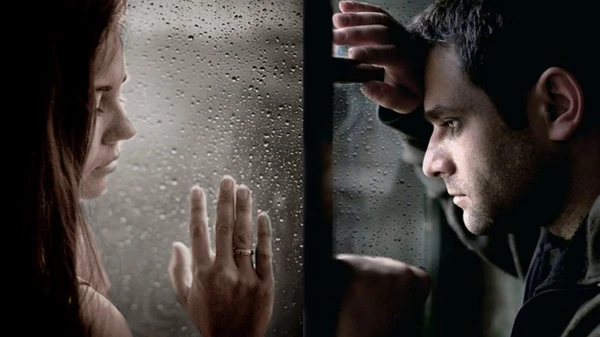
Love and hate seem opposite, but they share a common mechanism — deep emotional involvement. When we love, we wish well and happiness for the other; when we hate, we want them to change or suffer. These feelings are particularly characteristic of close relationships and are virtually absent in indifferent situations.
Unrequited Love as a Source of Negative Emotions
Unrequited love often generates a mix of love and hate. When a person does not receive reciprocity, the psyche seeks an external reason: the object of love begins to be perceived as "wrong" or "defective." Negative emotions gradually blend with feelings of love, transforming into irritation and even hatred.
Loss of Freedom and a Sense of Coercion
Even in healthy mutual relationships, love can coexist with irritation. The reason is the compromises and limitations that accompany intimacy. If a person feels that their partner restricts their freedom, anger arises, which can grow into hatred, despite the remaining positive feelings.
Vulnerability and Fear of Being Hurt
Intimacy requires openness: by showing their weaknesses, a person becomes vulnerable. The awareness of a potential threat triggers internal resistance, which can manifest as irritation or aggression towards the partner, who is the source of this vulnerability.
Flaws We Have to Live With
When a partner opens up, we see their imperfect sides. What seemed charming at first can become irritating over time. Outbursts of irritation do not mean a lack of love — they reflect the reality of the relationship without idealization.
Ambivalence as a Normal State
The combination of love and hate is referred to by psychologists as ambivalence. Usually, positive feelings prevail, but in some cases, emotions compete, creating a complex choice. Research shows that love and hate activate similar areas of the brain, including the insular cortex, which explains sudden emotional fluctuations.
Love and Hate — Two Faces of One Emotional Involvement
Love involves closeness, vulnerability, and acceptance of another's flaws. Hate in close relationships does not necessarily destroy love — it is a side effect of its depth. The fine line between these emotions is a natural part of human psychology, not a deviation.













Leave a comment