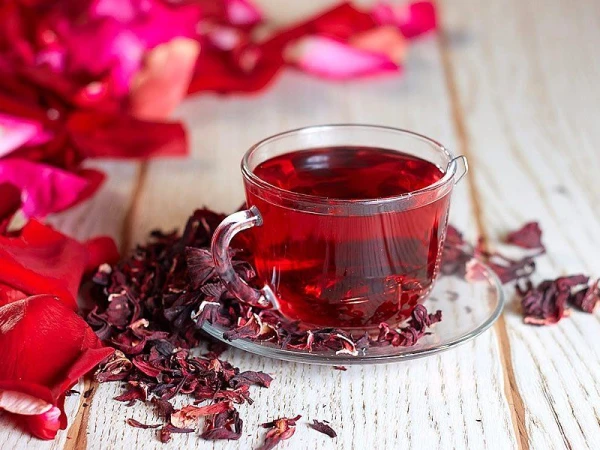
Hibiscus is not a medicine, but fans of the drink often notice its effect on well-being. It is said that cold tea lowers blood pressure, while hot tea raises it. But what does evidence-based medicine think about this?
What in hibiscus lowers blood pressure
The power of hibiscus lies in its color. The rich red hue is due to a high concentration of anthocyanins (plant pigments). Scientists have established that these pigments act similarly to mild medications that suppress angiotensin-converting enzyme (ACE). In simpler terms, anthocyanins prevent the narrowing of blood vessels, helping their walls remain relaxed.
Vasoconstriction (narrowing of blood vessels) is one of the key causes of spikes in blood pressure. Hibiscus contains ascorbic acid (vitamin C), citric acid, and malic acid, which have a mild diuretic effect. This helps eliminate excess sodium from the body, thereby reducing blood volume and, consequently, decreasing the strain on arterial walls.
Can hibiscus raise blood pressure
No. The hypothesis that hot hibiscus raises blood pressure lacks scientific basis. The reason for this myth is that any hot beverage causes a temporary dilation of peripheral blood vessels and a rush of warmth. This may create the impression that blood pressure has increased; however, the active substances in hibiscus always work the same way — beneficially for hypertensives.
Why hypertensives can drink hibiscus often, while hypotensives should do so occasionally
Unlike medications, hibiscus does not provide immediate results. To lower blood pressure (on average by 7–10 mm Hg), a cumulative effect is necessary. According to Iranian studies, this effect manifests when consuming at least two cups of the drink daily for a month. Therefore, people prone to hypertension will benefit from daily hibiscus tea. On the other hand, hypotensives should exercise caution and not brew hibiscus too frequently.