
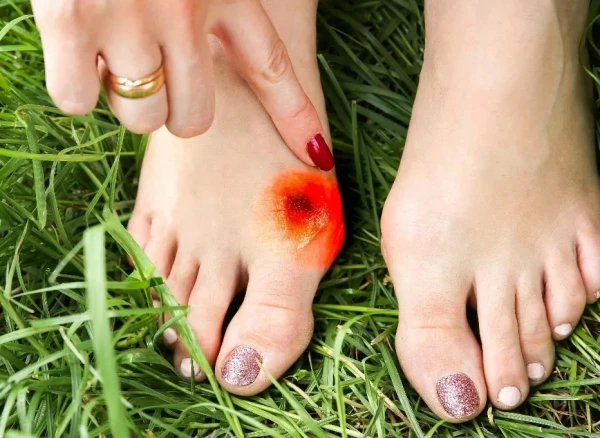
Protruding bumps on the foot can cause a lot of discomfort. The biggest issue is pain. Because of this, it’s difficult to find proper shoes. But for many women, there is another, equally important concern — "it’s unattractive."
What won’t women do for beauty! A protruding bump on the big toe, or medically known as Hallux valgus, can also ruin one’s mood, cause embarrassment, and lead to complexes. Even shoes with a small heel are strictly off-limits. That’s when some decide to take radical measures — to undergo surgery to remove these bumps. But is it worth it if the only problem is appearance?
A Problem Not Just for Women Over 65
There is a belief that a bump on the foot is a problem for women over 65. But that’s not true.
As orthopedic trauma surgeon Alexey Oleynik told “Doctor Peter,” in practice, the deformation can begin as early as childhood, from 7 to 8 years old. According to international studies, the prevalence of hallux valgus in patients under 20 years old reaches 11%.
At the same time, about one in ten patients with foot valgus deformity consult an orthopedic specialist solely for aesthetic reasons, meaning without pain and significant discomfort.
“Today, foot deformity often becomes a psychological problem: it’s harder to wear open shoes, one has to choose not what they like, but what is comfortable, leading to insecurity and a feeling of imperfection. However, if you look at photos from the red carpet of world celebrities, it’s easy to notice: pronounced hallux valgus and other foot deformities do not prevent them from wearing fashionable shoes and feeling confident,” says Alexey Oleynik.
Surgery for Beauty Is Not the Solution
Firstly, any surgical operation carries risks, no matter how gentle the method used.
Secondly, according to the orthopedic trauma surgeon, clinical practice shows that patients who undergo surgery solely for appearance are dissatisfied with the results about 10% of the time. The reason here is obvious. Even with minimally invasive methods, it’s impossible to have surgery and forget about it a week later.
“Full recovery after foot surgery can take up to 6 months. The timelines are individual and depend on the characteristics of the body and adherence to the doctor’s recommendations. But in any case, one must be prepared for postoperative swelling, stitches, and a healing period, moderate pain syndrome, and temporary limitations on usual activities,” explains the specialist.
That’s why during the consultation, the doctor thoroughly explains all stages of recovery and encourages the patient to thoughtfully assess whether they are ready to go through this process right now, without a compelling reason — pain.
Moreover, as the doctor adds, not every valgus deformity progresses.
“There are many older people with pronounced bumps on their feet who do not experience pain, move actively, and do not limit themselves in daily life. After detailed explanations, almost every second patient decides to postpone surgery,” explains Alexey Oleynik.
When Surgery Should Not Be Delayed
Surgical treatment will be justified and necessary, according to the orthopedic trauma surgeon, if:
-
pain increases and prevents finding comfortable shoes;
-
discomfort interferes with work, long walks, standing, or exercising;
-
the deformation significantly reduces quality of life and limits daily activities.
“In such situations, surgery is the only method with proven effectiveness that can eliminate the deformation and associated pain sensations,” asserts the specialist.
According to the doctor, modern techniques allow for quick correction, averaging 30 minutes under local anesthesia, without the need to walk with crutches and a cast afterward.
“Age in itself is not a contraindication; even elderly people tolerate the surgery well. My oldest patient was 89 years old,” adds Alexey Oleynik.
The doctor emphasized that surgery for hallux valgus is not about beauty but about quality of life, pain, and foot function.
“If the foot is calm, without painful sensations, and does not limit a person, surgery is not a necessary solution. However, if the deformation begins to dictate how to live, walk, and work, then surgery becomes a reasonable and justified step,” concluded the expert.















Leave a comment