Many cities with medieval architecture have been preserved in Western and Central Europe. Some towns have hardly changed architecturally over the past few hundred years. But with such a wide selection, where should an ordinary tourist go first to immerse themselves in the atmosphere of a medieval city?
Experienced traveler Vinicius Costa, who lives in France and has visited over 100 medieval cities in Europe, named five of the most fascinating ones that he is ready to recommend to others in the pages of Travel Off Path.
In his article, he admits that he rarely admires cobblestone streets, fortresses, or church squares anymore — everything has become familiar. But these five locations made him fall in love with medieval Europe all over again.
"These 5 European gems and their Old World charm completely captivated me and made me feel those butterflies in my stomach that I had been missing for so long," the traveler writes.
City of Rhodes, Greece
Forget about Santorini and Mykonos — a true treasure lies in the east of the Dodecanese archipelago. Rhodes is the largest medieval center in Europe, listed as a UNESCO World Heritage site. The city is surrounded by massive ramparts, towers, and gates reminiscent of Indiana Jones, while inside is a labyrinth of cobblestone streets, arched passages, and stone houses.
The Street of the Knights leads to the Palace of the Grand Master, Gothic cathedrals, and French influences from the Knights of Saint John. Nearby are Ottoman minarets, baths, and Italian buildings of the Mandraki harbor. This is a unique cultural fusion of medieval civilizations.
Honfleur, France
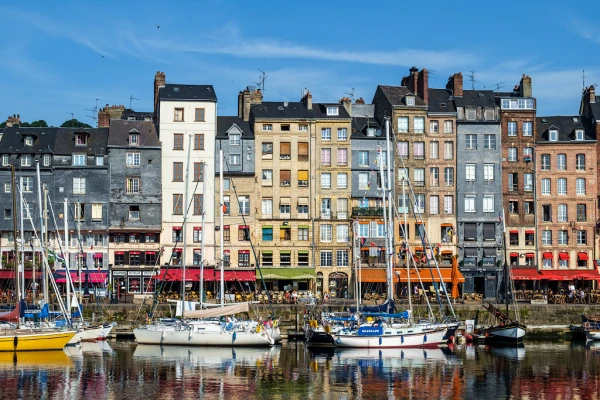
This picturesque port town in Normandy feels like a "love child" of Copenhagen and Amsterdam, but with a distinct French charm. The old harbor Vieux Bassin is surrounded by elegant 16th-century townhouses in muted tones that perfectly reflect in the water, while fishing boats and seagulls add to the authentic atmosphere.
Honfleur has avoided mass Instagram tourism: here you will find half-timbered houses, cobblestone streets, and the oldest wooden church in France — the Church of Saint Catherine from the Hundred Years' War. The town looks like a living impressionist painting, and fresh oysters with Calvados in local brasseries are a must-try ritual.
Mostar, Bosnia and Herzegovina
If Dubrovnik seems too staged, cross the border into Mostar — a true medieval gem with an Ottoman heart. At its center is the legendary arched Old Bridge from the 16th century over the emerald Neretva River, destroyed in the 90s and restored in 2004 stone by stone, including fragments of the original from the riverbed.
The Old Town lives an authentic life: Turkish bazaars, bullet-riddled facades, rusty remnants of machinery. Climb the minaret of the Koski Mehmed Pasha Mosque for a view, and in the summer, watch the daredevils jump from the bridge.
Meissen, Germany
Half an hour's drive from Dresden is a town where the real Albrechtsburg Castle rises above the Elbe with its creamy towers and spires, as if from a Walt Disney sketch, yet completely authentic. The Old Town (Altstadt) is a maze of narrow cobblestone streets and centuries-old buildings, almost untouched by World War II.
Unlike many German historical centers, everything here has been preserved since the 15th century: stepped gables, wooden facades, and a majestic cathedral in the castle courtyard. And at the café "Residenz," they serve the best marzipan — a good enough reason to return.
Sighisoara, Romania
In the heart of Transylvania lies the spookiest yet fairy-tale-like medieval town. Colorful houses, a clock tower, slanted facades with dormer windows like eyes, mist, and bells create the perfect backdrop for a gothic film.
It is here that Vlad the Impaler (Dracula) was born, and his statues and museum in his house add a touch of dark romance. A walk through the narrow paths and hidden passages at twilight is a journey into a true medieval atmosphere, where fairy tale meets horror.