
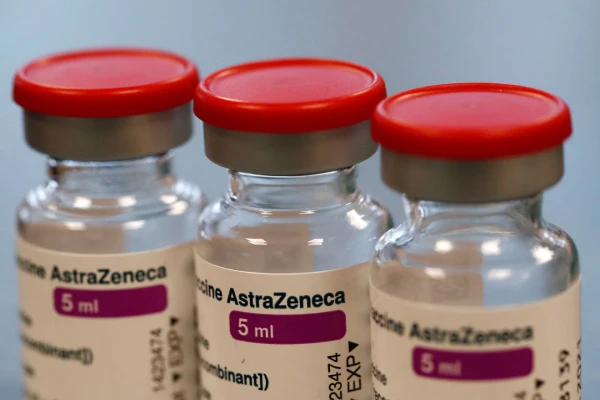
It became known back in 2021 that some coronavirus vaccines could cause blood clots. The most noise was around AstraZeneca and J&J. Scientists have finally managed to thoroughly understand why this happened.
The most controversial was the AstraZeneca vaccine, with the European Medicines Agency (EMA) confirming that it can provoke the formation of blood clots. People died in hospitals, and doctors could do nothing. A similar story occurred with the Johnson & Johnson (J&J) vaccines.
Researchers conducted a large-scale study to find out why coronavirus vaccines caused serious health problems. Their efforts were combined by scientists from McMaster University in Canada, Flinders University in Australia, and the University Hospital Greifswald in Germany.
In their experiment, researchers used biomaterials from over 100 people, which they studied in detail in the laboratory. The scientists paid special attention to gene sequencing to find antibody signatures and track various reactions of the body.
It turned out that the answer lies in an unexpected erroneous reaction of the immune system. Experiments showed that the body sometimes produces dangerous antibodies against its own blood proteins, leading to vaccine-induced immune thrombotic thrombocytopenia (VITT), or simply put, the formation of blood clots.
"Our study with molecular precision shows how a normal immune response to adenovirus can fail in very rare cases. By identifying the specific viral protein and the specific change in antibodies that leads to such a failure, we now understand why people developed clots," the scientists said.
VITT can develop after re-exposure to adenovirus, whether through vaccination or natural infection, but only in people with a specific hereditary version of the antibody gene IGLV3-21*02 or *03. Since this gene variant occurs in 60% of the population, it cannot be the sole cause of such a rare complication.
However, the immune response that leads to the development of VITT targets the adenoviral protein VII (pVII), which is very similar to a part of the human blood protein — platelet factor 4 (PF4).
In very rare cases, when the immune system reacts to factor VII, a specific mutation may occur in one of the antibody-producing cells. This mutation (K31E) leads to the replacement of one positively charged amino acid with a negatively charged one, and this small shift is enough for the antibodies to start attacking not factor VII, but PF4.
When the antibody binds to PF4, it activates platelets, leading to blood clotting and a decrease in platelet count, characteristic of VITT.
To simplify it to the minimum, the explanation would be: clots arose due to an erroneous reaction of the immune system that could not be predicted in advance.
The scientists also attempted to intervene and eliminate the mutation in the genes, and this helped. The dangerous activity disappeared, the antibodies did not attack specific proteins, and consequently, the platelets remained unactivated.
"Many know that mutations in DNA can lead to congenital anomalies or cancer, but the fact that an immune cell producing antibodies in response to a virus suddenly changes its reactivity towards its own protein due to a specific mutation is a remarkable discovery with no analogs in the scientific literature," said Theodor Varkentin, the study's author and an honorary professor in the Department of Pathology and Molecular Medicine at McMaster University.
The study not only explained the unusual reactions but also laid the foundation for further work on the creation and improvement of vaccines.















Leave a comment