
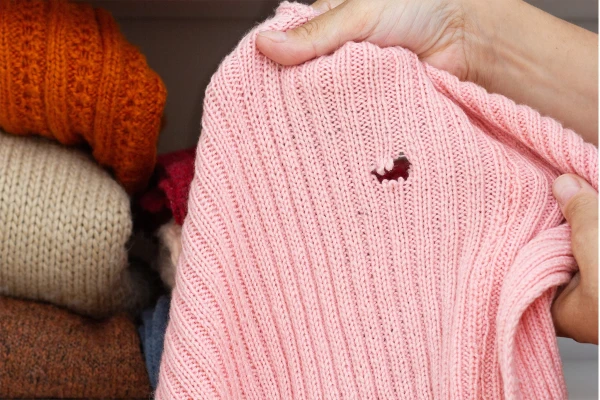
The moth is an unpleasant and cunning guest in our closets, capable of ruining beloved woolen items. But where does it come from in the house and how can you protect your clothes from larvae? Let's figure it out together.
Who Damages Clothes: Adults or Larvae?
In fact, adult moths do not feed on fabric — it is their larvae that cause the harm. These tiny creatures are almost invisible to the naked eye, but it is they who chew holes in sweaters, jumpers, and blankets. Biologists explain this simply: the Lepidoptera seek to provide their future offspring with a source of protein. Natural fibers in the closet become excellent food for them.
How Moths Get into the House
Moths do not appear "on their own." The main ways of entry are:
- eggs or larvae on purchased second-hand wool clothing, carpets, or stuffed toys;
- an adult moth that has flown in from outside or from neighbors, looking for a secluded place to lay eggs.
The female moth chooses a closet or a dresser drawer, lays eggs, and within 4–10 days in warm weather (or up to three weeks in cold), larvae emerge that can feed on keratin — a protein found in natural fabrics.
How to Prevent the Appearance of Larvae
If you notice a flying moth when opening your closet, it means that the larvae have already managed to damage your clothes. However, it is still important to fight them to stop a new breeding cycle.
Effective Control Methods:
- Cold: Freezing clothes at –18°C for a couple of days kills the larvae.
- High Temperature: Washing at 60°C or steaming also destroys the insects (check the label recommendations).
- Chemical Products: Aerosols and sprays for treating closets eliminate adult moths and larvae. After use, the closet should be thoroughly cleaned, and clothes should be washed or taken to dry cleaning.
Prevention: Regularly airing out closets and moving items reduces the risk of moths. Folk remedies like lavender sachets or essential oils are almost ineffective.
Conclusion
Fighting moths requires attention to detail: identify larvae, treat clothes and the closet, and air them out regularly. By following these simple rules, you can preserve your favorite woolen items and avoid unpleasant surprises.















Leave a comment