
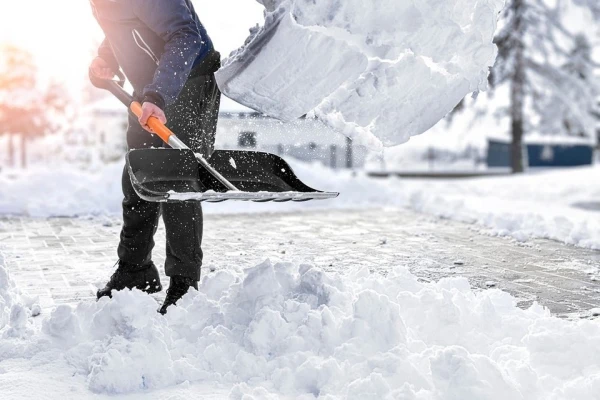
This winter has turned out to be snowy. A new trend has even emerged online: without waiting for the utility workers, people are taking shovels and clearing their yards. And if the car is buried, a shovel is absolutely necessary. We explain how to choose this winter accessory and, most importantly, how to use it correctly.
This snowy winter, those with a spot in a covered parking lot can only envy others. However, many have to clear not only their cars but also their cottages from snow. And particularly conscientious individuals take shovels and clear the pathways around their homes without waiting for the janitors.
On one hand, such physical activity in the fresh air is beneficial. On the other hand, if you overdo it, you can easily injure your back. We explain how to use a shovel correctly to minimize risks.
Don’t Grab the Shovel Until You Warm Up
Warm up your muscles and joints before starting work. When they are cold and tense, the risk of injury is much higher. The body needs time to adapt, increase blood flow, and prepare for the workout, which is essentially what snow shoveling is.
Five minutes is enough. March in place, make smooth torso turns, do squats, and don’t forget about circular arm movements and shoulder rotations.
Don’t Underdress
No short jackets or light sweaters. Choose clothing that covers your lower back and spine: these parts of the body should stay warm. Appropriate footwear is also necessary to ensure good traction on icy surfaces so you don’t fall with the shovel during another swing.
Choose the Right Shovel
The ideal option is a lightweight tool with a curved ergonomic handle that suits your height. Avoid metal shovels: when filled with snow, they become particularly heavy.
Twist Less
Orthopedic trauma specialists explain the correct technique for using a shovel.
-
Push the snow forward and to the side with the shovel, and lift small amounts of snow.
-
Avoid twisting. Instead, turn your whole body in the direction you are throwing the snow.
-
Bend your knees, not your back. Lift the weight using your leg muscles, without straining your lower back.
-
Pay attention to your posture. Try to work with a straight back.
Take Breaks
Be sure to take breaks between sets every 10-15 minutes. And to prevent your muscles from cooling down again, don’t sit on a bench. Walk around, do some warm-up exercises, and stretch. Additionally, while shoveling, constantly change sides to avoid overstraining, never rush, and avoid sudden movements.
Don’t Forget to Drink Water
Although thirst is not as pronounced in the cold as it is in the heat, the body still needs fluids. Moreover, during such work, a person sweats actively, losing water reserves.
"Shoveling is an energy-intensive activity. You can burn up to 400 kcal in an hour," doctors say.
When to Stop Immediately
Stop shoveling snow and consult a doctor if you experience any of these symptoms:
-
sharp or increasing pain in the back;
-
pain that radiates to the legs or arms;
-
feelings of numbness or tingling;
-
shoulder pain accompanied by weakness or limited mobility;
-
dizziness or shortness of breath.
And keep in mind that such exertion is contraindicated for people with cardiovascular conditions, especially in severe frost. At low temperatures, blood vessels constrict, and blood thickens, causing the heart to work harder. In such conditions, the risk of heart attacks and strokes significantly increases.














Leave a comment