
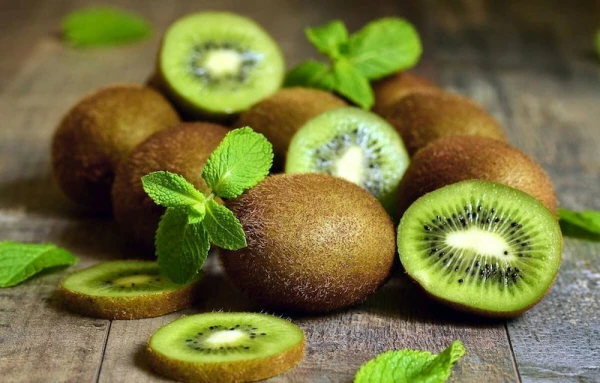
Kiwis are usually sold by weight or packaged in baskets. If there is a choice, prefer the first option. This way, you can personally verify the quality of each fruit.
The most popular varieties of kiwi are "Hayward" and "Butterfly." Both have the familiar green flesh with black seeds and fuzzy skin. The main difference is probably just in shape: "Hayward" is more oval, while "Butterfly" indeed resembles the insect of the same name. Ripe kiwis of these varieties have a sweet taste with a characteristic tartness, although the acidity may prevail.
The flesh of the "Gold" kiwi has a rich yellow-green color and is distinguished by its sweet taste, even when not fully ripe. The skin of this variety can be smooth or have a bit of fuzz.
The "Ruby Red" kiwi has red-purple or black seeds and a reddish tint to the flesh, which can be slightly more or less saturated. The fruits are covered with fuzzy skin, like the popular green varieties, although it may be slightly lighter. Red kiwis will delight with their juiciness and sweetness, although in an unripe state, the taste will be somewhat sour.
Whatever variety you choose, pay attention to the appearance of the fruits. The skin should have an even color without spots, damage, mold, sticky layers, and signs of rot. At the same time, there may be brown dry spots or stripes — "scars" that formed during the growth of the kiwi. Make sure there are no dark spots or moisture accumulation around the stem.
Feel the kiwi: a ripe fruit retains softness and firmness but does not lose its shape. If your fingers literally sink into the flesh and dents remain on the surface, the berry is overripe and has likely started to spoil. Of course, you can buy such a kiwi, but it should be eaten as soon as possible. Firm fruits will be unripe. If you take such, remember that they will need time to ripen at home.
Evaluate the aroma of the kiwi — it should not be off-putting. A musty, sour, or wine-like smell indicates that the berries are spoiled.
How to Ripen Kiwi at Home
There are two simple ways to get ripe fruits without much effort. Whichever you choose, make sure the surface of the kiwi is dry. If necessary, gently pat the skin with a paper towel. There is no need to wash the berries beforehand.
At Room Temperature
Lay the fruits in a single layer on a plate or in a basket. Leave them in a dry place at room temperature (18–24 degrees) away from the stove, radiators, and heating appliances. Make sure that direct sunlight does not hit the berries.
The ripening period for kiwi in such conditions is from 2 to 7 days. It is unlikely that the fruits will ripen all at once, so check them daily and remove those that have become softer.
Using Other Fruits and Vegetables
Kiwis are sensitive to ethylene, which accelerates the ripening of fruits. Some fruits and vegetables actively emit this gas, such as apples, bananas, peaches, pears, peppers, and tomatoes.
-
Place the kiwi in a paper bag. Also, add 1–2 ripe bananas, apples, or other "ethylene generators". It is important that they show no signs of mold or rot; otherwise, the kiwi may spoil before it ripens.
-
Close the bag, leaving a small opening for air circulation. Leave the package at room temperature in a dry place. It is important that it is away from heating appliances and protected from direct sunlight.
The ripening process for kiwi will take about 1–3 days. Check the bag daily, inspect the fruits, and take out those that are already ripe.
How to Store Kiwi
Remove the fruits from the bag or packaging and gently wipe the surface of any condensation if necessary. There is no need to wash kiwi before storing; excess moisture can cause them to spoil faster.
Unripe fruits, as we mentioned, can be kept at room temperature. Ripe berries should be placed on the bottom shelf of the refrigerator or in a special compartment for fruits and vegetables. This way, kiwis can stay fresh for up to four weeks.
How to Tell if Kiwi Has Spoiled
The presence of mold on the surface of the fruits, dark spots, dents, and skin damage should raise concern. Even if the kiwi looks normal externally, the stem may be rotting.
If when pressed, the kiwi feels too soft, the skin cracks, juice is released, or deep dents form, the fruit is surely spoiled. To confirm this, cut the berry and assess the quality of the flesh. If you see an uneven mushy texture or dark spots, throw the product in the trash.
A bad smell from the kiwi — sour, musty, moldy, rotten, or fermented — also indicates spoilage.















Leave a comment