
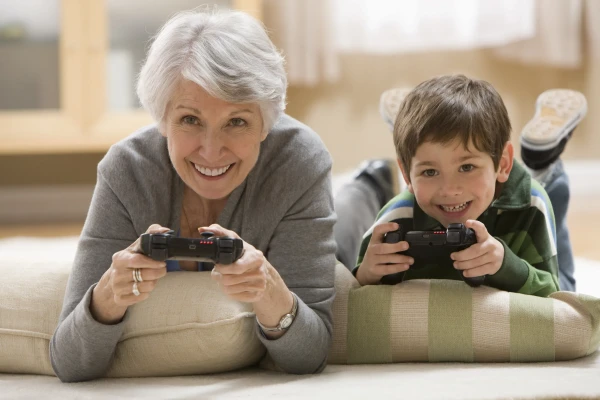
Many notice: grandmothers were stricter with their children in their youth, while surrounding their grandchildren with care, patience, and unconditional love. Scientists explain that this difference in attitude has not only psychological but also neurobiological reasons.
How Attitudes Toward Children and Grandchildren Differ
During the upbringing of their own children, parents experience constant pressure of responsibility — the need to provide, educate, control, and guide. This creates high demands and strictness. The situation is different with grandchildren: grandmothers no longer bear full responsibility for their future, so they can afford to be more gentle, attentive, and emotionally warm.
What Scientific Research Has Shown
Neurobiologists and anthropologists from Emory University in the U.S. conducted a study involving 50 grandmothers who had grandchildren aged 3 to 12 years. The participants were shown photographs of their grandchildren, adult children, and unfamiliar people while simultaneously recording brain activity using MRI.
The results showed that when looking at their grandchildren, the areas of the brain responsible for emotional empathy were activated in the grandmothers. This indicates a deep emotional resonance — joy from a child's smile and genuine sadness if the child is unwell.
Why Emotions with Grandchildren Are Stronger
According to neurobiologist James Rilling, grandmothers subconsciously strive to feel what their grandchildren feel. Young children evoke a powerful emotional response due to their vulnerability, facial expressions, and need for care.
When grandmothers looked at photographs of their adult children, the areas of the brain associated with cognitive empathy were activated — the ability to understand another person's feelings on a rational level, but without strong emotional involvement. The connection remains, but it is less intense.
Evolutionary Explanation
Scientists suggest that the love grandmothers have for their grandchildren has an evolutionary basis. Caring for the offspring of the next generation increased the chances of survival for the lineage. This is why older people develop a particularly strong emotional attachment to their grandchildren.
Why This Connection Is So Important
For grandchildren, a grandmother often becomes a source of unconditional acceptance. She is someone who will always find time to listen, support, comfort, and give advice. Such an emotional bond helps the child feel safe and strengthens psychological health.
It is no coincidence that a Welsh proverb states: “Perfect love sometimes comes only with the first grandchild.”










Leave a comment