
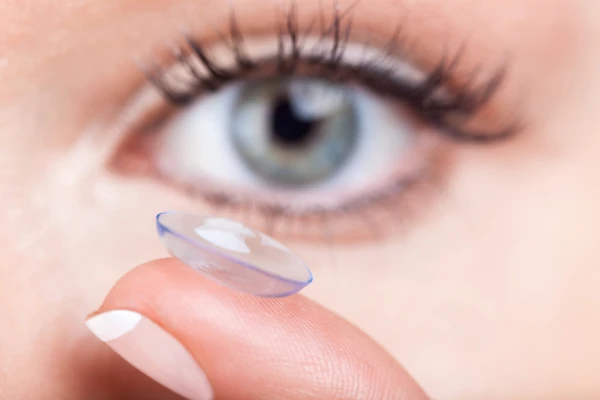
Contact lenses today are not just an alternative to glasses, but a convenient tool for vision correction and an active lifestyle. However, there is no universal option: what works for a 20-year-old may cause discomfort after 40.
With age, not only does visual acuity change, but also the condition of the tear film, corneal sensitivity, eye strain, and lifestyle rhythm. Therefore, the choice of lenses should be based not only on diopters but also on age and specific needs. Ophthalmologist Mikhail Vygotsky explains in detail how to approach this process.
Under 25: Adaptation, Simplicity, Safety
At a young age, the eyes are usually well-hydrated, the cornea is elastic, and vision is stable. Therefore, the optimal option is lenses that are easy to use and do not require complicated care. Daily lenses are perfect for beginners and active individuals: they minimize the risk of infections and do not require maintenance with solutions, which is especially convenient for a busy schedule and sports activities.
25–35 Years: Screen Work and First Signs of Fatigue
For people in this age group, vision often changes not due to diopters but because of prolonged time spent in front of a computer, smartphone, or tablet screen. The dry air in offices and prolonged concentration lead to dry eye syndrome. In such cases, it is advisable to choose models with increased moisture content and moisture retention technologies — this helps the eyes to become less fatigued throughout the day.
35–45 Years: Age-Related Changes and Increased Demands
After the age of 35, the tear film may become less stable, and the eyes tire more quickly, especially in the evening. Even in the absence of significant changes in diopters, it is important to choose lenses made from quality materials with high oxygen permeability and an emphasis on hydration to avoid irritation and discomfort.
After 45 Years: Presbyopia and Combined Tasks
With age, presbyopia may develop — a decrease in the ability to focus on close objects. In such situations, regular lenses may no longer suffice: multifocal contact lenses come to the rescue, providing clear vision at different distances. They require some adaptation, but with the right selection, they significantly simplify daily life. In this case, consultation with an ophthalmologist and precise adjustment of parameters are important.
Considering Individual Characteristics Beyond Age
Age is an important guideline, but it does not encompass all the nuances of lens selection. People with sensitive eyes, allergies, or a tendency to inflammation most often benefit from daily lenses without preservatives. For travelers and those frequently encountering humidity fluctuations, it is important to choose models resistant to drying out. Athletes will benefit from lenses with good stability that do not shift during movement.















Leave a comment