After 40, hair color begins to play a more noticeable role than before: skin tone changes, the contrast between facial features decreases, makeup applies differently, and the hair shade either masks flaws or treacherously highlights age-related changes. That’s why familiar hair dye colors that seemed successful for years suddenly stop matching your appearance.
Good news: age doesn’t matter here. What’s important is not how old you are, but what shades you choose. The right hair color can refresh your face, make your skin appear more even, and even replace part of your anti-aging care. Let’s analyze which hair colors really age you after 40, and what shades to dye to look modern and well-groomed.
Which Hair Dye Colors Add Age
Jet Black
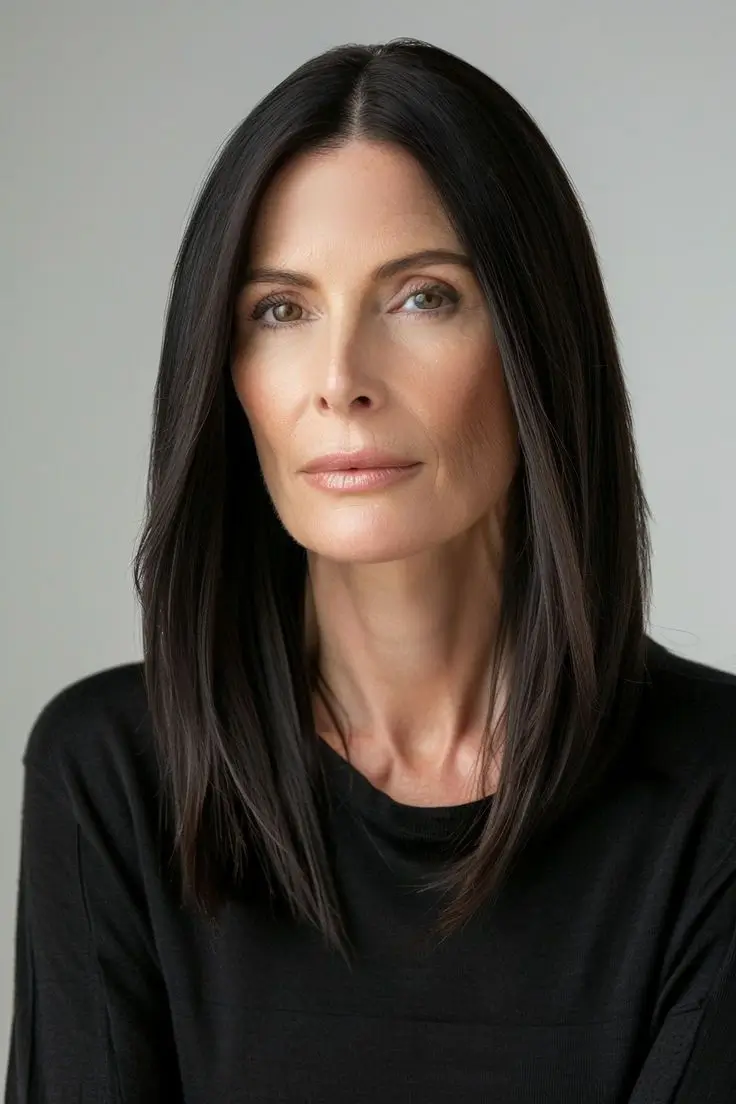
Black is one of the most treacherous colors after 40. It sharply increases the contrast between hair and skin, making wrinkles, nasolabial folds, and dark circles under the eyes more noticeable, especially if the color is solid, without highlights and depth. This shade makes features appear harsher and visually weighs down the face.
If black is part of your identity, it’s worth softening it: add warm nuances or opt for more complex coloring, but in its pure form, the color almost always works against you.
Too Cool Blonde
Platinum, silver, and ash-gray blonde looks striking in photos, but in real life, it often highlights dry skin and uneven tone. After 40, such shades can bleach the face, making it look pale and tired.
Moreover, cool blonde enhances redness and the vascular network: as a result, even with good care, the face looks less fresh than it actually is.
Dark Chestnut
Dark chestnut without highlights and nuances is often perceived as too heavy, especially if the color is dense and completely covers gray hair. This shade can add severity and age, even if it is considered natural. After 40, dark colors require depth: without it, they start to work against volume and lightness of the look.
Bright Red and Copper Shades
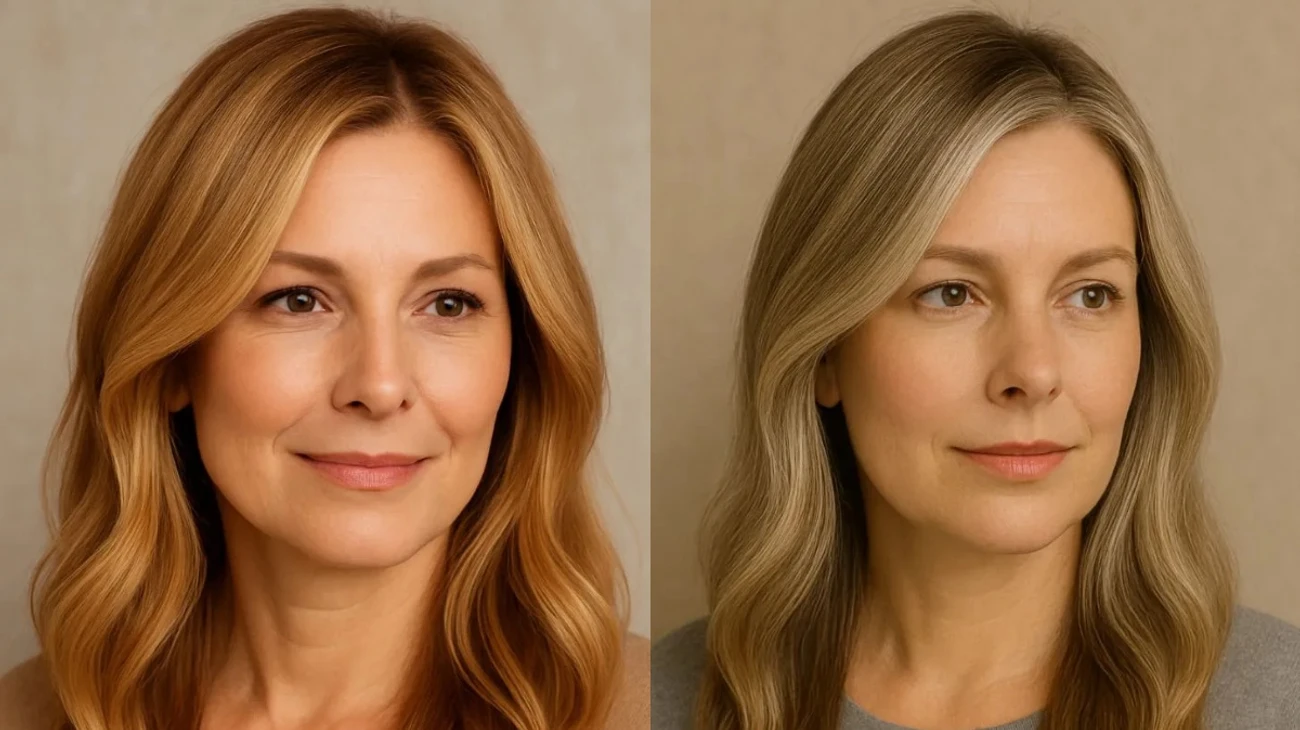
Intense red, copper, and carrot colors enhance the warm nuances of the skin, emphasizing pigmentation and redness. While at 25 these shades looked bold and striking, after 40 they often create a sense of untidiness and fatigue.
What Shades to Dye After 40 to Look Younger
Warm and Neutral Light Brown
One of the most successful options: warm light brown with soft highlights looks natural, effectively conceals gray hair, and makes the face calmer. Light brown does not clash with the skin and creates a sense of well-groomed appearance.
Chocolate and Coffee Shades
If you’re not ready for light colors, choose dark but warm shades. Chocolate, coffee with milk, and soft mocha add depth and create a gentle look. Shades with light highlights near the face work well: such hair dye colors look expensive and soften facial features.
Beige and Wheat Blonde
For blondes over 40, beige, creamy, and wheat shades are ideal: they reflect light, refresh the skin, and do not emphasize age-related changes. Unlike cool platinum, these colors maintain volume and liveliness of the look.
Complex Coloring Instead of One Tone
After 40, techniques that create depth work especially well: balayage, shatush, or soft highlights. They add light near the face, visually lift facial features, and make the color more vibrant — achieving a light lifting effect without radical changes.
hair colors after 40, hair dye colors, which hair color makes you younger, which hair colors age you, hair dye after 40, hair color by age, how to look younger after 40, trendy hair colors 2026, care for dyed hair, how to choose hair color
The Main Rule After 40
Age is not a reason to give up dyeing, but it is a reason to avoid extremes. Too dark, too cool, or too bright colors often add age. In contrast, multi-dimensional, warm, and natural shades help you look fresher and more modern.