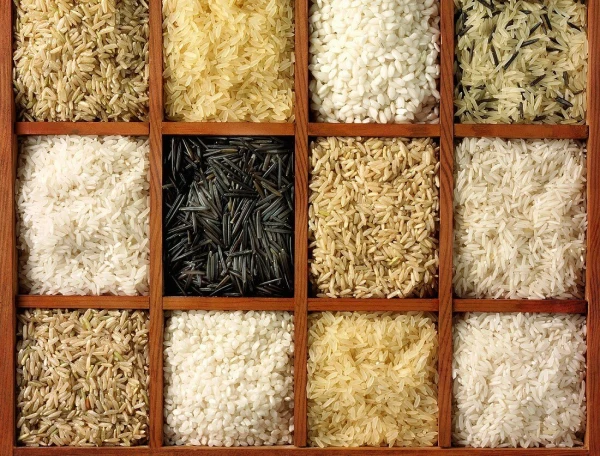
Choosing the right rice is half the success of a dish: some varieties keep the grains fluffy and long, others provide stickiness for rolls, and others release starch and make sauces creamy. We have gathered simple rules to help you not miss: what to choose for pilaf and side dishes, what rice is needed for sushi and risotto, when to choose brown rice, and how to match the variety with cooking techniques.
For Fluffy Side Dishes and Pilaf, Choose Long-Grain
If you want to avoid a mushy mess, opt for long-grain rice: Indian basmati, Thai jasmine, parboiled, or quality long-grain blends. These varieties have a high amylose content, so after cooking, the grains hold their shape and do not stick together. Additionally, this rice provides a subtle nutty aroma, making it excellent for curry, vegetable sides, and pilaf.
Technique is just as important as the variety: rinse until the water runs clear, soak for 20–30 minutes if desired, cook in measured amounts (for basmati, the ratio is about 1:1.5, for jasmine 1:1.25–1.35), do not stir during cooking, and let the rice "rest" under a lid for 10 minutes — this way, the steam will finish the cooking without turning everything into a sticky mass.
For Sushi and Rolls, Use Medium- or Short-Grain Rice
"Stickiness" is not overcooking, but rather the physics of the variety: Japanese japonica and California "sushi rice" are rich in amylopectin, which binds the grains together. This rice must be rinsed until the water is crystal clear and soaked for 20–30 minutes, cooked with precise water ratios (usually 1:1–1:1.1), and then seasoned with a mixture of rice vinegar, sugar, and salt — not just for flavor, but also to stabilize the starch.
For onigiri and rolls, this is key: the stickiness holds its shape, but each grain remains distinct. Do not substitute short-grain rice with long-grain: it will not form a neat ball, and excessive stirring during cooking will not help, but will only turn it into crumbs.
For Risotto and Creamy Dishes, Choose Arborio, Carnaroli, or Vialone Nano
The essence of risotto lies in the starch that gradually releases into the broth, turning it into a cream without cream. The best at this are medium-grain Italian varieties with a large "core" of starch: Arborio releases a lot quickly, Carnaroli is more stable and forgives an extra minute, and Vialone Nano provides creaminess and a precise "al dente" texture.
Important "no's": this rice is not rinsed (otherwise, you wash away the surface starch) and is not cooked "like porridge"; the technique is always "by the ladle": sautéing the rice, adding wine, then hot broth in small portions with constant stirring until creamy waves form.
For Health Benefits and Nutty Flavor, Choose Brown, Red, or Black Rice
Unrefined varieties retain the husk and germ, where fiber, minerals, and oils are found: brown (or whole grain), red, and black rice provide a nutty aroma, dense texture, and a more even glycemic response from the body. They take longer to cook (usually 30–45 minutes), so more water is required (approximately 1:2–2.25), so plan for time and do not expect excessive softness.
Bonus: these varieties are excellent in warm salads with vegetables and legumes, served with meat or fish with sauces, in Buddha bowls. Store brown rice in a tightly sealed container (preferably in the refrigerator): the oils in the husk oxidize faster than in white rice, and the flavor suffers.