Stores are full of butter: there are sticks, spreads, farm-made, homemade, butter-vegetable blends, and a dozen other variations. But not all of these products are entitled to be called butter: in some cases, part of the milk fat has been replaced with vegetable fat, in others, they simply skimped on fat content and hid it behind a beautiful name, and in yet others, the packaging and storage have already spoiled the taste. We have gathered seven reliable signs that will help you quickly distinguish quality butter from everything else.
Label and Composition
The most reliable and clear filter is the list of ingredients: high-quality butter has a short and understandable list. It contains cream (or "normalized cream"), and salt is acceptable for the salted version. There should be no vegetable fats, milk fat substitutes, flavorings, colorings, or emulsifiers on the label. Also, any unclear abbreviations and combinations of letters and numbers are an immediate no.
Pay attention to the name: butter is one product that you are looking for, while butter-vegetable oil, spread, or paste is another, with different standards and taste. The simpler the wording and the fewer words on the label, the higher the chance that what’s inside is indeed what you need, safe and without additives.
Fat Content
Butter relies on milk fat — it provides flavor, plasticity, and proper behavior in cooking. For classic unsalted butter, the benchmark is around 82–83% fat (some standards allow for 80%), while for farmer's butter, it is about 72–73%. The lower the fat content, the higher the water content: such butter tends to "sizzle" in the pan, adds excess moisture to the dough, and has a paler taste. If you see numbers below 72% or vague designations like "fatty product," you are likely not looking at butter in the strict sense.
Standards, Manufacturer, and Shelf Life
On the packaging, look for a reference to a relevant standard (GOST or ISO or technical conditions with clear parameters) and understandable information about the manufacturer: address, contact line for consumers, production date. Responsible factories indicate both the batch and the shift. The shelf life is an important clue: real butter in foil and at +2…+6 °C usually has a moderate shelf life; too "long" a life at room temperature hints at stabilizers or atypical technology. A good sign is transparency: a website with descriptions of raw materials, regions of milk procurement, and laboratory protocols.
Packaging and Storage
Butter's best friend is light-proof foil or combined paper with foil: they protect the fat from oxidation and foreign odors. Transparent films and plastic windows are beautiful, but sunlight and store light quickly "age" the fat, leading to rancidity. At home, keep the butter tightly closed, separate from strongly scented products, in a butter dish — only the portion that will be used in 2–3 days. Proper packaging plus cold is half the flavor, especially if you plan to bake or whip sauces.
Appearance and Texture When Slicing
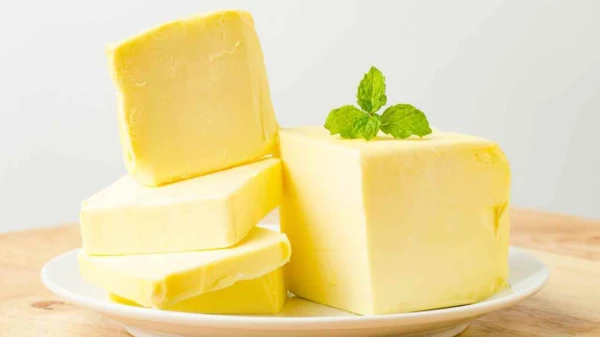
Quality butter has a uniform color — from creamy to light yellow (depending on the season and the cows' feed), without spots or "marbling." A cold stick should slice evenly, with a clean "glass-like" cut, not crumbling to dust or smearing, at 18–20 °C the butter becomes plastic but holds its shape and does not flow into a puddle. A too-bright yellow tone year-round may indicate a coloring agent, and a loose, "flaky" structure may indicate violations in fat crystallization or repeated freezing.
Behavior in Baking and Spreadability
In dough, quality butter provides crunch and flakiness: shortcrust becomes crumbly, puff pastry becomes airy, and creams remain stable and smooth. If cookies "spread" into puddles or cream does not hold peaks at room temperature, there is a high likelihood of excess water or an inappropriate fat profile. When spreading from the refrigerator, a good stick initially springs back, while immediate "spreading" to a soft spread at +4 °C is a worrying sign. For sandwiches, keep a small portion at room temperature, while the main supply should be kept cold: this way, you preserve flavor and texture.