
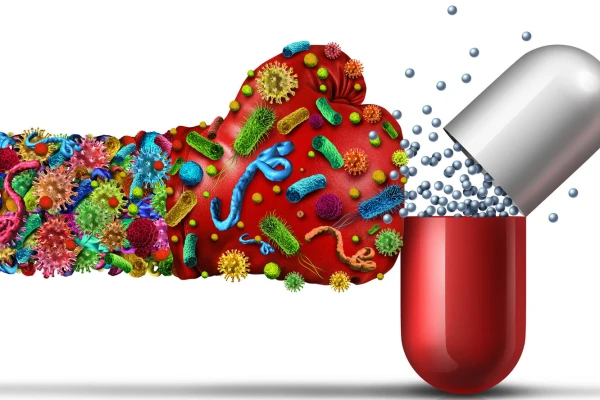
The World Health Organization has presented a worrying report: in 2023, every sixth bacterial infection turned out to be resistant to antibiotics. This means that the medications that once saved lives are losing effectiveness, and the world is facing the growing threat of a "post-antibiotic era."
Antibiotics are losing effectiveness
According to WHO, from 2018 to 2023, bacterial resistance to antibiotics has increased by more than 40% in observed "pathogen-drug" combinations. The highest level of resistance is noted in Southeast Asia and the Eastern Mediterranean, where one in three infection cases is untreatable with standard antibiotics.
In the African region, resistant infections are identified in one in five patients — primarily due to the lack of quality diagnostics and access to modern medications.
Dangerous pathogens
WHO studied 8 common bacteria, including:
- Escherichia coli, Klebsiella pneumoniae, Staphylococcus aureus, Streptococcus pneumoniae, and Salmonella spp.
The situation with E. coli and K. pneumoniae — causative agents of dangerous bloodstream infections and sepsis — is particularly alarming.
- More than 40% of E. coli strains and 55% of K. pneumoniae worldwide are resistant to third-generation cephalosporins.
- In Africa, this figure exceeds 70%.
Moreover, resistance is also increasing to carbapenems — last-line antibiotics that were previously considered a "last hope."
What WHO says
"Antimicrobial resistance is outpacing the achievements of modern medicine and threatens the health of families worldwide," said WHO Director-General Tedros Adhanom Ghebreyesus.
WHO warns: if the trend continues, even simple infections will again become life-threatening.
What countries should do
The organization urges governments to actively implement the GLASS program (Global Antimicrobial Resistance Surveillance System), collect quality data, and adhere to the principles of the One Health approach, integrating medicine, veterinary science, and ecology.
The main goal is to curb the rise of antibiotic resistance by 2030, otherwise humanity may lose one of the most significant achievements of 20th-century medicine.












Leave a comment