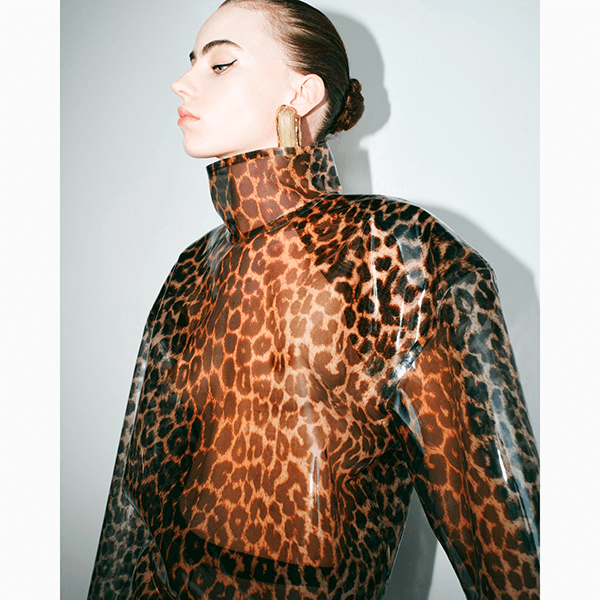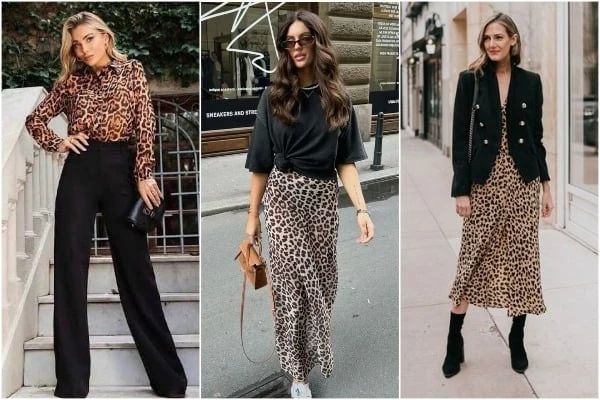
Following the autumn-winter 2024 and spring-summer 2025 shows, leopard print once again holds a strong position in trends. Many are intimidated by its complexity and extravagance, so it’s important to know how to 'tame' it. To avoid looking out of place and not veering into kitsch, it’s essential to know how to combine leopard correctly. We have gathered the main tips for each style and occasion, after which this beast will no longer seem so frightening!
Casual Style
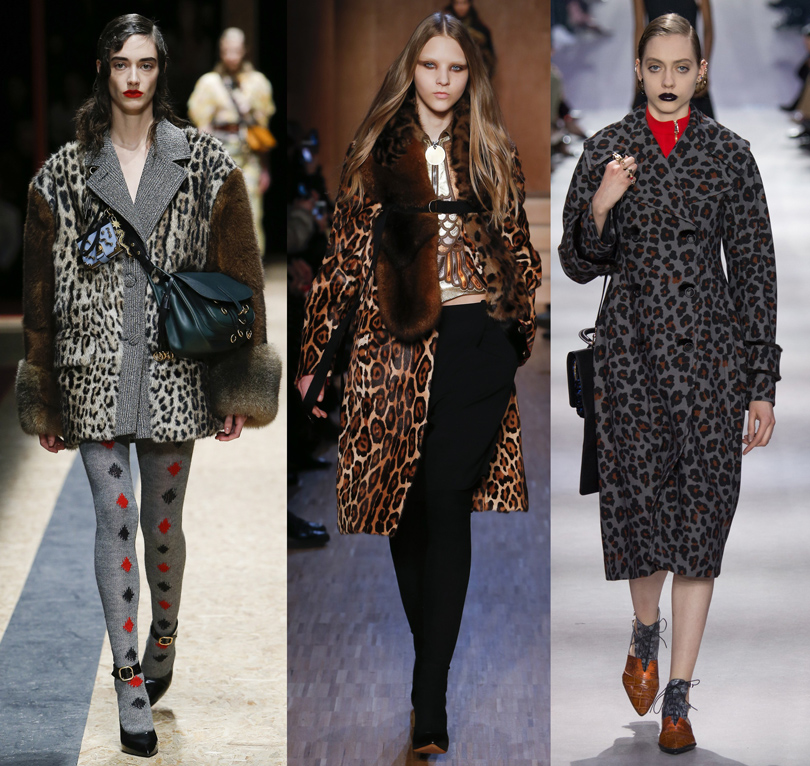
In a casual wardrobe, leopard print is best presented as the main accent of the outfit — and that’s one thing! At the Dolce&Gabbana FW24 show, a long coat with mixed leopard print was styled with a belt and a hat, while a Diesel model walked the runway in a cropped fur coat with a leopard pattern over a sheer blouse. In real lookbooks, such items are worn against a backdrop of maximally restrained solid basics: jeans, black or beige sweaters, chunky knitwear. They tone down the leopard and make it more casual.
Tips for Everyday Looks:
-
Choose one leopard item as an accent. It’s best if it’s outerwear: for example, a coat or jacket. Alternatively, it can be a separate accessory — a bag, shoes, or a belt.
-
Pair leopard with neutral clothing. Black pants, a white t-shirt, flared jeans, or an olive sweater will create a stylish backdrop for the print. It’s best to dilute leopard with denim or items in natural shades: black, brown, or green.
-
Consider the quality and scale of the print. As fashion expert Amy Bannerman advises, the fabric should be smooth, the pattern should resemble a real leopard rather than being abstract — such items look more expensive. Large, clear spots on dense wool or cotton look more noble than fluffy faux fur.
Business Style
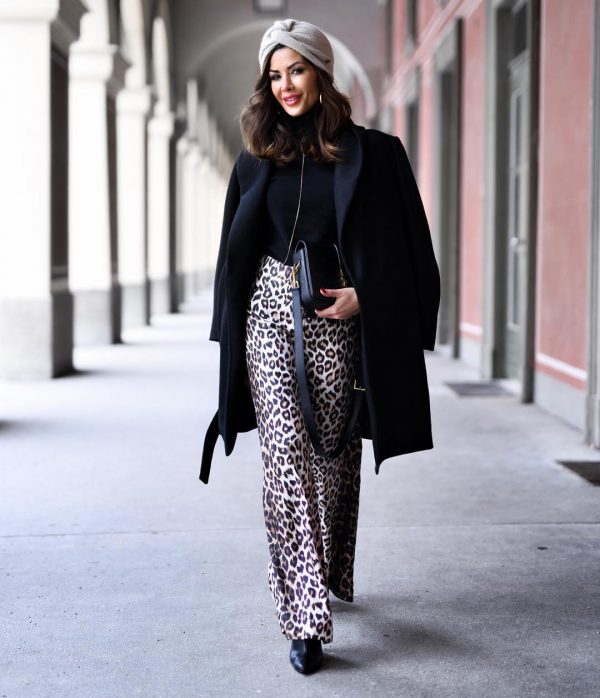
For an office look, leopard should be used very sparingly. More often, it’s a separate element: a blouse, pencil skirt, or accent belt. For example, you can wear a solid suit with a thin leopard shirt. But don’t forget about the cut — a straight blazer or classic turtleneck will help add strictness.
Tips for Business Looks:
-
Choose leopard in a small scale. When selecting a print, prefer more subdued variations — with small or muted spots. Such a pattern looks neater and definitely won’t be jarring.
-
Stick to a neutral palette. Combine the print with basic shades — black, graphite, beige, dark blue. For example, a leopard top with a dark gray suit will look restrained and appropriate.
-
Make one bold accent. Avoid a total look: let only one leopard print be the focus. For instance, if it’s a skirt or blouse, complement the outfit with a sleek blazer and solid pumps.
-
Use minimal jewelry. Avoid excessive luxury; let the leopard itself serve as decoration. Classic accessories will suit it: a solid leather belt, black shoes, or a restrained shopper bag.
Evening and Festive Looks
For a night out, leopard can be presented more boldly and glamorously. Designers suggest combining it with luxurious fabrics and complex textures. For example, Dolce&Gabbana SS25 uses sequins, satin, and chiffon — this way, the leopard print plays against the shiny fabric and becomes truly irresistible. At Versace, evening dresses were literally wrapped in silk leopard print, while Blumarine FW24 featured bright dresses with leopard tights.
Tips for Evening Looks:
-
A fail-safe option is a leopard dress. A slip dress or mermaid silhouette in leopard print is chic and easy to style. These are standalone pieces that don’t require additional details.
-
Prefer noble fabrics and colors. Choose evening materials: satin, velvet, silk, or lace. Leopard on such textures looks especially exquisite. Deep shades like gold, burgundy, emerald, or classic black pair excellently with the print.
-
Wear simple accessories. At the Versace and Blumarine shows, leopard itself served as decoration — shoes and clutches were solid to avoid overshadowing the print. For the evening, it’s also better to stick to minimalism: calm earrings or classic black shoes will perfectly complete the look.