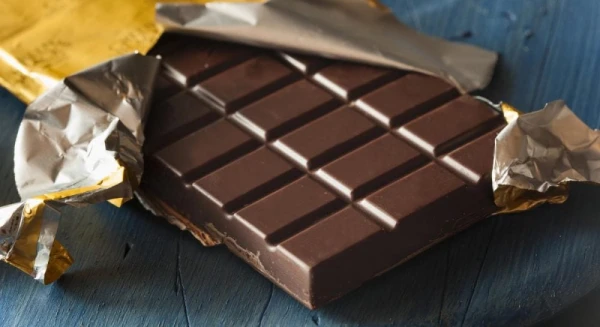
The innovative company has successfully created milk chocolate using cultivated cocoa butter, releasing prototypes that meet high-quality standards and open a new era in confectionery production.
A food startup, supported by Mondelez International, has made a breakthrough by introducing chocolate bars made from lab-grown cocoa butter. This product, according to the company, is the first of its kind and marks an important step towards reducing dependence on traditional cocoa bean cultivation methods.
The innovative company Celleste Bio has successfully developed milk chocolate using unique cell-cultivated cocoa butter. Together with partners, they have created about ten prototypes, each fully compliant with strict internal quality standards.
This revolutionary development clearly demonstrates that lab-grown cocoa ingredients are ready to move beyond experimentation and be successfully applied in the production of finished food products. The developers claim that their cocoa butter is identical to traditional cocoa in texture and melting properties.
"The chocolate was made using cell suspension technology, where cocoa cells are grown in a controlled environment, reproducing the compounds inherent in natural cocoa," the article states. Instead of extensive plantations, the process begins with a minimal sample of cocoa bean. The cells are then placed in bioreactors, where they actively grow, multiply, receive necessary nutrients, and produce valuable cocoa butter.
Goals and Benefits of the Innovation
Celleste Bio's CEO, Michal Beressi Golomb, emphasized that the company was founded in 2022 with the ambitious goal of ensuring a stable future for the entire chocolate industry. This is particularly relevant in the context of increasing pressure on global supply chains caused by climate change, the spread of plant diseases, traceability challenges, and geopolitical instability.
At Celleste Bio, they are convinced that their innovative approach can significantly reduce the need for land and other resources traditionally required for cocoa production. They note that just one cocoa bean, when the process is scaled in bioreactors, can yield enough cocoa butter to make an entire batch of chocolate.
According to the developers' calculations, a 1000-liter bioreactor can produce up to a ton of cocoa butter annually from a single bean. In comparison, traditional methods would require about a hectare of plantations to achieve the same volume.
This revolutionary development is particularly relevant against the backdrop of increasing tension in global cocoa supplies due to climate change and unstable harvests. Recent years have been characterized by significant price fluctuations for this valuable product.
Path to Commercialization
Despite promising results and successful prototypes, the technology is still in its early stages of development. Celleste Bio aims to scale up production and plans to bring its unique product to market by 2027, of course, after obtaining all necessary regulatory approvals.
The company proudly states that it has already confirmed the feasibility of fully utilizing its ingredient as an alternative to traditional cocoa. They have successfully created a pilot production base and demonstrated that the characteristics of their product fully meet high standards.
The developers are actively exploring the potential of artificial intelligence to fine-tune the properties of cocoa butter. This will allow them to adjust the melting temperature and flavor characteristics according to the requirements of various types of products.
The main obstacle remains scaling production to a full industrial level while maintaining economic efficiency and strictly adhering to all regulatory norms. To date, the company has already raised an impressive $5.6 million in investments.
Celleste Bio is actively collaborating with partners to expand its production capacity and refine the technology before the official commercial launch. Plans also include placing production facilities closer to end-manufacturing enterprises, which will reduce logistics costs and lower harmful emissions. Despite all the upcoming challenges, the ability to produce cocoa without being fully dependent on plantations promises to stabilize global supply chains and significantly reduce negative environmental impacts. This is especially important for regions suffering from climate change and deforestation.
Other Innovations: Self-Healing Material
In addition to breakthroughs in the food industry, American engineers have recently introduced a unique fibrous composite capable of self-repairing internal damage more than a thousand times. Experts believe this technology could radically transform the lifespan of objects such as airplanes, cars, wind turbines, and even spacecraft.
Researchers demonstrated how the new material successfully repaired delamination-type damage in laboratory conditions multiple times, which is one of the key issues with modern composites. Likely, thanks to this innovation, the lifespan of various structures will increase from several decades to hundreds of years.