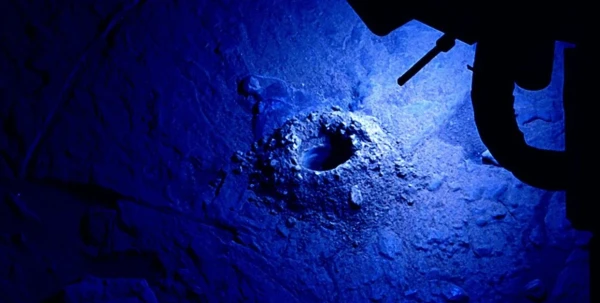
It would be terrifying to be alone on Mars at night. The nighttime on the Red Planet is vastly different from that on Earth.
NASA's Curiosity rover used LED lights from the Mars Hand Lens Imager camera, located at the end of its robotic arm, to create a rare nighttime image of the surface of the Red Planet, writes Focus referencing Futurism.
Night on Mars lasts just over 12 hours. Because the Red Planet has a similar axial tilt to Earth, nights there are longer in winter and shorter in summer. However, during the night on Mars, there is almost complete darkness, as there is no artificial lighting, and only stars are visible in the sky. At the same time, temperatures at night on Mars drop to minus 37 degrees Celsius even at the equator.
The Curiosity rover, which has been exploring Mars for almost 14 years, is equipped with LED lights at the end of its robotic arm, allowing it to illuminate the seemingly endless darkness on the Red Planet.
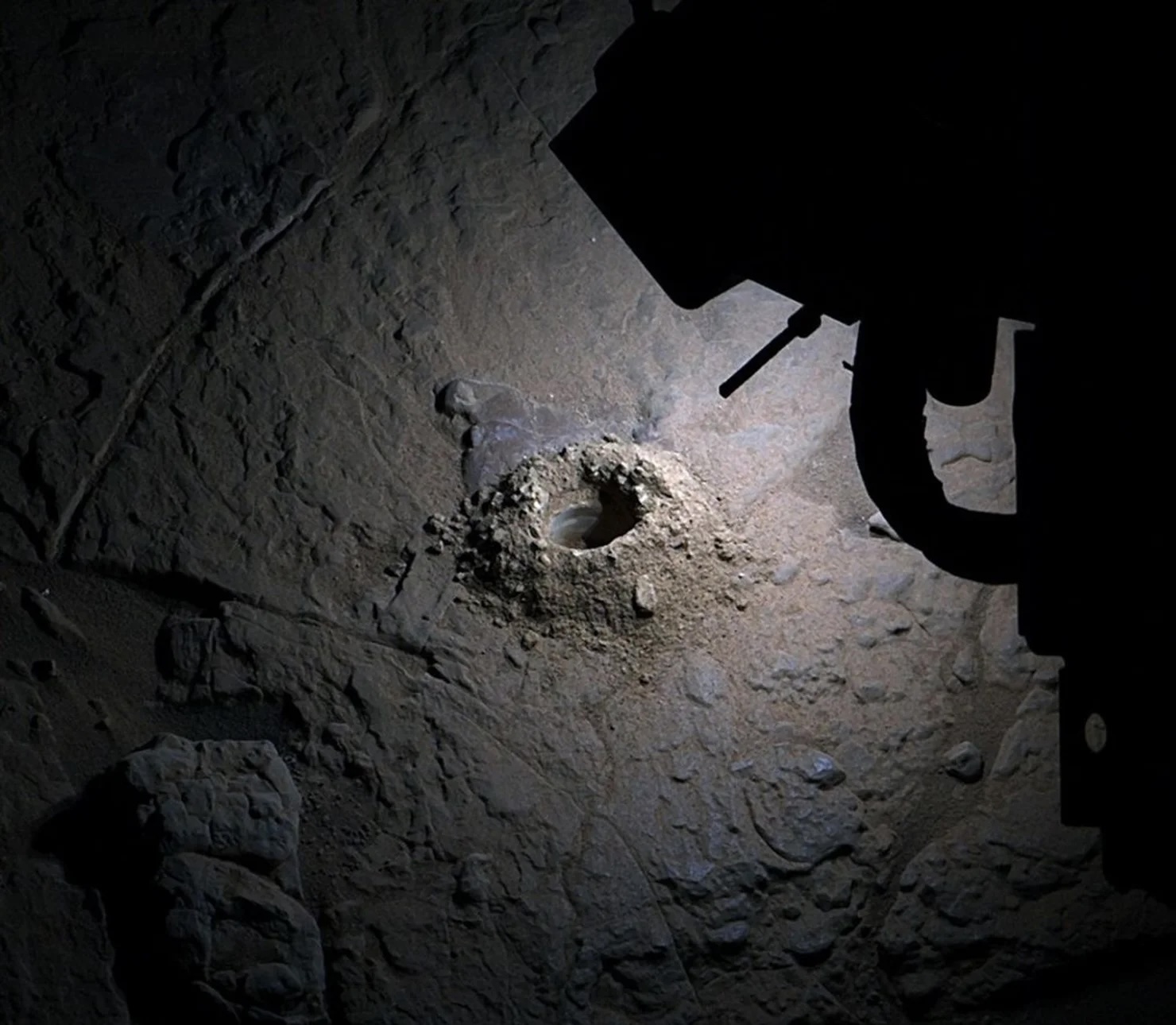
The LED lights are part of the Mars Hand Lens Imager camera located at the end of the Curiosity's arm. This camera is one of seventeen cameras installed on the rover and can take true-color images with a resolution of 1600 by 1200 pixels. It is equipped with both ultraviolet and white LED lights, enabling it to take pictures at night.
NASA showed one of these nighttime images, which shows a hole drilled by the rover in the surface of Mars. This eerie view of the alien environment serves as a reminder that the lonely rover has to face almost complete darkness while exploring Mars in search of signs of ancient life.
Sometimes scientists used the LED lights for heavily shaded areas of the surface during the day, such as the inner surfaces of holes drilled by the rover. Previously, the lights were used to study the layering of rocks to better understand their composition. However, in 2018, Curiosity changed its method of drilling holes due to issues with the drilling rig, resulting in new holes being too rough and dusty to discern any details. Nevertheless, the new hole drilled by Curiosity was deemed smooth enough to attempt to determine the layers of rock.
This hole was drilled during the rover's exploration of a region rich in geological formations known as boxwork structures, which cross the surface for many kilometers and look like giant webs when viewed from space.