Alongside the entertainment industry, Unitree continues to develop the domestic application of its products.
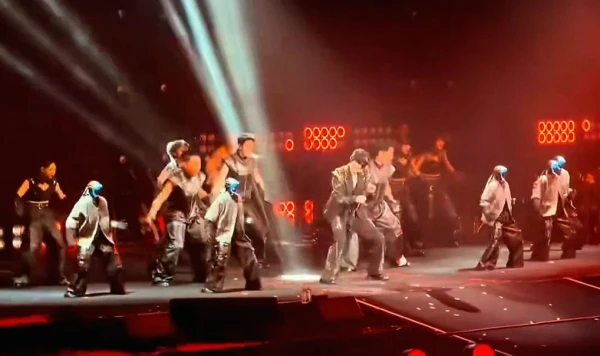
Humanoid robots G1 from the Chinese company Unitree Robotics took a new step in popularizing technology by performing on a large concert stage. During a show as part of the concert tour of performer Wang Lihong in Chengdu, a group of these machines in bright costumes performed a synchronized dance alongside live dancers, demonstrating impressive coordination of movements.
The performance took place at an arena accommodating 18,000 spectators and was received extremely positively by the audience. As noted on the artist's website, this is a rare case of integrating dancing robots into a live music show, where advanced technology organically complements the performance. Many fans called this moment one of the most creative in the tour, highlighting the harmonious combination of music and engineering. Reactions on social media were also enthusiastic, with comments stating that Chinese robots have reached a new level, learning to dance like professionals.
Alongside the entertainment industry, Unitree continues to develop the domestic application of its robots. The company recently announced new features that are still in development. The latest development from Unitree, the G1 robot, is becoming not just a high-tech engineering product but also a cultural phenomenon that amazes with its capabilities.
The term "robots" was introduced by Karel Čapek in his play "R.U.R. (Rossum's Universal Robots)," published back in 1920. Since then, almost all world science fiction writers have written about humanoid machines, and the three laws of robotics proposed by writer Isaac Asimov are considered an undeniable truth, as if intelligent machines already exist. Artificial intelligence is still far from robots, but that does not prevent them from being invented and actively used.