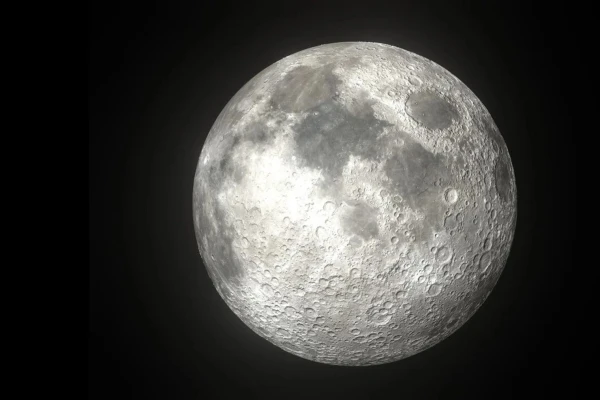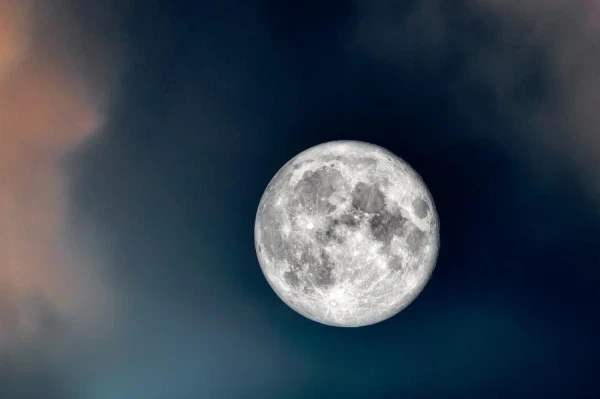
On Thursday, December 4, the last supermoon of the outgoing 2025 year will occur. According to astronomers, on this night the Moon will appear much larger and brighter than usual, writes Focus.
Scientists say that the supermoon can be observed due to the Moon's proximity to Earth at this time, writes IFL Science.
This time, the supermoon will occur when our natural satellite is just 357,219 kilometers away. This approach will be only a few hundred kilometers farther from Earth than the record close approach in November, when the Moon was closest to our planet.
Astronomers say that the next supermoon will occur just a month later, on January 3. But next time, the Moon will be several kilometers farther away.
Typically, three or four such phenomena occur in a year. This year, the last three supermoons were observed in October, November, and the third is yet to come in December. In 2025, the supermoons were special in that all occurred within one season, which is quite a rare phenomenon. The next similar sequence will be in winter 2028, when supermoons will be on January 12, February 10, and March 11.
There is no scientific definition of a supermoon, and this unofficial term was coined by an astrologer, which was adopted by the astronomical community.
As is known, the Moon's orbit is not perfectly circular. Although the average distance between Earth and the Moon is 384,400 km, as it moves, the Moon can come closer or move away by several tens of thousands of kilometers.
In other words, if a full moon occurs within 90% of the point of closest approach of the Moon to Earth, then it is a supermoon. In this case, it usually refers to a distance of 367,607 km.
The Moon can also move away from Earth by more than 405,000 km, which is why the difference is so noticeable. According to NASA, if one observes the Moon continuously, its size can increase by 14%, and its brightness by 30%.
"It is very rare for a body to move in a perfectly circular trajectory. The Moon has a slight eccentricity, meaning it moves around Earth in an elliptical trajectory, so sometimes it is closer and sometimes farther away," explains Professor Sarah Russell, a planetary scientist at the Natural History Museum in London.