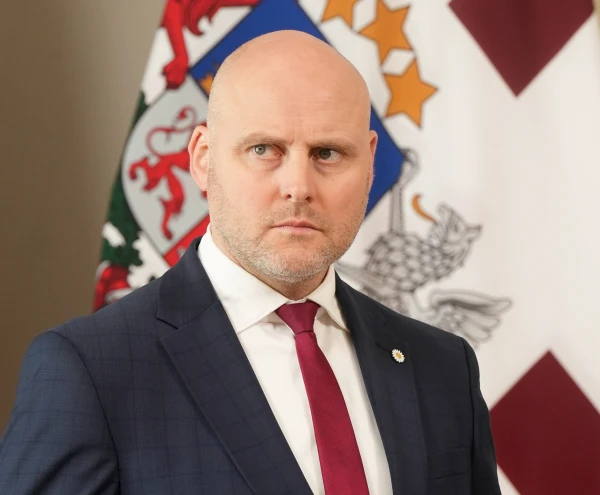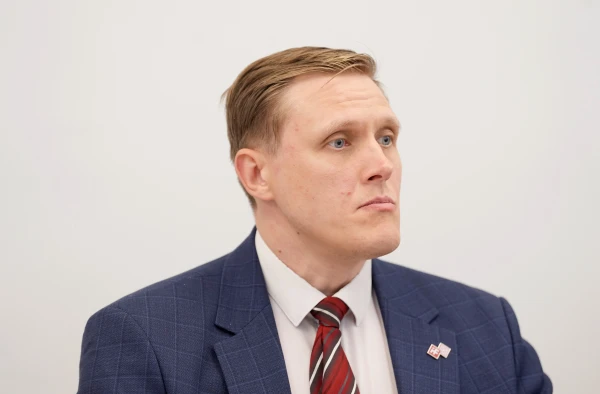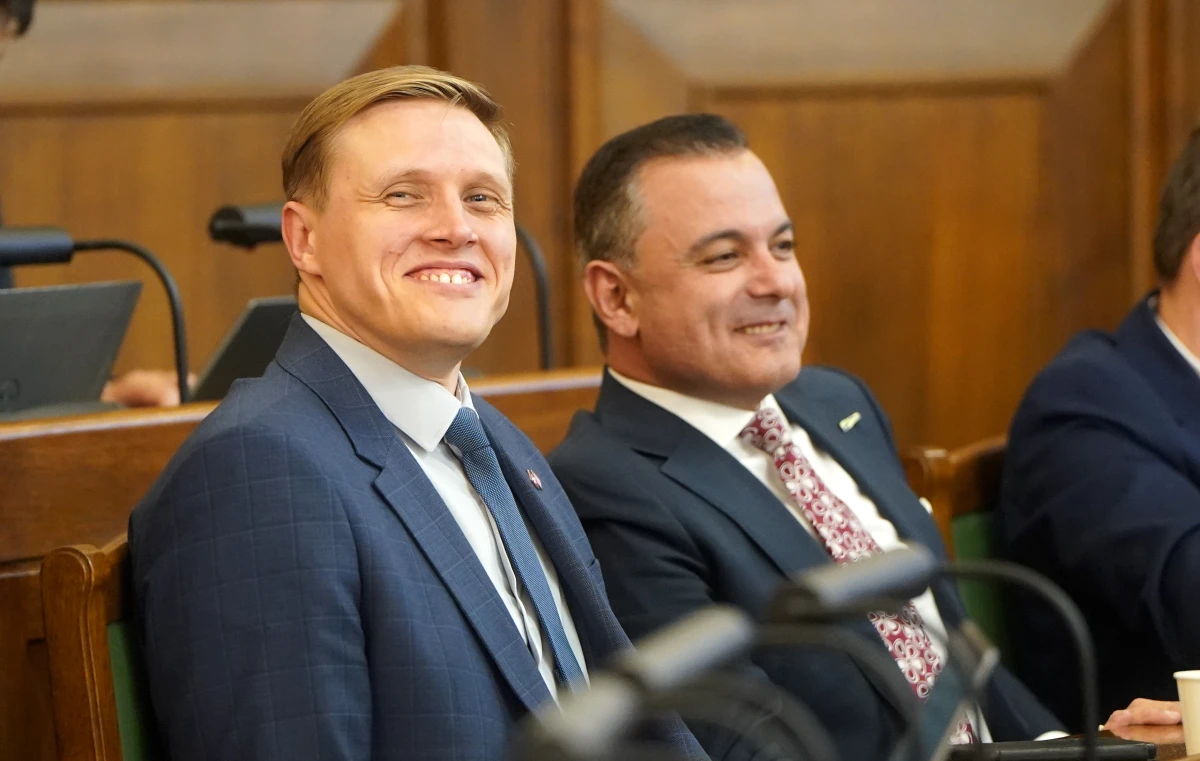
The new Minister of the Interior, Janis Dombrova, intends to give an order to all subordinate institutions to use the Latvian language for both internal communication among employees and when serving residents on his first day at work. According to him, in certain structures, the practice still remains where other languages dominate in the working environment.
One of the first steps of the new Minister of the Interior, Janis Dombrova, will be to strengthen the role of the state language in the Ministry of the Interior system.
In an interview with the program "900 seconds" (TV3), the politician stated that on his first working day, he intends to sign an order regarding the use of the Latvian language in all institutions under the ministry's jurisdiction.
According to the initiative, communication among employees in the workplace should occur in the state language. The same requirement is planned to be established for communication with the residents of Latvia.
According to Dombrova, despite existing norms, there are still situations in some institutions where other languages dominate in everyday work environments. The minister did not specify which structures are meant, but emphasized that the problem still exists and requires a solution.
"The first decision I will make today will be an order to all institutions under the Ministry of the Interior," Dombrova stated, speaking about the necessity of using the state language both within institutions and when serving citizens.
The topic was raised in the context of a question about what changes the new leadership of the ministry will be able to implement before the upcoming municipal elections.
The minister expressed confidence that noticeable results can be achieved in the remaining time and assured that he intends to work actively on changes in the sector.
What is important to know: this is not about new language requirements for residents, but about the internal organization of the work of the Ministry of the Interior institutions and the order of customer service in state structures.
Dombrova also stated that he expects understanding from the heads of subordinate institutions and hopes that after his signal, such situations will no longer arise.
According to him, residents of Latvia should not face circumstances where services in state institutions are provided in a language other than Latvian.
Language policy became the first topic that the new minister decided to prioritize immediately after taking office.
Dombrova wants to discuss a limit on the number of foreigners in Latvia
Janis Dombrova also intends to make migration policy one of the key areas of his work. He believes that the state needs to strengthen control over the entry of foreigners and eliminate schemes that allow the existing rules to be used for economic migration.
In an interview with the program "900 seconds" (TV3), the minister stated that the provisions of the government declaration in the field of security largely reflect the National Alliance's approach to defense, internal affairs, and migration issues.
According to Dombrova, the need for changes is also confirmed by the findings of the parliamentary investigative commission, which previously analyzed migration processes.
The minister claims that there are various mechanisms through which people enter Latvia, whose main goal is not education or obtaining asylum, but finding work and improving their economic situation.
As an example, he cited the system of attracting foreign students. According to Dombrova, in some countries, Latvia is advertised not so much as a place for education but as an opportunity for employment.
Also, in the minister's opinion, some arrivals use asylum procedures for economic reasons rather than due to security threats or persecution.
To change the situation, the Minister of the Interior believes that not only strengthening control by state institutions will be required but also a review of the regulatory framework.
He stated that possible changes could affect both the internal procedures of departments and the rules of the Cabinet of Ministers and legislation. Other ministries, including the Ministry of Education and Science and the Ministry of Culture, are planned to be involved in the discussion.
One of the most discussed initiatives may be the introduction of a specific limit on the number of foreigners that the country can accept without losing control over migration processes.
At the moment, this is not about a specific bill or a ready-made quota system. The minister speaks about the need to start a discussion on acceptable volumes of immigration and possible regulatory mechanisms.
"We need to determine this maximum limit — how many foreigners our state can accept without losing control over the processes, as has happened in several other European countries," he pointed out in the interview.
The minister also criticized previous long-term migration forecasts, according to which the number of arrivals from other regions of the world was supposed to increase by several thousand people each year.
In his opinion, such a trend cannot continue indefinitely and requires political revision.
Specific proposals and possible changes in legislation are yet to be discussed; however, the topic of migration has already been identified by the new leadership of the Ministry of the Interior as one of the priorities for the coming years.