
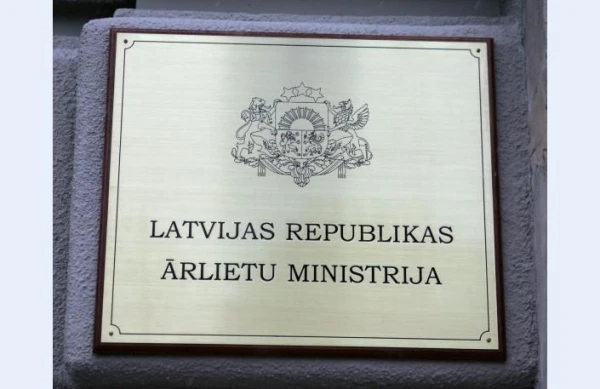
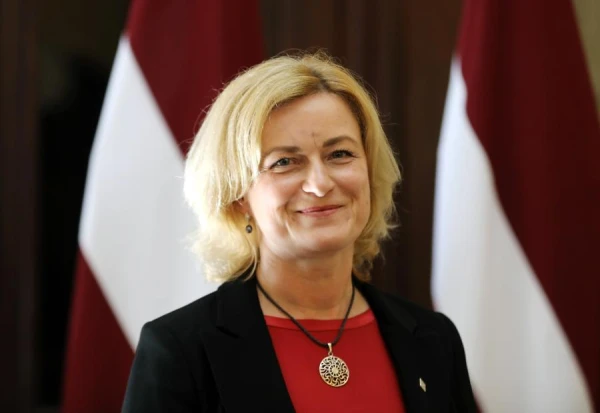
Stability in the Middle East region is crucial for global security, stated Latvian Foreign Minister Baiba Braže to the LETA agency.
She noted that Latvia is closely monitoring events in the Middle East and is in constant contact with the Latvian embassies, European Union (EU) countries, and other states.
This morning, phone conversations took place with Israeli Foreign Minister Gidon Sa'ar and Jordanian Foreign Minister Ayman Safadi.
"Latvia calls on all parties to exercise restraint, ensure the protection of civilians, and prevent further escalation. Stability in the region is crucial for global security," emphasized Braže.
Given the cancellation of flights, the previously scheduled visits of the minister to Israel and Jordan have been postponed.
The Ministry of Foreign Affairs (MFA) urges all Latvian citizens in the region to follow the instructions of the authorities of the host countries and to take care of their safety.
The ministry also stated that Iran has long refused to constructively engage in dialogue with the USA and the EU to reach a resolution on the Iranian nuclear program, ballistic missile program, and support for terrorist groups in the region.
Iran systematically and deliberately continues to pursue an aggressive foreign policy, creating threats to the security of the region and other countries.
Iran also continues to support Russia's aggression against Ukraine, the MFA notes.
The ministry emphasizes that Iran is a repressive regime that suppresses its own people.
Iran has expressed threats against EU member states regarding the designation of the Islamic Revolutionary Guard Corps as a terrorist organization.
Latvia has repeatedly condemned the actions of the Iranian regime, including its lack of cooperation with the international community and the International Atomic Energy Agency (IAEA) on issues related to the Iranian nuclear program.
Advisor to the President of Latvia Edgars Rinkēvičs, Mārtiņš Drēgeris, informed the LETA agency that Rinkēvičs and other officials involved in foreign policy are closely monitoring events in the Middle East.
He explained that the coordinated strikes by the USA and Israel against Iran followed prolonged efforts by the USA and the EU to achieve a negotiated solution regarding the Iranian nuclear program, ballistic missile program, and support for terrorist groups in the region.
Drēgeris also noted that Iran has systematically and deliberately continued to implement its aggressive foreign policy, creating threats to the security of the region and other countries. Iran also continues to support Russia's aggression against Ukraine and suppress its own people.
Rinkēvičs' representative emphasized that it is important to avoid a broader regional conflict, as stability in the Middle East is crucial for global security.
As reported, Israel and the USA are striking Iran on Saturday, according to the Israeli Ministry of Defense and President Donald Trump.
"The State of Israel has begun a preemptive strike against Iran. Defense Minister Israel Katz declared a special and immediate state of emergency across the country," the Israeli Ministry of Defense stated.
Trump reported on the platform "Truth Social" that the US military has begun "large-scale combat operations in Iran" to eliminate "threats from the Iranian regime."
Several explosions were heard in Tehran in the morning.
Apparently, a missile strike occurred, reports the Iranian news agency Fars.
Explosions were heard in five cities in Iran on Saturday, according to Fars.
It was also reported that explosions were heard in Jerusalem and northern Israel on Saturday, according to AFP and Qatari channel Al Jazeera.
As previously reported by the Israeli army, missile launches from Iran towards Israel were recorded.









Leave a comment