

Latvia received international confirmation of the state's ability to effectively combat financial crimes and ensure the security of the financial system, the Financial Intelligence Unit (FIU) reported to LETA, commenting on the report published by the Council of Europe's expert committee on assessing measures to prevent money laundering and terrorist financing, Moneyval, regarding the results of the sixth round of mutual evaluation of Latvia, LETA writes.
The Moneyval report was published on Thursday.
As noted by the Financial Intelligence Unit (FIU), the report emphasizes that Latvia has achieved high or substantial levels of effectiveness in almost all criteria. The document acknowledges significant progress made by Latvia and its long-term commitment to combating financial crimes.
"We have eliminated high risks in the financial sector, and Latvia is a safe and reliable country for investments. This is evidenced by Latvia's choice to be among the first countries assessed under the new FATF standards. We are pleased that the targeted work of the government has yielded results," commented Prime Minister Evika Silina.
Finance Minister Arvils Aseradens noted that after the shocks in the financial sector in 2018, Latvia made a conscious political decision to carry out deep structural reforms, creating a transparent, safe, and internationally compliant financial sector oversight system.
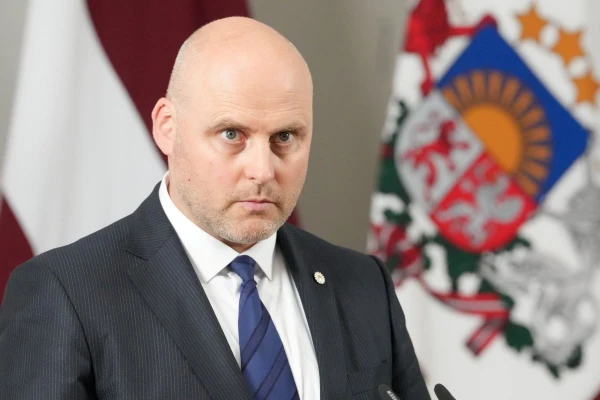
"Today we have created a regulatory and supervisory framework based on effectiveness, inter-agency cooperation, and a risk-based approach. This is an important component of national security and economic competitiveness — a strong and reliable financial system enhances investor confidence, reduces reputational risks, and strengthens Latvia as a safe and attractive partner in international financial transactions," said Aseradens.
According to the FIU, the assessment results confirm that the service is one of the leading financial intelligence units in the world and a leader in international cooperation, making a significant and qualitative contribution to the financial security of Latvia and the world.
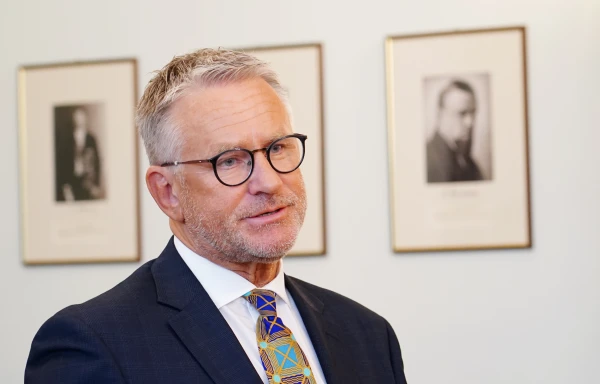
"This assessment is a clear signal that Latvia is recognized as a reliable and capable partner in the international fight against financial crimes and sanctions evasion," noted FIU Director Tom Platanis.
He also acknowledged that the main challenge going forward is maintaining proportionality. "Institutions involved in an effective system must be able to assess when intervention or regulatory action is necessary and when it is not. By purposefully applying a risk-based approach while ensuring that low-risk sectors are not overburdened, Latvia strengthens its reputation and simultaneously complies with leading international standards," explained Platanis.
According to the FIU, the service's work in improving the quality of reports, implementing technological solutions, and strengthening cooperation with law enforcement and regulatory authorities has been particularly highly rated.
Experts point out that the FIU is an effective, modern, and technologically advanced institution providing high-quality financial intelligence information. The risk assessment process for money laundering, terrorist financing, and proliferation of weapons, carried out under the guidance of the FIU, contributes to forming a unified and adaptive understanding of Latvia's risks.
The FATF, or Financial Action Task Force, is an international organization that sets and monitors standards for preventing money laundering, terrorist financing, and proliferation of weapons.
Moneyval is an expert committee of the Council of Europe that assesses member states according to FATF standards.
FIU Director Tom Platanis publicly acknowledged at the beginning of 2025 that the forecasts regarding the Moneyval assessment are positive.
Latvia has also applied to be the first country to be assessed in the sixth round. The results of the assessment will impact Latvia for the next ten years, the FIU indicated.
About five years ago, Moneyval placed Latvia under enhanced scrutiny and allowed for the possibility of including the country in the list of states with strategic deficiencies in preventing money laundering and terrorist financing, the so-called "grey list."
To avoid being placed on the "grey list," Latvia undertook extensive reforms, or a "major overhaul" of the financial system, which, in particular, led to significantly stricter requirements for clients of credit institutions and negatively affected the availability of financing.










Leave a comment