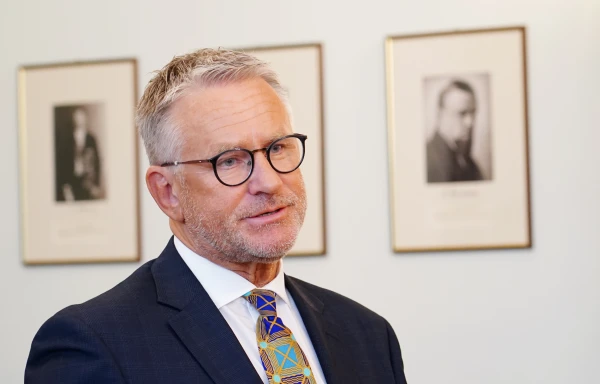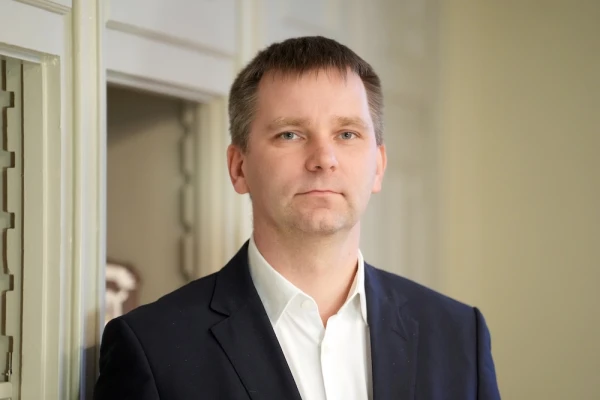
The main problem in procurement in Latvia is insufficient competition, stated Artis Lapinsh, head of the Procurement Monitoring Bureau (IUB), in an interview with the LETA agency.
It is necessary to strive to increase competition, emphasized Lapinsh, noting that the European Commission assessed that each additional bid submitted in procurement can ensure a reduction in contract execution costs by 2.5%.
"However, the most challenging aspect is changing the mindset. It is the customer who formulates the requirements, makes decisions, assesses economic feasibility, and must increasingly reflect on these issues. Many already have reduced budgets, and enhancing competition is the only right way to cut procurement costs," noted Lapinsh.
He explained that if one compares the number of announced procurements at the EU level with the gross domestic product (GDP), Latvia ranks first. However, according to Lapinsh, this does not mean that more foreign suppliers participate in Latvian procurements than on average in the EU.
"It seems that we ensure very high transparency in procurements, but this does not yield results — and this is the main problem," said Lapinsh.
The head of the IUB reminded that the last changes in procurement regulation at the EU level were in 2014. Despite the proclaimed goal of increasing transparency, in practice, the regulation has become more burdensome, and the European Court of Auditors acknowledged that the level of competition in EU procurements has halved.
"We also see this: if we compare data from 2024 and 2025, the share of procurements with only one bidder has again increased by one percentage point," noted Lapinsh.
When asked what this is related to, Lapinsh replied that, in his opinion, it is a dilemma for the entire EU. He explained that too much attention is paid to strategic goals — 'green' procurements, innovations, and so on. These requirements are high, but competition is generally higher, and prices are lower when procuring standardized goods that many produce and offer.
As soon as high or specific requirements are imposed, even if the goal is noble, the range of offers narrows because entrepreneurs can successfully operate and earn outside the public procurement system, explained Lapinsh. He also acknowledged that the situation has been influenced by the pandemic and the war.
"But here a choice must be made — between speed and transparency, competition and efficiency. These are opposite poles, and one must be able to find balance. A tilt in one direction or another will lead to harm to something," stated Lapinsh.
He indicated that after the reform of the public procurement system, the customer will have the obligation to plan procurements, and the plan, which includes all procurements starting from one euro, will be public. These plans will be centrally available on the IUB website.
However, the customer is then given the freedom of choice, noted Lapinsh. Depending on the subject of the procurement, he will be able to announce a procurement or negotiate with potential suppliers. Currently, procurements are announced even for amounts of 500 euros, but in Lapinsh's opinion, this is not always justified.
"So far, practice clearly shows: the number of submitted applications depends on the contract value. The lower the value, the lower the interest from suppliers. For example, if an institution needs to buy brooms or other household goods, of course, a procurement can be announced, but it is much more efficient to visit several household goods stores and simply buy those brooms than to wait a month for applications and then evaluate them," said Lapinsh.
He also noted that there are goods and services that Latvian companies do not offer at all — for example, the services of rating agencies. From his point of view, it makes no sense to announce such procurements — one should directly contact specific suppliers.
Lapinsh acknowledged that he is troubled by situations where a procurement worth 1000 euros creates a procedure more burdensome than provided by regulations. "And here we return to the question of changing the mindset. The times when at least someone participated in every procurement are over. Now, as I have already said, the lower the amount, the less interesting it is for suppliers. Therefore, customers need to start looking at their procurements through the eyes of market participants and think about how to make them more attractive," noted the head of the IUB.
He acknowledged that for ten years the procurement system in Latvia has essentially remained unchanged, while competition indicators have decreased. "We have relatively cumbersome regulation that does not achieve its goal. Continuing in the same spirit, we have no reason to expect that the level of competition will improve," concluded Lapinsh.