
Just think: even 45-year-old residents of Latgale still remember the time when it was possible to easily ride a bike to the village store in the Vitebsk region or in Pskov to buy something interesting that was lacking in Latvia.
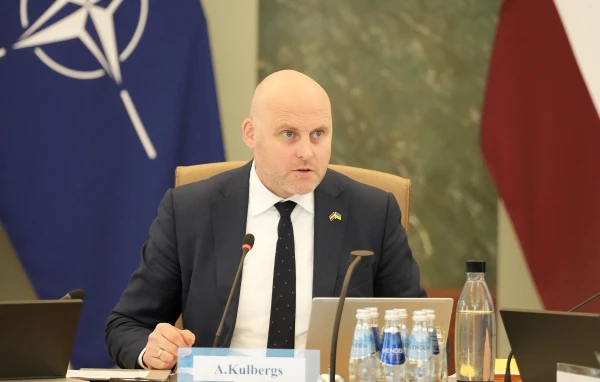
However, what is currently in short supply is ordinary good-neighborly relations, and Latvia views its neighboring states through the sight of a rifle. The recently approved budget for 2026 allocates every eighth euro of taxpayers' money for defense and security needs. The Cabinet of Ministers led by Evika Silina reported on what is being done at the borders.
EU Against Neighbors
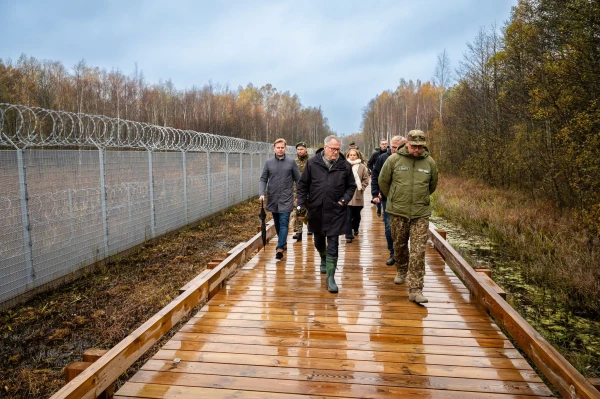
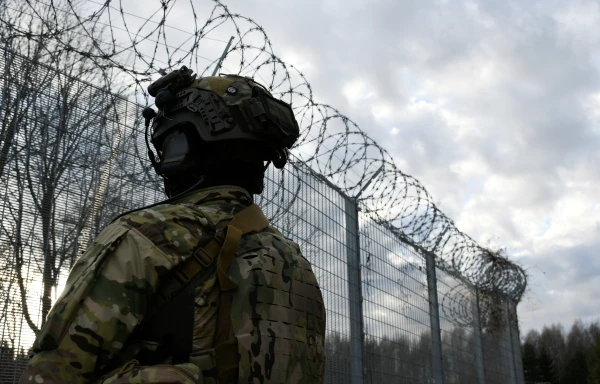
The length of the Latvian-Belarusian border is 173 km – and along the entire length of this route, 144.46 km of metal fencing with barbed wire has been installed, 119.8 km of patrol paths have been laid, 27.19 km of wooden walkways have been built, 1.75 km of concrete pontoons have been installed, and 6 communication towers have been erected. For 2026, another 16.7 km of patrol path and 4.29 km of infrastructure around the border lake Riču have been planned.
On one hand, the issue of burying the Daugava River is not currently on the agenda, although it is raised jokingly on social media, which is already in turmoil due to news about the dismantling of the Latvia-Russia railway. (It seems I made a very wise decision to buy a few bags of Kazakh buckwheat at the Eurasian price of 1 euro for 0.8 kg, because if logistics becomes exclusively road-based, I don’t even want to think about how much more I will have to pay).
On the other hand, it seems that rumors about the elimination of steel highways of the "Russian" gauge of 1520 mm, which extend beyond Latvia into the countries of the Union State (RF and RB), are most actively circulated by Facebook users from neighboring, fraternal EU countries. After all, who else but them will get the transit? For instance, if a cargo needs to be delivered from Azerbaijan to Scandinavia – it used to go through Russia and Latvia, but now it will likely go through Ukraine and Poland? One way or another, it is unlikely that long-term contracts will be concluded with a country that seriously discusses the dismantling of the railway.
New Trends
Now Latvia has a different economic model: according to legislation, a third of contracts for the needs of the National Armed Forces must be awarded to local producers. So, in the near future, we will have a proper, nationally oriented military-industrial complex. For example, the border with Belarus is currently being built by private businesses – SIA Citrus Solutions and SIA VIA. These beneficiaries will even install grates on the pipes through which swamp sludge will flow during floods.
In Brussels, EU and NATO strategists, while drawing impenetrable borders for Latvia, apparently relied on the meteorology typical of Western Europe. Where it is mainly dry and hot. However, in our region, as indicated by the Ministry of the Interior of Latvia in its report, precipitation in 2025 was 20-22% above normal, and the infrastructure simply flooded! "These conditions significantly increased soil instability and contributed to landslides. Landslides were also influenced by clearing works and high groundwater levels – machinery repeatedly sank and could not move safely. The sources of groundwater in this area could not be identified either during the initial geotechnical investigation or at the design stage, which is why this situation should be reasonably classified as unpredictable and objectively inevitable." Well, if it is necessary, it is necessary – an additional 149,696 euros with VAT were paid.
These are just "trifles" compared to 51 million for just the first phase of the border with Belarus.
There is no doubt that in those places that did not sink into the marshes, everything looks imposing: border vehicles weighing up to 3.5 tons can move there. Ramps for the descent of watercraft are equipped. But all of this can only be described from pictures, as an unarmed citizen of Latvia will never set foot in those Latgalian lands, unless they are a builder of those very SIA. Otherwise, this is a closed border zone, and these paths are by no means for public use.
But what do you think – wouldn’t a wooden walkway look great along the 20 km of Jurmala beach? And beautiful pontoons wouldn’t hurt our resort city either, as the nearest ones are only in Palanga...
Kurjanka, Kukova, Rika, Kira, Vada, Voroža
Under such charming Balto-Slavic names, the water borders of Latvia with Russia are mentioned in the report of the agency of Rihards Kozlovskis ("New Unity"), where lines of barriers for a potential adversary have also been laid. Here, the border is being constructed by SIA IGATE, which has managed to install only a third of the planned fence – just under 100 km. Another 60 km of paths have been laid, covered with mulch.
However, some fearless travelers still leaving Latvia report that from the side of Pskov, a multi-lane highway is clearly visible, which far surpasses the entire population of the 60th region of the Russian Federation (both in license plates and in overall economic activity).
Our contractors have requested an extension of the work deadlines by 21 weeks because... it rained. Yes, so much that part of the important strategic barrier with the RF ended up... in a newly formed lake. Now the builders intend to make these fences floating, on pontoons.

Photo: VNĪ.
Essentially, all these precautions should have firmly deterred the desire to cross the border even for visits, even in the most legal way. But there are still those who travel to the RF. And there are stories about them: one lady from Rezekne attended a seminar in the neighboring country – and was arrested. An investigation is now underway.





Leave a comment