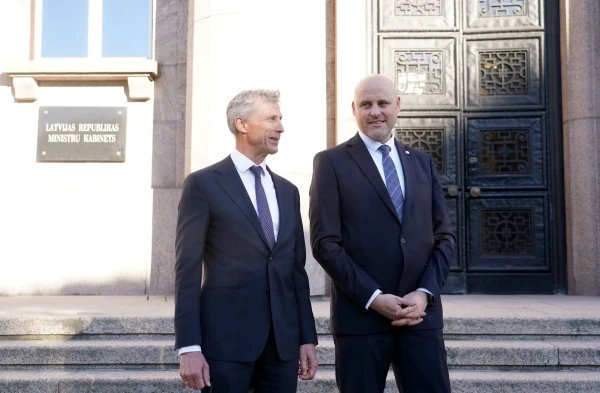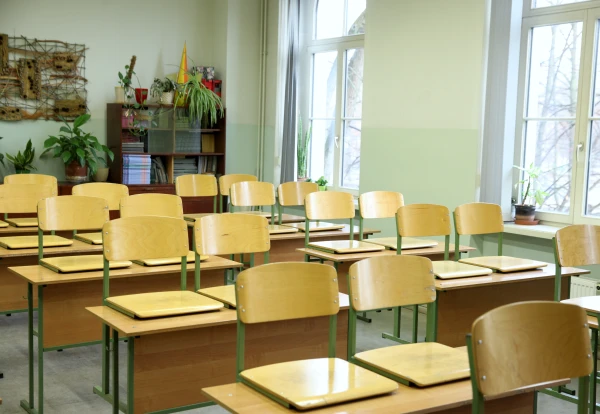
It is planned that Riga's educational institutions will be able to use about €4 million for a successful transition to Latvian language instruction for students from national minority backgrounds, Vice Mayor of Riga Vilnis Kirssis announced at a press conference on Tuesday.
Part of the funds will be allocated to kindergartens to ensure that each group has two educators and one teaching assistant. This will enhance the intensity of Latvian language learning.
In schools, these funds can be used for additional payments to teachers who will work with smaller class groups to help students better master the language.
Moreover, the funding is planned to be directed towards the salaries of teaching assistants and to finance extracurricular activities, such as discussion clubs, visits to cinemas for students to watch patriotic films, and similar activities, Kirssis explained, adding that schools will have the freedom to choose which additional activities to conduct.
In turn, the head of the Riga City Council's Education, Culture, and Sports Committee, Laima Geikina, emphasized at a press conference that the first phase of the transition to a unified school was completed in May of this year. The subsequent phases will involve the implementation of the principles of a unified school.
According to Geikina, strong school leaders capable of being true leaders are essential for a successful transition to Latvian language instruction.
The State Service for Quality of Education (SSQE) in a report published this autumn on the transition to the principle of a unified school in the 2024/2025 academic year concluded that in two-thirds of educational institutions, the transition to instruction exclusively in Latvian is proceeding as planned, while significant difficulties have been identified in one-third of schools.
The main difficulties in these schools are related to the inability of the leadership to effectively manage changes, insufficient preparation of educators to work in a linguistically diverse environment, prolonged vacancies among teachers and support staff, as well as inadequate implementation of a competency-based approach.
Educational institutions find it challenging to create a fully Latvian environment, as simply having Latvian language lessons is not enough for language acquisition. Daily communication in Latvian among educators, students, and parents, as well as learning materials that promote the development of language skills, are necessary, notes the SSQE.
Observations by the SSQE indicate that only 10% of schools adapt the curriculum to the actual level of Latvian language knowledge among students, while in 80% of schools, effective language development methods, such as group and pair work, are not applied in lessons. Furthermore, classroom observations showed that some educators for whom Latvian is not their native language still struggle to express their thoughts and make language errors.
According to the service, this affects both the overall educational environment and the support provided by educators to children and youth, as well as informal communication outside of lessons.