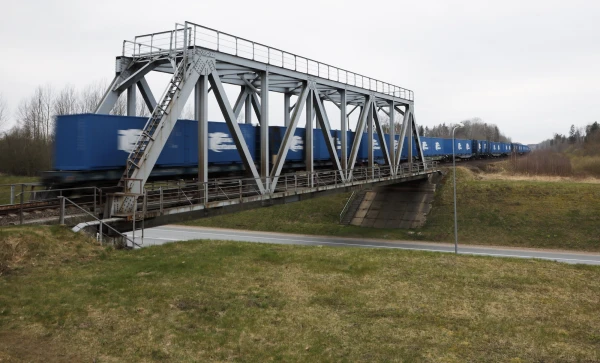
Should the railway tracks leading to Russia be dismantled? This question has become relevant again after the statement from the National Armed Forces (NAF) that it is necessary for ensuring the security of Latvia. In the program “Spēles noteikumi,” invited participants discussed the arguments for and against: some emphasize that the rails and embankments are a route through which the Russian army could enter in case of war, while others argue — it is better to blow up the trains with tanks, reports TV3.
“We have often heard that our territory, especially the eastern part of Latvia — swamps, lakes, pipes, forests — is one of the lines of defense,” said military analyst and author of the blog “Vara bungas” Mārtiņš Verdiņš, starting the discussion with this argument in favor of dismantling the rails. “It should be taken into account that the railway embankments leading [from Russia] effectively nullify this advantage.”
The issue of the rails has been discussed in the military sphere since the restoration of Latvia's independence, emphasizing that this threat must be eliminated as a priority. “Back then, there were many people who served in the Soviet railway troops; they could tell what to expect from them and how it could end.”
At the same time, Verdiņš emphasizes that it is not enough to simply remove the rails — the embankments must also be eliminated. Russia has specialized railway troops numbering from 30,000 to 50,000 personnel. These troops have already proven their effectiveness by building a military railway to Abkhazia in Georgia.
“There are other historical examples. So this is not a joke. The foundation of Russian military logistics is the railway,” Verdiņš reminded.
Meanwhile, former manager of the Freeport of Riga and member of the board of the Latvian Association of Stevedoring Companies Leonid Loginov wonders why the focus is specifically on the rails, and why the question of dismantling airfields, highways, and hydroelectric power stations is not raised.
“I cannot imagine who and how is going to travel by railway. If you look at the map of Latvia, Latvia is a so-called dead end,” Loginov argues. “The trains with tanks and other equipment will simply hit a wall in Ventspils and Liepaja. After us, they have nowhere to go.”
In his opinion, Latvia should act in the opposite way. Leave the rails and, if the Russians really come by railway, be prepared for it — to blow them up, as in 1941.
“Guerrilla warfare, mines under the rails — and forward, like in the movies,” Loginov stated his position on why the rails should be preserved.
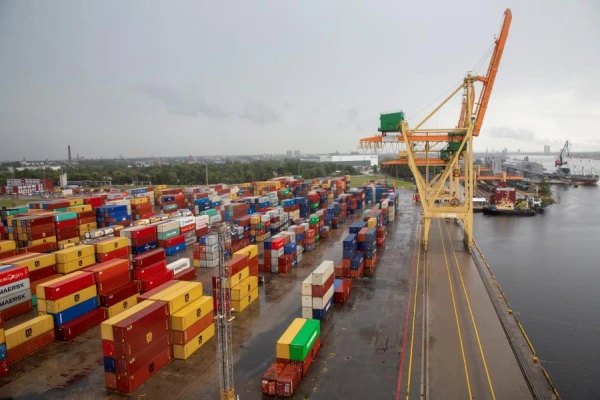
The company Latvijas dzelzceļš also opposes the dismantling of the rails, pointing out that such a step would stop transit cargo transportation. The volume of railway transportation in Latvia has decreased from 11.5 million tons in 2024 to 7.6 million tons in the first ten months of this year. Imports and transit from Russia and Central Asian countries accounted for a third of the transportation in 2024. For Latvijas dzelzceļš, this would mean significant losses.