
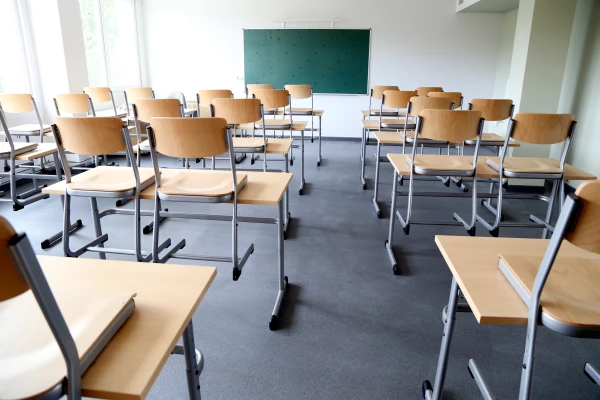
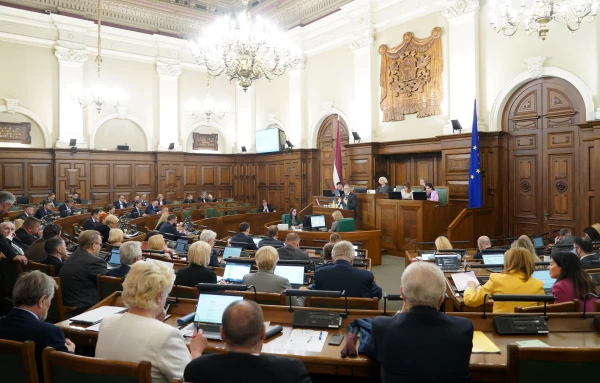
On Wednesday, the Saeima adopted amendments to the education law, which stipulate that the government will determine the number of students in class groups and the procedure for financing schools.
The amendments will allow the Cabinet of Ministers, in collaboration with social partners and founders of educational institutions, to develop rules and establish criteria for the accessibility of education. The government will determine the distribution of class groups and the number of students in the class groups of educational institutions.
The amendments to the education law apply to general education institutions established by municipalities, state universities, other legal entities, and private individuals, as well as to vocational education institutions established by municipalities that also implement programs of general basic and general secondary education.
The Cabinet of Ministers is delegated the authority to establish criteria and procedures for state participation in financing the salaries of teachers in general education institutions if the institution does not meet the quantitative indicators of students in class groups established by the Cabinet of Ministers.
According to the bill, teachers' salaries will not be funded from budgetary resources if the number of students in a specific class group does not meet the quantitative indicators established by the Cabinet of Ministers. In this case, the salary of teachers in the corresponding class group will be financed from the funds of the educational institution's founder, and the state will participate in their financing according to the criteria and procedures established by the Cabinet of Ministers.
If the number of students does not meet the quantitative indicators established by the Cabinet of Ministers, the municipality will be obliged to ensure the payment of teachers' salaries in the corresponding class group of the educational institutions it has established at least to the same extent as it would have been funded from state budget resources.
According to the Ministry of Education and Science, the existing network of educational institutions contributes to the fragmentation of teachers' workloads, and increasing the lowest salary rate for teachers does not ensure a significant increase in each teacher's salary.
To ensure the quality of education in small classes and retain teachers in these educational institutions, a large number of teachers and, consequently, more funding are necessary.
The expenses for the existing network of educational institutions are high and are growing due to declining birth rates and urbanization, emphasizes the Ministry of Education and Science.
The greatest disproportion is observed among primary schools, which account for 46.4% of all educational institutions but only 23.5% of students.
In rural areas and sparsely populated settlements, 11% of the total number of students reside, while there are 37.3% of the total number of educational institutions located there.













Leave a comment