
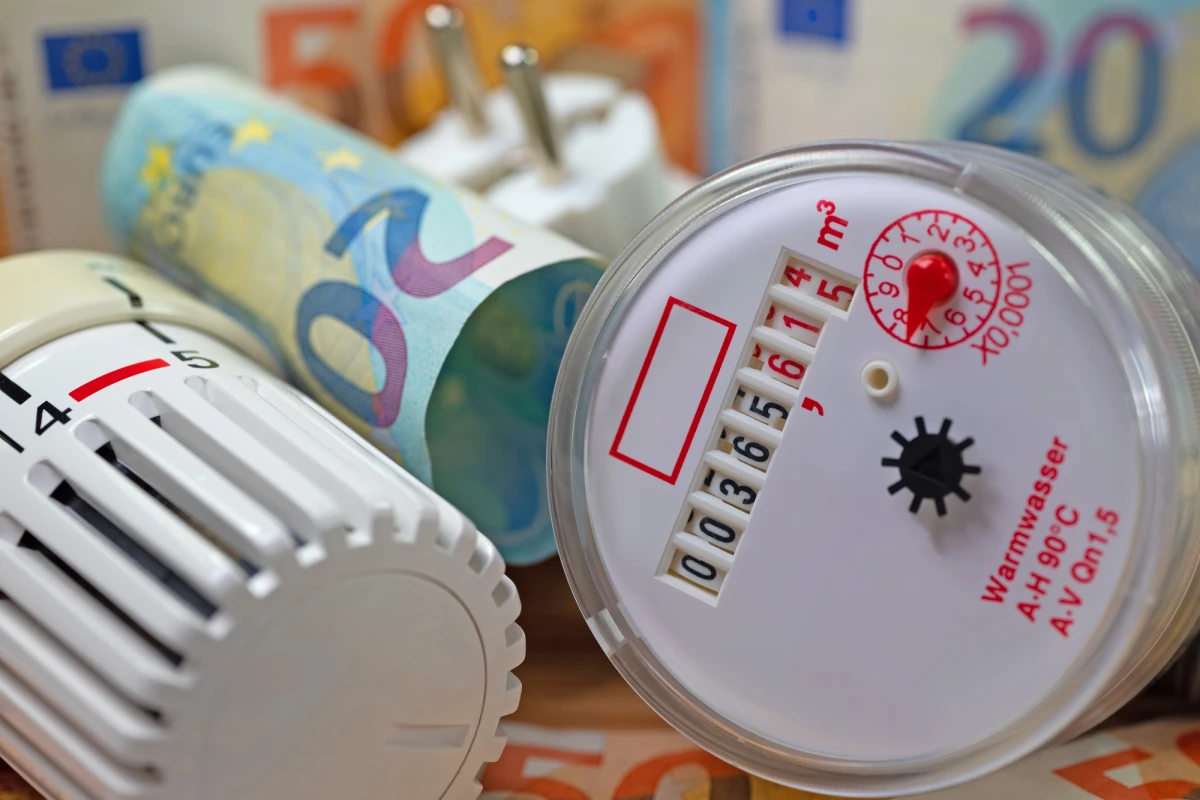
“Recently, I had a conversation with an employee of Rīgas namu pārvaldnieks (RNP) — the municipal company that services our building. In the conversation, the employee mentioned that after some time, each house will be required to make a decision: either to install new identical remote reading water meters or to install new identical regular water meters (just like now, but all the same, at the same time and from the same company).
Later, I searched for information on this topic online. On the website of the Consumer Rights Protection Center (RTA) I found that:
"Until January 1, 2027, co-owners of the house need to make a decision about the further system of water consumption accounting – whether to switch to a unified system or remain with the existing one."
Later, on the website of the Ministry of Economics, I found the following information: "Residents will be able to continue using already installed meters even after their verification period expires, and this procedure will remain in effect until the community of apartment owners decides to replace centralized meters throughout the residential building, establishing uniform requirements for all meters, such as sensitivity, requirements for remote reading capabilities, etc.
The decision to implement a unified water consumption accounting system must be made by the community of apartment owners by January 1, 2027, based on an assessment of the economic feasibility of installing remotely readable water consumption meters, including remote reading of open-type data."
So, as I understood, the house has the right to remain on the old scheme.
And the management company (in our case, RNP) must first conduct a feasibility assessment and communicate this assessment to the community of apartment owners, rather than framing the issue as if the owners are obligated to install new cold and hot water meters. Or did I misunderstand something?"
Answers from the head of the public relations and marketing department of Rīgas namu pārvaldnieks, Inita Kabanova:
– In general, no one is obligating residents to install new meters, and the final decision remains with the apartment owners.
If there are no significant water losses in the building – that is, if the monthly readings of the general meter of the house approximately match the total readings of the apartment meters – then it is possible to continue using the old meters without concern. In other words, if the house does not decide on a unified accounting procedure, then we, as the management company, will continue to use the procedure that has been in place until now.
However, if there are regularly significant water losses in the building, it would be in the interest of the apartment owners themselves to make a decision on a unified accounting procedure and the installation of new meters.
When water drains away
An important point: when making a decision about replacing meters, the main consideration to guide oneself by is whether there are regular water losses in the house (more than 20% for three consecutive months). It is REGULAR – because isolated sudden large leaks are usually associated with some extreme situations that can be eliminated and prevented (accidents, damages, etc.).
If the cause of significant water losses is not a physical leak, then it may be a matter of everyday "chronic" inaccurate accounting of water consumption. And inaccurate accounting in practice can include both simple human errors in reporting readings and intentional distortion of indicators (for example, to "save" money at the expense of neighbors) when there are high heating bills. This also includes cases of fraud – when some "craftsmen" install various clever devices on their meters to prevent their device from showing actual consumption.
Drip losses
Often inaccuracies are related to the low sensitivity of old-type meters: old meters may not detect, for example, how water slowly drips from a faulty faucet or toilet. And when this happens continuously, day after day, over a month, a significant amount can "drip" that then has to be collectively paid by all neighbors.
The timing of reporting readings is also significant. To make it convenient for residents, they are given the opportunity to report meter readings over several days; however, the readings of the general house meter are taken on one day. Accordingly, discrepancies inevitably arise, as a person continues to use water during the "interim" time – between the day they reported their apartment meter reading and the day the readings of the general house meter were taken.
Problems and their solutions
Thus, we as the management company recommend apartment owners in buildings where significant water losses are regularly observed to choose remotely readable meters, as they solve several problems:
- they help avoid errors (accidental or intentional) in reporting apartment meter readings;
- they help avoid incorrect calculations due to readings being provided at different times;
- ultrasonic, remotely readable meters are technologically best suited for measuring water, as they cannot be manipulated – for example, by installing a magnet;
- and due to their high sensitivity, such meters can detect even very low water consumption, allowing for quick identification of issues, such as a leaking faucet in apartment N – quietly, literally drop by drop, but continuously for months – and inform the owner of that apartment about the need for repairs. This will help reduce unnecessary water consumption, thus preventing the apartment owner, and consequently the entire building, from incurring additional expenses.
Freedom of choice
But, as mentioned earlier, the final decision regarding the necessity of installing new meters in principle, as well as the choice of specific, most suitable ones, remains with the apartment owners – the co-owners of the building.
And if the house does not make a decision on this, then water accounting will continue as it has before.













Leave a comment