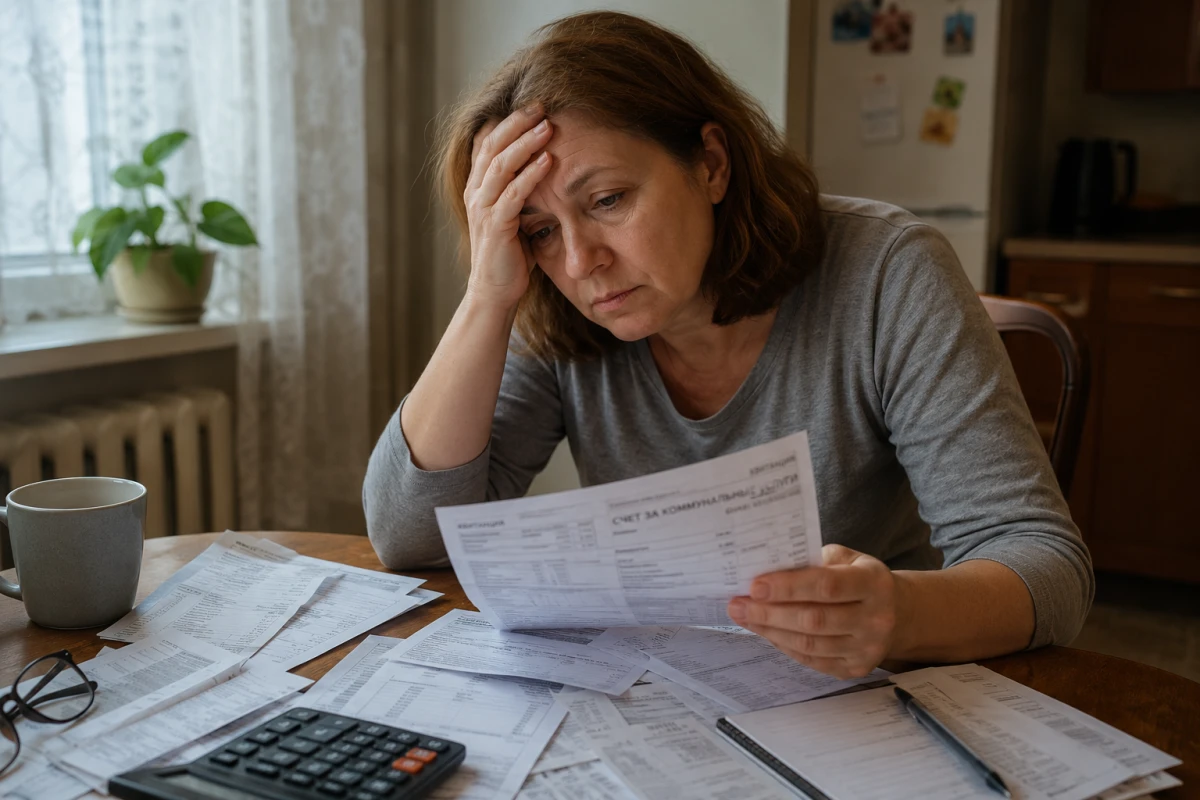
A letter from Anita, a mother of five children living in the Saldus region, arrived at the LA.LV editorial office. At the beginning of the letter, she notes that the thought that something has "broken" in our country does not leave her. What does she mean? Anita describes her observations and experiences that reflect the situation.
A letter from Anita, a mother of five children living in the Saldus region, arrived at the LA.LV editorial office. At the beginning of the letter, she notes that the thought that something has "broken" in our country does not leave her. What does she mean? Anita describes her observations and experiences that reflect the situation.
Anita has been looking at job advertisements.
“Full-time work in manufacturing — 850 euros gross. Salesperson job — 830 euros gross. This means about 600–700 euros after taxes. For a full-time position. For the time of a human life. For a person's health, strength, nerves, and fatigue.
I want to loudly ask: has anyone who makes decisions about taxes, prices, and salaries ever tried to survive on such a salary? Not theoretically. Not in an Excel spreadsheet. But in real life.
With children. With electricity bills. With food prices. With the dentist. With school supplies. With winter boots for five children. With fuel. With medicines. With a life where every unforeseen situation can become a disaster,” the mother of five rhetorically asks.
She knows well that food prices are rising almost every month — gradually even a simple grocery basket for a family is becoming a luxury.
The woman has noticed that more and more people in stores are not looking to buy what they need, but rather what they can afford.
The offered salaries cannot even cover basic needs.
“I want to say something very important: this is not normal. It is not normal when a person works full-time and lives in constant stress.
It is not normal when mothers cannot sleep at night, thinking about how to pay the bills. It is not normal when people work to exhaustion and still live on the edge of poverty.
It is not normal that many residents of Latvia no longer live — they simply endure,” Anita states directly.
She also refers to Article 109 of the Satversme, which establishes that everyone has the right to social security. Article 1 of the Satversme speaks of Latvia as a socially responsible state. But what does a socially responsible state mean in practice if a person who honestly works full-time cannot provide a decent life for themselves and their children?
Anita continues: “A decent life should not be available only to those who were born into wealth or live in the capital. We often talk about patriotism. About the birth rate crisis. About family values. About people leaving. But are we honestly discussing the reasons? Because people leave not only because of money. People leave because of the feeling that their work and life here are not respected. A person cannot live long only in survival mode. It breaks the nervous system, relationships, health, and hope. It causes depression, burnout, and helplessness. And the most tragic thing is that we begin to perceive this as the norm. But this is not the norm. This is a social problem.”
Anita understands that entrepreneurs are also having a hard time now, that they also need to pay taxes and deal with high expenses, however, in her opinion, the system loses sight of the person — the ordinary working person.
“And it seems to me that it is time in Latvia to speak much louder about one very uncomfortable question: what kind of life can a full-time job provide in our country today?
Because if a person who works every day still lives in fear and need, then this is no longer just an economic issue. It is a question of justice. Of human dignity. Of the state's relationship with its people. I am just a mother from rural Latvia. But I know that many are secretly feeling the same way right now. Tired. Scared. And at the same time angry that honest work no longer guarantees a decent life,” Anita is outraged.