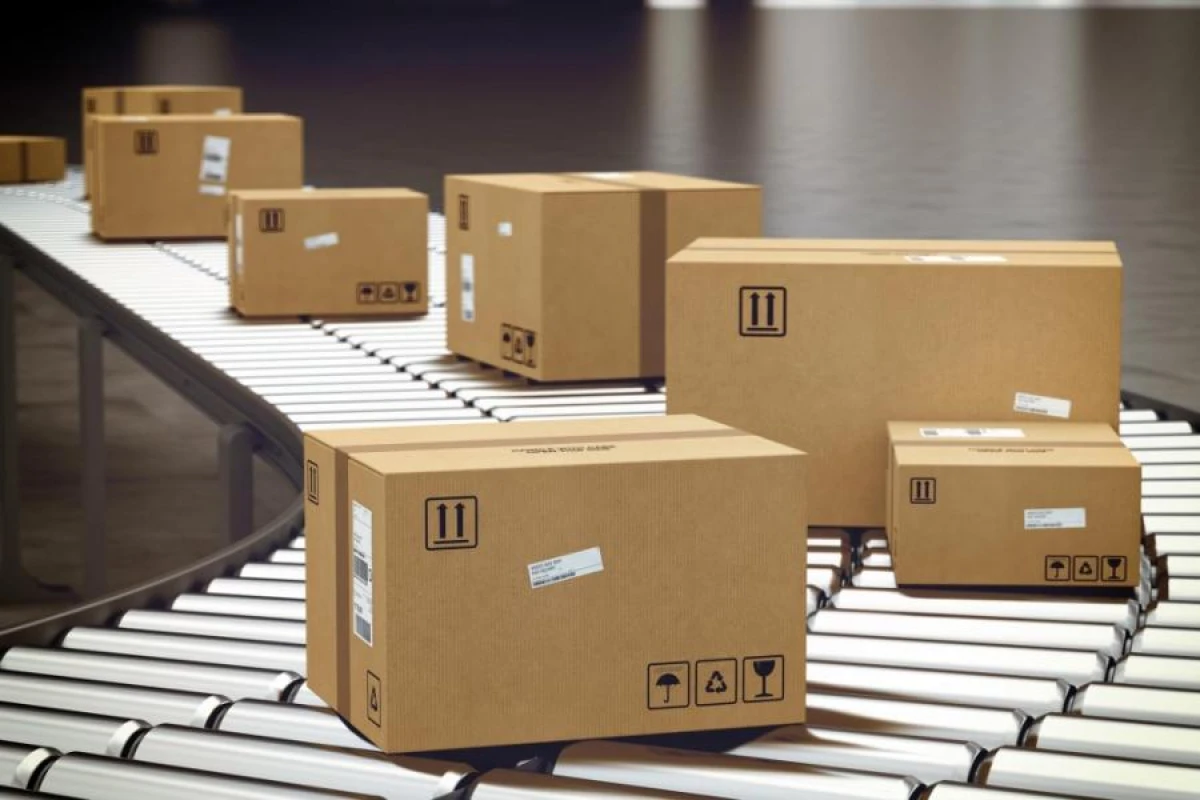
As already reported by Bb.lv, from July 1 of this year, new European Union (EU) rules will come into effect, providing for a fixed customs duty of 3 euros for each item in shipments from non-EU countries.
Latvian shoppers are already actively discussing on social media how to avoid the new surcharge, and have noticed that popular platforms have found a way to circumvent this system.
A broad discussion has unfolded on the social platform Threads about how the popular clothing seller Shein and the marketplace Temu are adapting to the upcoming changes. Shoppers have noticed that products now have a special label "EU warehouse".
"Add to cart items labeled 'EU warehouse', and the product will be shipped from Europe. This means that nothing will change and there will be no additional fees," shares one shopper in the discussion, expressing relief that she can still buy small items from China without overpaying three or four times more in local stores.
However, opinions are divided: while some shoppers are pleased with the opportunity to bypass the system, others point out that this feature has primarily meant faster delivery, while on the Temu platform, items from local warehouses can sometimes cost even twice as much. Many users also complain that they do not see such a label in their apps even after updating the application.
As reported earlier, from July 1 of this year, a regulation will come into effect that will eliminate the current exemption from customs duty for shipments valued at no more than 150 euros. To ensure that customs clearance for low-value shipments continues to be quick, a simplified method for calculating customs duty will be introduced — a fixed customs duty of three euros will be applied to each item in the shipment.
The Latvian State Revenue Service (VID) explains that an "item" is one or more goods in a shipment that have the same tariff classification, description, and origin. This means that if a shipment contains, for example, different clothing items, a customs duty of three euros will be applied to each item separately. A dress, men's trousers, children's clothing for infants, and a t-shirt are classified as four different items according to tariff classification, therefore, a customs duty of 12 euros will have to be paid for such a shipment. Without changes in the application procedure, VAT will still need to be paid for all goods in shipments.
If an online store or e-commerce platform, such as Temu, AliExpress, Shein, or eBay, sells goods under a special VAT regime that allows taxes to be collected at the time of purchase (IOSS regime), then both VAT and customs duty can be paid at the time of purchase, informs VID. In this case, recipients of shipments will not have to deal with customs formalities themselves, as the customs clearance of goods will be handled by the delivery service.
In other cases, taxes will need to be paid when customs clearance of the shipment arriving in Latvia is conducted, explains VID. As is currently the case, the recipient of the shipment will be able to choose the most convenient way for themselves to clear customs — either to do it themselves by connecting to the VID electronic declaration system, filling out and submitting a simplified import customs declaration for postal shipments, or to use the paid services of customs brokers such as VAS Latvijas pasts, express mail, or other customs clearance specialists to carry out customs formalities.
Continuing the implementation of changes in the field of e-commerce, the EU will apply a processing fee ("Union handling fee") of two euros for each item in shipments from third countries starting November 1 of this year.
The changes will affect the purchase of goods from any third country — China, the USA, the UK, Norway, Switzerland, and other non-EU member states.
VID explains that amendments to EU legislation are being made to promote fair competition, eliminating the situation where sellers from third countries have price advantages over EU entrepreneurs who pay taxes in full.