
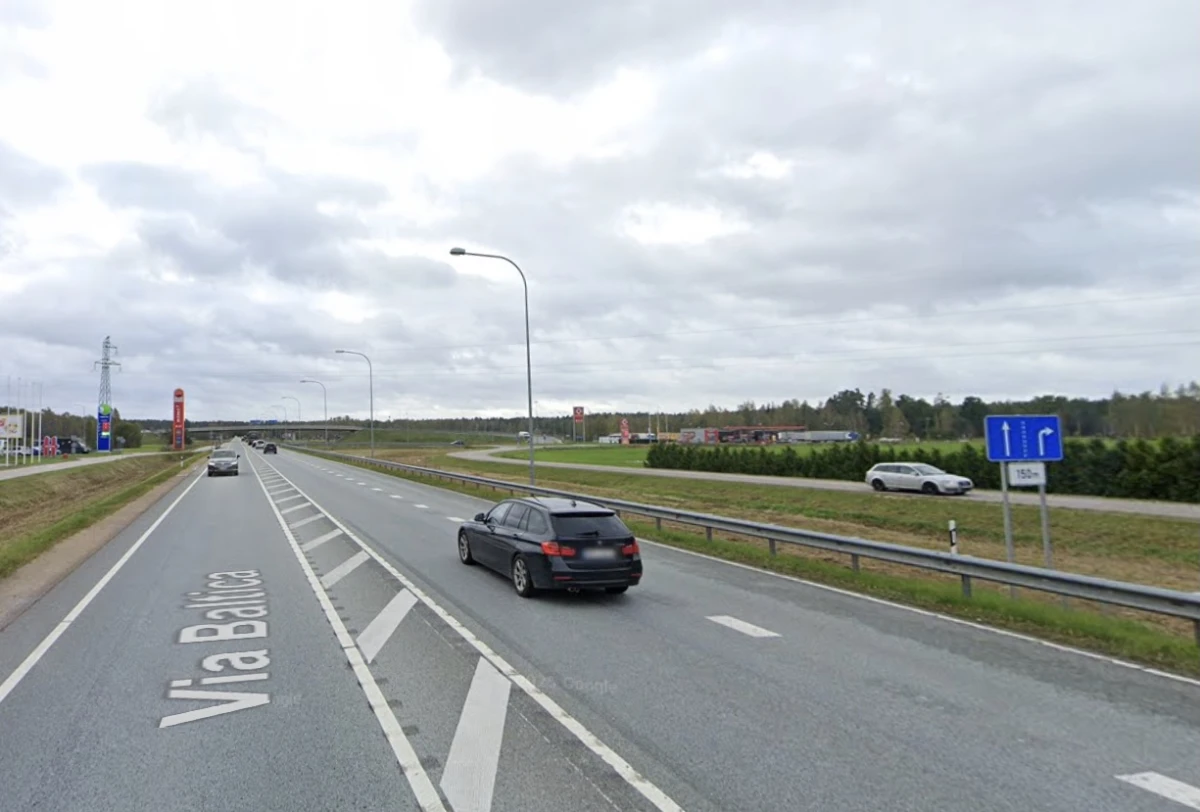
As cities grow, state highways are increasingly surrounded by residential neighborhoods, warehouses, and shopping centers. This changes the nature of traffic and raises the question: who should develop and maintain roads that have effectively already become city streets?
Latvian highways are gradually changing their purpose. What was once a high-speed road between settlements is increasingly resembling an ordinary city street with shops, residential buildings, businesses, and numerous exits.
This process is particularly noticeable in the vicinity of Riga.
In the program "Zebra" (TV3), host Pauls Timrots recalled that in the mid-1990s, it was possible to freely shoot footage on a virtually empty road near Marupe. Today, this area is filled with a dense flow of cars, industrial parks, and new residential neighborhoods.
According to Anna Kononova, a representative of "Latvian State Roads," such transformation has been occurring for many years and continues as cities and towns expand. The main sign that a highway is beginning to turn into a street is the increase in the number of exits, intersections, and left turns. At the same time, the average speed of traffic decreases, and the number of potentially dangerous points increases.
The problem is exacerbated by the fact that new shopping centers, warehouses, and residential complexes often seek direct access to the state highway. Each such exit makes traffic less safe.
A vivid example is the Tallinn highway in the Adazi area. Once, it was the main route to Estonia. Today, numerous businesses, shops, and other facilities line the road. For safety, pedestrian bridges and additional infrastructure have already been built here, but new connections to the highway continue to emerge.
A similar situation has developed on the initial section of the Liepaja highway, which has more than 30 different exits.
Experts believe that instead of separate exits for each facility, parallel roads and safer transport solutions should be developed to maintain the throughput of highways. According to road experts, where highways are effectively already serving as city streets, the responsibility for them should gradually shift to local governments.
Along with the road, the state could transfer funding for its maintenance. Then local authorities could independently decide whether additional traffic lights, bike lanes, pedestrian crossings, or road surface reconstruction are needed.
The issue is becoming increasingly relevant as suburban development around Riga continues, and former country roads gradually turn into part of the urban infrastructure.
How the state and local governments distribute responsibility for such roads will affect not only the quality of their maintenance but also the safety of thousands of drivers and pedestrians.








Leave a comment