
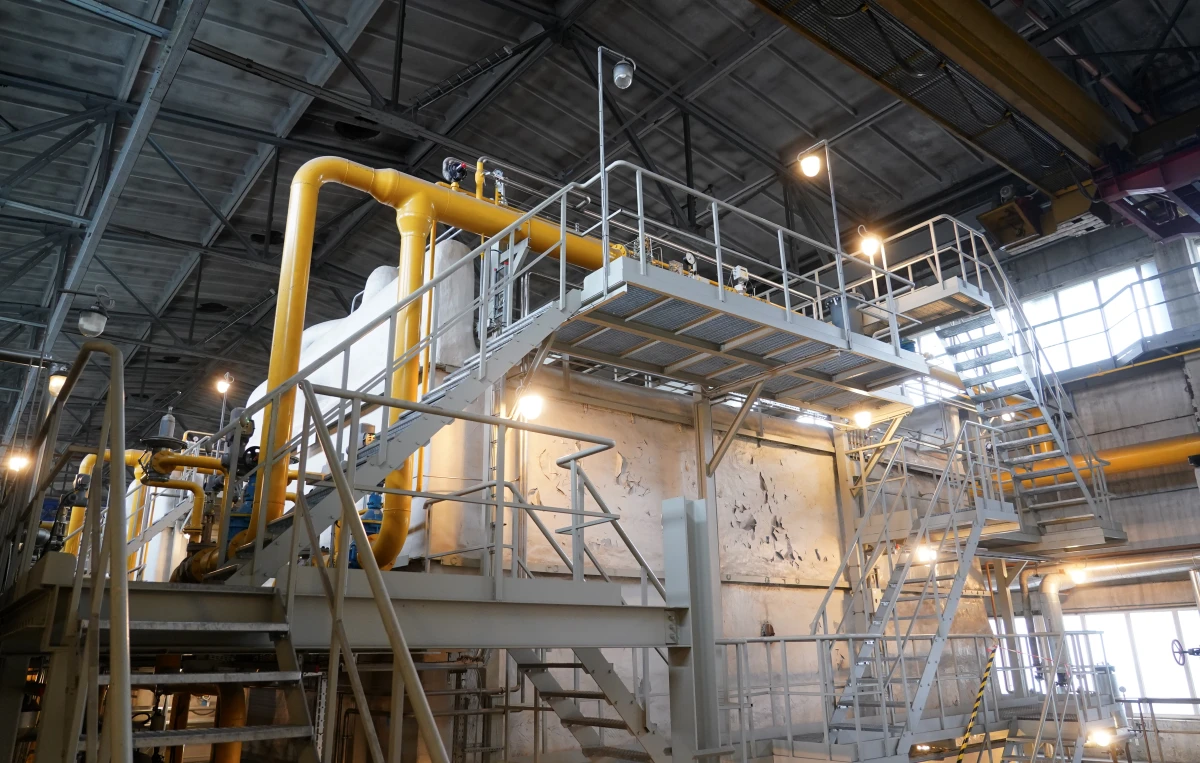
The parliamentary investigation commission has urged KNAB and the State Revenue Service to assess possible embezzlement, conflicts of interest, and inaction by officials in the heating supply sector of Riga. According to deputies, residents may have overpaid tens of millions of euros due to the existing procurement system.
The parliamentary investigation commission has urged law enforcement agencies to assess possible violations in the heating supply system of Riga, including the likely embezzlement of public funds, conflicts of interest, and inaction by officials.
The commission's final report states that between 2022 and 2025, significant volumes of residual heat produced at the Latvenergo power plant were effectively released into the atmosphere in the centralized heating system of the right bank of the Daugava, while consumers were supplied with more expensive heat purchased from independent producers.
According to the commission's calculations, the volume of unused residual heat during this period amounted to 1.3 million megawatt-hours, while the purchased volume of thermal energy reached approximately 3 million megawatt-hours. The deputies believe that the existing market model effectively pushed the cheapest heat out of the system.
The financial losses for consumers and possible overpayments are estimated by the commission to be around 62.5–78.8 million euros. Additionally, the state had to spend over 140 million euros to support residents in paying for heating.
The report also indicates that due to the dual production of heat, approximately 295,000 tons of CO2 were additionally released. Criticism is directed at several entities — the Public Utilities Commission, the Competition Council, the Ministry of Economics, the Ministry of Climate and Energy, as well as the shareholders of "Rīgas siltums." According to the commission, none of the parties took sufficient action for a long time to change the situation.
The commission specifically pointed out possible management issues in "Rīgas siltums" — outsourcing and travel expenses, risks of conflicts of interest, and the lack of a clear center of responsibility among the company's shareholders.
Deputies also criticized the situation around the "Imanta" power plant, where the cogeneration unit is effectively mothballed, despite ongoing maintenance costs.
The commission proposes to amend the legislation so that the heating system operator is obliged to purchase heat strictly starting from the cheapest source. It is also proposed to establish a priority for cogeneration and residual heat.
Furthermore, it is recommended to revise the tariff methodology and implement a full-fledged "day-ahead" or "hour-ahead" thermal energy market with transparent rules and penalties for violations.
Not all deputies agreed with the commission's conclusions.
Representative of the "New Unity" party, Uģis Rotbergs, in a separate opinion criticized part of the recommendations, stating that mandatory operation of the power plant exclusively in cogeneration mode may contradict the principles of energy system operation and the rules of the Nord Pool market. He also emphasized that any changes should be made only after a complete analysis of technical, economic, and energy risks.
The commission was established in November 2025 to investigate the reasons for the rising heating costs in Riga and possible risks to energy security. It was headed by the current prime ministerial candidate Andris Kulbergs.





Leave a comment