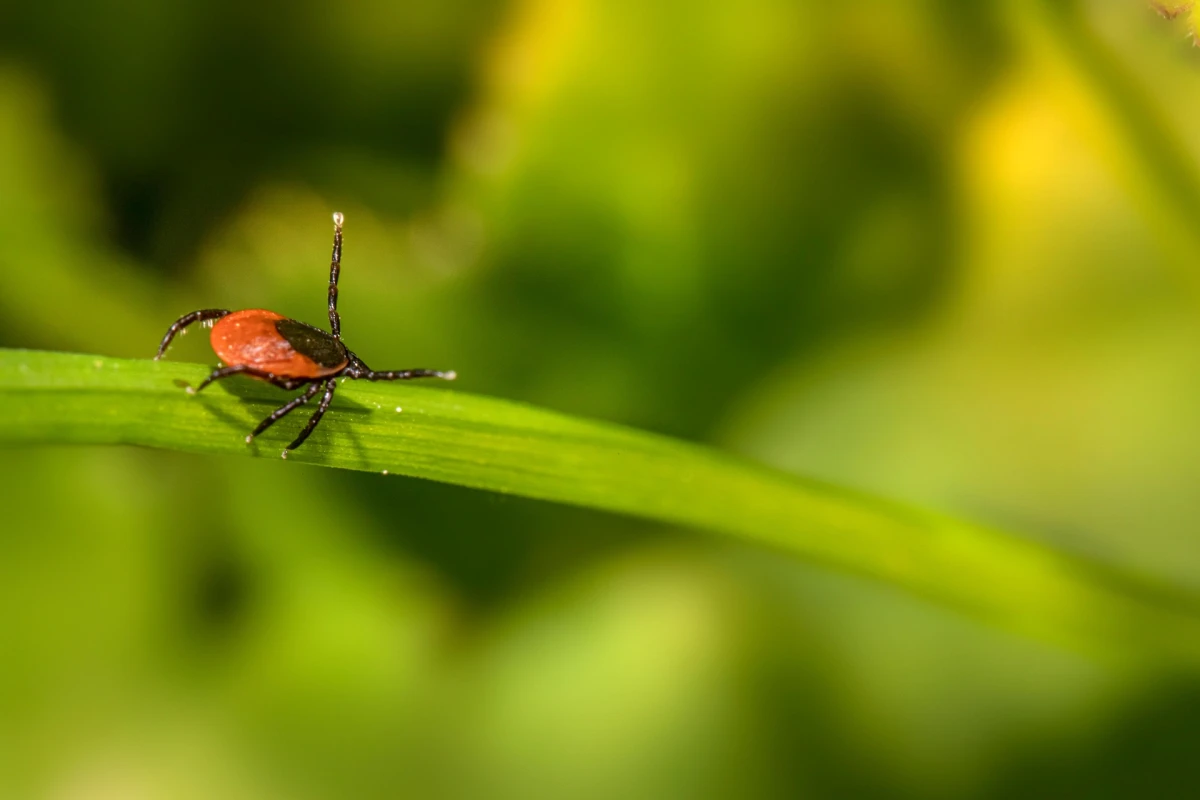
After a warm winter, ticks have become active earlier than usual, and along with this, the risk of infections is increasing.
The tick season has already begun in Latvia. The Jakabpils Regional Hospital has removed 12 ticks this year, the first one on March 26, public media reports, according to LETA.
"The past winter was favorable for ticks. A thick layer of snow covered the ground, creating good conditions for their hibernation in the soil," explains Inese Cera, chairwoman of the Latvian Entomological Society.
Doctors advise not to delay and to remove the tick immediately. "There is no need to go to the emergency room because you will have to wait. It will take four to five hours," says physician assistant Natalia Kozlova.
After a bite, it is important to monitor your health. If redness or flu-like symptoms appear, you should see a doctor.
Tick-borne encephalitis remains the most dangerous disease. "The most frightening form is its meningoencephalitic form... a person cannot even lift a cup of coffee," warns doctor Maris Belte.
There is also an increase in cases of Lyme disease, for which there is no vaccine. There is a vaccine only against tick-borne encephalitis — and this is the most reliable protection. Ehrlichiosis, which can also cause severe complications, is less common.