The state’s Lvportals.lv explained what health information about Latvians is included in the E-veselība system and who has the right to view it. In theory, everything looks good, but is it really so in practice? - Grani.lv investigated.
The E-veselība system has been imposed on both medical professionals and patients without asking for their opinions — it was simply decided "from above." The idea is that everything related to the health of each individual should be in one place, and this data can be viewed by both the patient and medical professionals — to see the complete picture.
Let’s look at this system first from the patient’s perspective.
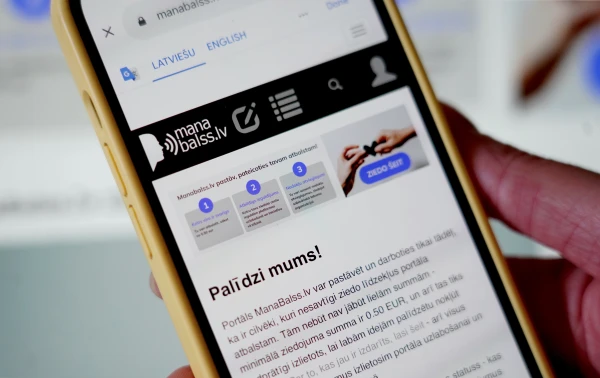
The main inconvenience is that access is only possible with an electronic identification card (eID) that has the right to an electronic signature or the SmartID mobile application. Authentication through one’s bank, which our grandparents have barely managed to master, is not allowed. Thus, some patients cannot take advantage of the conveniences of E-veselība.
However, the others can indeed obtain quite a lot of information about their health. After they have logged into the portal using an electronic signature or mobile application, the following sections appear on the screen:
-
"Laboratory test results." Here, reports of tests starting from 2024 are collected. Also stored are results of tests initiated by the patient at their own expense.
-
"Electronic referrals." This section contains referrals issued to you for consultations with specialists, diagnostic examinations, and home care.
-
"Patient card." This includes hospital discharge summaries, descriptions of services provided in outpatient clinics, results of visual diagnostics and their interpretations. It may also include data such as your allergies, chronic diseases, past surgeries, regularly taken medications, and medical devices. (However, the completeness of this information depends on whether the doctor entered the data manually. If they didn’t, then nothing will be there).
-
"Prescriptions" — this section stores electronic prescriptions for medications and medical products (such as test strips for diabetics, for example).
-
"Sick leave certificates" — this should contain information about periods and statuses of sick leaves.
-
"Vaccination data" — this is dedicated to information about vaccinations (but only from 2024, so it may only be useful for infants).
-
"Family doctor and EHIC": this contains information about who your family doctor is, as well as data from the European Health Insurance Card.
Now let’s look at this system from the perspective of medical professionals. I am not a medical worker, but recently I involuntarily empathized with their problems when I went for two diagnostic examinations for which two electronic referrals had been issued. These were referrals for an ultrasound that could be done at the same time, in the same place, with the same doctor.
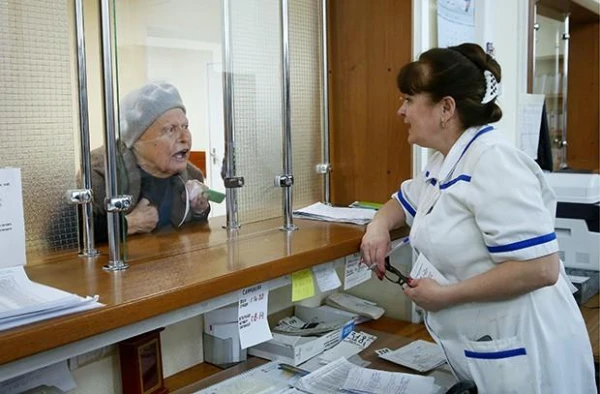
However, there were immediately misunderstandings at the reception. "We don’t have your referrals!" — the receptionist shocked me. "How can that be?". "Just like that. Call your family doctor, maybe they can explain."
The time was 8 AM, and the family doctor might not pick up the phone. But, thankfully, they did. And it began: the family doctor shouted that the referrals had been issued, the reception said there was nothing, the family doctor recommended going to the "new system," the reception countered that "there are three systems, and we don’t have access to the new one." And in the middle, I stood, participating in this argument as a relay telegraph pole, frantically figuring out whether I would be able to get the ultrasound or not. After all, I wouldn’t be able to grab the state quota a second time.
In the end, the referrals were never found. The ultrasound specialist, to whom the receptionist explained the situation, wearily waved their hand and said that — fine, they would accept and examine me without the referrals. Feeling almost like a fraud, I swore to send them as soon as I got home, reached my computer, reading device, and my eID, logged into the damned E-veselība system, copied both referrals, and reformatted them into any acceptable format…
Unfortunately, a couple of days later, a familiar doctor, to whom I recounted this situation, explained: the ultrasound specialist would most likely not receive a cent from the state for both diagnostics performed on me. Because the E-veselība system is arranged in such a way that the data for the provided service must be entered by the doctor immediately at the time of its provision — or never again.
The same acquaintance (who is a rehabilitation specialist) added that due to the E-veselība system, medical professionals are now forced to spend the lion's share of the time that was previously dedicated to the patient on mindless data entry. This takes much longer than the previous paperwork (E-veselība can lag, the computer can freeze), so only a few minutes remain for working with the actual patient.
Thus, for medical professionals, the E-veselība system does not provide the mass of conveniences that the state’s Lvportals.lv is currently promoting so wonderfully. Perhaps someday, in the future, this system will be fine-tuned, and everything will be different. But for now, terrified patients can hear at any moment from the reception window, "we don’t see your referral," and the doctors will have nothing to do with it…