How not to break down in the beds and what must be taken into account during the spring-summer season?
Recommendations are provided by trauma surgeon Dmitry Omelchenko from the Veselības centru apvienības (VCA) Elite clinics. He is assisted by certified pharmacist Elena Bebre from Mēness aptieka.
Tetanus is closer than it seems...
According to Dr. Dmitry Omelchenko, the main problem with working on the land and at the cottage is injuries.
"I want to remind everyone: any cut, even the most minor one, when in contact with soil can lead to tetanus infection, a deadly disease. Tetanus vaccinations remain effective for about ten years; after that, any contact of a wound with soil or rust becomes life-threatening," says trauma surgeon Dmitry Omelchenko from VCA Pļavnieki. "The bacterium Clostridium tetani produces a dangerous toxin that affects the nervous system. I would recommend all gardeners, farmers, and skilled workers to take care of preventive vaccination against tetanus, which can be done at almost any Veselības centru apvienības (VCA) clinic. If you get a cut or puncture from a rusty nail, wire, broken glass, or just a dirty object and do not have tetanus protection, you should see a doctor as soon as possible to assess your risk and, if necessary, receive a preventive vaccine."
What to do in case of injury?
According to the surgeon, in the case of puncture, cut, or lacerated wounds, and the most common skin injuries, the first step is to stop the bleeding, and if it is severe and does not subside, call emergency medical services for advice!
The algorithm is as follows: quickly rinse the wound with clean running water and treat it with an antiseptic. "For this purpose, regular hydrogen peroxide is suitable; however, we recommend using Braunol (a solution containing povidone-iodine, which is a broad-spectrum antimicrobial agent that helps prevent infection and promotes healing of minor skin injuries) or chlorhexidine, which is a more effective and gentle modern antiseptic (it should be in your first aid kit!). A liquid containing betaine, which can also be purchased at the pharmacy without a prescription, is also suitable for this purpose. After that, a sterile bandage or adhesive plaster should be applied."
The pharmacist notes that the selection of adhesive plasters in the pharmacy is very wide (consult with the pharmacist when buying for your cottage first aid kit): there are sets of different sizes, including strips (these should be applied strictly perpendicular to the wound, pulling its edges together), as well as liquid plasters in the form of glue, which are helpful if the skin is injured in a hard-to-reach area for treatment...
"For bruises, gels containing heparin can be used, which reduce swelling, slow down inflammation, improve microcirculation, and also promote the resorption of hematomas (bruises). However, these gels should not be used if you have an open wound – for example, a knee with bleeding abrasions. For wound care, you can use a gel containing active substances – dimethyl sulfoxide, escin, diethylamine salicylate.
If redness, pain, swelling, pus, or other signs of infection appear, you should see a doctor," clarifies pharmacist Elena Bebre from Mēness aptieka.
Closed-toe shoes and gloves for your hands!
"As a trauma surgeon who sees dozens of patients every day, I can say that very often, cottage workers injure their big toes, hurriedly or carelessly stepping on sharp shovels, tripping over various objects, and so on," shares Dmitry Omelchenko. "Meanwhile, a fracture (or crack) of the little toe or big toe is a situation that requires mandatory fixation and treatment. The algorithm is as follows: if the injured toe hurts the next morning, and a burgundy-black bruise with a bluish tint appears – go to the doctor, do not wait for it to pass on its own, unless you want to limp for the rest of your life. No harvest is worth that!"
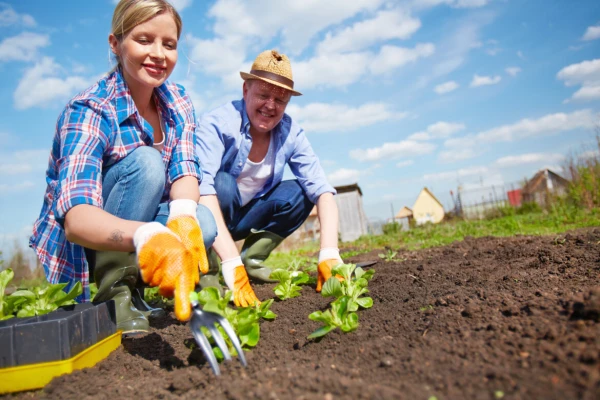
According to the doctor, many injuries of gardening enthusiasts and homeowners can be prevented with basic safety precautions. "I always say: if you decide to dig or plant something in the ground, don’t forget to wear knitted gloves; this protects against abrasions and calluses," explains the traumatologist. "Sometimes, very tight gloves are needed, for example, when trimming bushes and other tasks, which is important to avoid splinters. Conversely, when using moving cutting machinery, I categorically do not recommend wearing gloves: any glove can get caught in the mechanism, and the prognosis in such a situation is frankly bad..."
Do not use all available ointments and gels at once!
In case of any injuries (bruises, dislocations, sprains), the injured part of the body should be immobilized, if possible, raised higher. For cooling, the best options are cooling aerosols and gels sold in pharmacies, but if you do not have any, you can take a frozen bag of vegetables from the refrigerator.
"I recommend having a special cooling compress on hand that becomes simply icy when compressed!" suggests pharmacist Elena Bebre. "The cold compress should be applied for 20 minutes to the injury site. After that, you can use a cooling gel or a gel containing cooling substances, such as menthol: this remedy is used every six hours for three days. If the pain from the injury is severe, you can take a tablet containing the active ingredient ibuprofen, paracetamol, or dexketoprofen. Remember that such medications should be taken after meals and only if there are no stomach problems or individual reactions. The duration of use should not exceed three days, according to the instructions, and then you need the advice of a pharmacist and a doctor."
"I would add that in the case of a dislocation, after the cold compress, the injured area should be immobilized with an elastic bandage," specifies doctor Dmitry Omelchenko. "But do not bandage the limb too tightly, as this can compress the vessels and provoke swelling."
"Alternating cold and heat in case you have strained muscles or bruised will yield the best healing effect," suggests the pharmacist. "For the first 24-48 hours, cooling agents are used, and then you can switch to warming ointments. This approach speeds up recovery significantly. But please, never mix several different ointments together (a common mistake is to use everything available in the home first aid kit at once). You may cause skin irritation or even burns by combining a diclofenac product with some warming ointment!"
Do not test the strength of your joints and back!
According to Dr. Dmitry Omelchenko, many Latvians, when they get to their cottage or their garden plot, get carried away with planting and engage in literally exhausting labor: standing in a bent position from morning till evening, mowing or digging something... As a result – inflammation and that very "shooting pain when it becomes difficult to straighten up." To avoid bouts of pain in the back, legs, and arms – first and foremost, you should meticulously dose your loads!
The pharmacist says that an external local pain-relieving and anti-inflammatory agent, if the back has been subjected to too much load, can alleviate the condition. But if the gel or ointment contains the active ingredient sodium diclofenac, then applying it to the lower back or neck, it is strictly forbidden to expose that area to the sun, as these agents cause skin sensitivity and can lead to burns."
"Additionally," recommends Elena Bebre, "now is the perfect time to take dietary supplements that will support joint health. Such products contain glucosamine, chondroitin, collagen, vitamin C, and manganese (which is responsible for the formation of normal bone, cartilage, and connective tissues). This will help protect cartilage tissues from damage and retain water in them. It is important that this is type II collagen (there are three types of collagen in total).
In pharmacies, on the advice of the pharmacist, you can buy preventive plant-based products with avocado and soybean oil, which somewhat slow down the process of cartilage tissue destruction.
There is also such a thing as pain-relieving patches containing a non-steroidal anti-inflammatory drug and medicinal plants – extracts of arnica, white willow. They can be used for tired legs and back."
...The trauma surgeon asks everyone to work as carefully as possible and at heights: a fall from even a small height can lead to very serious injuries. Climbing to the attic or roof of a house should only be done with a safety harness and only on a securely fixed ladder.