
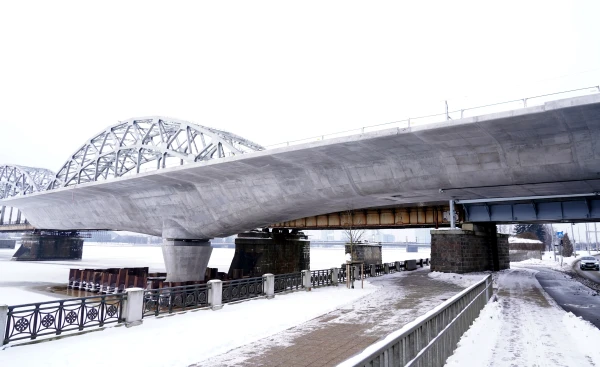
The Council urges to clarify the actual costs of the project as soon as possible and to develop a fiscally responsible financing plan.
As noted by the Council, according to forecasts from the Ministry of Finance, Latvia's government debt will continue to rise to about 52-53% of the gross domestic product, which is more optimistic than previous forecasts made within the framework of the medium-term budget in the fall of 2025. The current forecasts are based on assumptions of a more rapid economic growth; however, they do not take into account a number of risks, including rising energy resource prices and additional expenses for projects and sectors such as Rail Baltica, airBaltic, healthcare, and education. At the same time, under the current debt forecast, debt servicing costs are planned to be at 1.3% of GDP in 2026 and will rise to 1.6% in 2029-2030 (from €606 million in 2026 to €901 million in 2030). Moreover, if the European Central Bank raises interest rates, Latvia's debt servicing costs will also increase.
The Council notes that the current inflation data for 2026 does not yet reflect the latest impact of rising oil prices due to the escalation of the conflict in the Middle East. In response to the inflation risk, the Saeima has lowered the excise tax rate on diesel fuel. The Council warns that although the fiscal impact may be neutral in the short term, there is a risk of violating the fiscal discipline law in the longer term if the decline in revenues due to the Saeima's decision to lower the excise tax rate on diesel fuel is not compensated by other government measures.
The Council points out that with rising price pressures on energy resources, there may be a need for additional support for households during the heating season; however, this simultaneously creates additional fiscal challenges. The Fiscal Discipline Council consistently emphasizes that in such conditions, targeted support should be prioritized over general fiscal measures to avoid contributing to the growth of public debt.
This morning, the Fiscal Discipline Council "delighted" us with a warning: if government debt continues to rise (and it will!), the situation will become significantly more complicated in the medium term, and serious budget cuts will be necessary. Moreover, the international situation has also escalated, which could lead to a substantial slowdown in economic growth. The situation in Latvia is further complicated by the "golden" project of the century...
As noted by the Council, in the medium term, the fiscal situation will become significantly more complicated: the budget deficit remains high (around 3-5% of GDP), and it is growing mainly due to defense spending, which must be at least 5% of GDP starting in 2027. Loans are being used to finance these expenses, including the EU SAFE instrument; however, the Council emphasizes that in the long term, relying solely on increased debt is not sustainable, and it is necessary to find a structural and long-term solution in a timely manner.
At the same time, fiscal space is sharply shrinking: while it will still be positive in 2027, from 2028 onwards, without a change in policy, it will become negative and will deteriorate even further in subsequent years, the Council notes. The situation is exacerbated by already approved measures, for example, in healthcare and education, which do not have secured funding, which is not in line with good budget planning practices!
The Council particularly highlights the fiscal risks associated with state-owned companies and large infrastructure projects. airBaltic continues to operate at a loss, the company has negative equity, a low credit rating, and very high borrowing costs. At the same time, the funding for the Rail Baltica project raises concerns – there is still a significant funding shortfall of several billion euros, while an accurate assessment of the project's costs is unavailable. The Council urges to clarify the actual costs of the project as soon as possible and to develop a fiscally responsible financing plan.














Leave a comment