Visitors are concerned about potential environmental contamination that could be harmful to health in the newly created Skanste park in Riga.
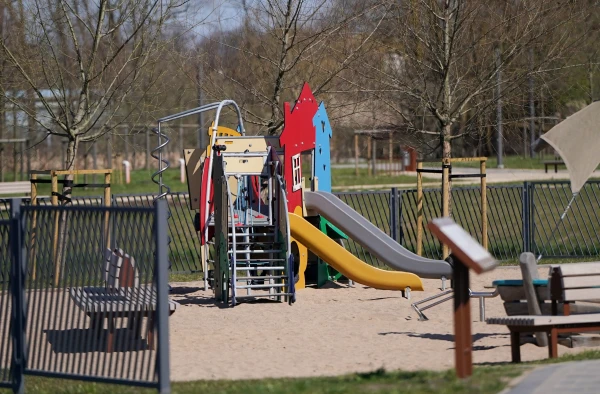
For a long time, the children's playground located there was closed to visitors, as the local government had suspicions about the presence of contaminated, toxic soil, reports the Bez Tabu program (TV3).
The Skanste project, initiated over ten years ago, has historically been problematic. Its implementation has significantly dragged on, and costs have risen substantially over time. As a result, the first Skanste park was created, where residents can spend time with children, engage in sports, or simply relax.
Last year, the park, which cost nearly 22 million euros, showed significant environmental contamination in tests. The Riga City Council forwarded the results of the soil studies to the State Environmental Service.
The park was built on land previously contaminated with petroleum products and heavy metals. The local government had concerns that the remediation work—namely, the investigation and cleaning of the area—was either not completed or not done according to plan, leading to suspicions that the soil might also be contaminated at the playground. Its use was prohibited last year.
Recently, the playground was reopened for public use. To assess the quality of the environment and potential health risks for children, the Department of Housing and Environment of the Riga City Council organized a detailed study of soil contamination in the playground area. According to the local government, studies were conducted at five drilling points based on a letter from the Health Inspection, which indicated the need for further investigation due to elevated lead levels in one of the groundwater monitoring wells.
The test results show that neither the concentration of petroleum products nor heavy metals exceeds the critical values established by regulations that could affect the health of park visitors. The local government also noted that the top layer of the playground is made of clean fill material, which significantly reduces the risk of direct contact with historically contaminated soil.
The results obtained were sent to the Health Inspection, which, after evaluating the information provided, did not object to the reopening of the playground for visitors. At the same time, the inspection urged the Riga City Council to continue monitoring and control.
Meanwhile, the State Environmental Service reported that it required the local government to conduct a detailed soil study not only under the playground but also throughout the entire park area.
Kalvis Avotins, director of the Riga regional office of the State Environmental Service, noted that Latvian legislation establishes soil quality parameters, and some indicators are indeed exceeded. The problem has been identified, and regulatory provisions foresee further actions up to the completion of remediation. According to him, the process is currently about halfway through, and a more detailed study is needed for a comprehensive analysis of the situation, which the service expects from the responsible department of the Riga City Council.
Visitors surveyed in the Skanste park criticized the responsible authorities for not conducting a proper study of the area before the park was created. Many of them still remain unsure that the contamination is safe, especially considering that studies are ongoing.