
Latvian Radio: For the transition to teaching only in Latvian, additional funding, for example, for individual work with students whose Latvian language needs improvement, has been allocated by both the government and municipalities. But schools were unable to spend the allocated money - there simply were no specialists to hire.
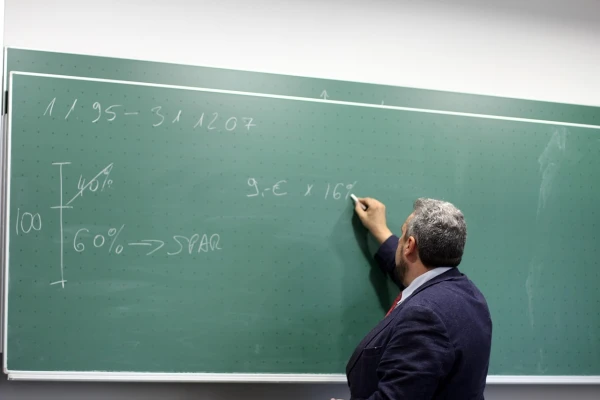
Since the beginning of the transition to a unified school system, the government has annually allocated an additional three to four million euros to schools. In the previous academic year, the government transferred more than 3.3 million euros to municipalities so they could pay teachers and support specialists additionally for working in classes where students have different levels of proficiency in the state language. However, nearly 800 thousand euros remained unspent.
Rolands Ozols, Deputy State Secretary of the Ministry of Education and Science, told Latvian Radio: “That is, [schools] could attract speech therapists, they could hire teaching assistants for work, and they could use funding for extended day groups. What we see in practice is that the percentage of funding utilized averages about 60% to 70%. We must take into account that there are still many unfilled vacancies for support staff.”
Ozols admitted that the money is not being spent because there is a shortage of specialists.
School directors confirmed Ozols' words to Latvian Radio. Elena Vedischeva, the director of Riga Secondary School No. 40, said:
“In the first year, we managed to spend only 30%. Indeed, this was the case because it was most difficult to attract support staff in the first year. And this year, we have almost spent all the allocated funding.”
This means that this school has gradually managed to find the necessary specialists. However, the situation overall has not improved.
Natalia Rogaleva, the director of Riga Secondary School No. 34, said: “There is money to pay, but we do not see these people. These people are not there, there are no Latvian language teachers, and this is a big problem. Now, I think this is the number one problem: human resources.”
She noted that money alone cannot solve the human resource issues in schools anymore.
How to address the staff shortage? Ozols replied that the problem is systemic, and the competition in the labor market is to blame. Both he and Rogaleva ponder: the prestige of teachers needs to be raised, then such a shortage of educators will not exist.
Schools have managed to pay for the work of teaching assistants the most, as this role is taken on by teachers who have a partial workload in their main jobs or those who have burned out in their teaching positions. But there is a particularly acute shortage of speech therapists and special educators.










Leave a comment