Our country significantly lags behind its neighbors in funding the future intellectual elite. In Lithuania, spending on higher education is, in absolute terms, almost 3.5 times more than in Latvia.
Considering that there are one and a half times more people living in the neighboring country, we get a difference of 2.33 times per person, in favor of Lithuanians.
22 Universities and 21 Colleges
In terms of freedom of choice, today’s graduate seems to have a lot of options. The Higher Education Council summarized the academic institutions of the republic. Among them are 11 state universities:
-
University of Latvia,
-
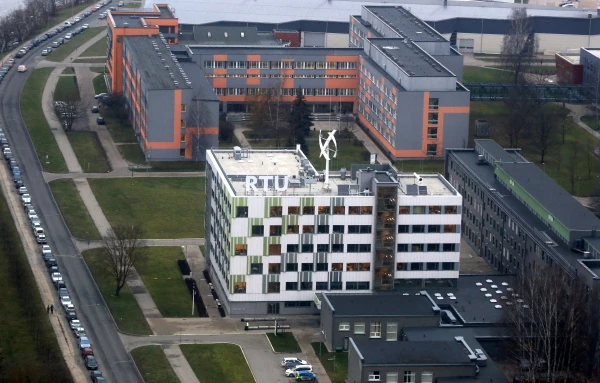
Riga Technical University,
-
Latvia University of Life Sciences and Technologies,
-
Rīga Stradiņš University,
-
Latvian Academy of Arts,
-
Jāzeps Vītols Latvian Academy of Music,
-
Latvian Academy of Culture,
-
Daugavpils University,
-
National Defence Academy of Latvia,
-
Ventspils University of Applied Sciences,
-
Vidzeme University of Applied Sciences.
-
There are also 11 private universities founded by individuals:
-
Riga School of Northern Countries,
-
RISEBA University of Business, Arts and Technologies,
-
Transport and Communications Institute,
-
Turība University,
-
Baltic International Academy,
-
Riga Graduate School of Law,
-
Luther Academy,
-
European Christian Academy,
-
Riga Aeronautical Institute,
-
School of Economics and Culture,
-
Riga School of Economics — Stockholm School of Economics in Riga.
The higher education system includes 14 state colleges:
- Malnava College at the Latvia University of Life Sciences and Technologies;
- Red Cross College at Rīga Stradiņš University;
- Medical College at Rīga Stradiņš University;
- Rīga Medical College at the University of Latvia;
- Rīga 1st Medical College at the University of Latvia;
- Daugavpils Medical College at Daugavpils University;
- Liepāja Maritime College at Riga Technical University;
- Olaine Technology College at Riga Technical University;
- College of Fire and Rescue Service and Civil Defence;
- College of the State Police;
- College of the State Border Guard; Rīga Construction College;
- Rīga Technical College;
- State Agency for Social Integration.
Seven colleges have been established by private individuals in the country:
- Alberta;
- Law;
- Accounting and Finance;
- Business Management;
- Riga College of Management;
- Maritime College ovikotas;
- Hotel Business College HOTEL SCHOOL.
In addition, Latvia allows the operation of branches of two foreign universities, both belonging to the tiny State of Vatican City. The Rīga Higher Institute of Religious Sciences and the Rīga Institute of Theology operate as branches of the Pontifical Lateran University (founded in 1773).
Consolidation in Progress
It can be noted that the Latvian Sports Pedagogical Academy (LSPA) is no longer listed — it has undergone "consolidation" with Rīga Stradiņš University. Accordingly, future coaches will study alongside doctors. At the same time, as noted by the Chancellor of Rīga Stradiņš University, Toms Baumanis, the building of the former Institute of Physical Education is 60% amortized and requires an investment of 34 million euros.
Sports pedagogy is characterized, unfortunately, by low selection criteria — both in terms of exam score requirements and tuition fees. At the same time, about 50% of students drop out. At a meeting of the Saeima Education, Science and Culture Commission, Mr. Baumanis mentioned among the problems of LSPA the obvious "low international influence in science" and, unexpectedly, "the influence of geopolitical risks on research and education."
What has Rīga Stradiņš University done by merging with an institution that has produced many celebrated champions? They created a laboratory for studying sports nutrition. In terms of funding, they allocated 373,436 euros. That is, just over 1% of the necessary amount...
This once again indicates that the mechanical merger of different educational institutions, especially those located at opposite ends of the capital (the University — Ilguciems, the Academy — Jugla) is not supported by real resources.
Still Not Reaching the 2008 Level
Moreover, the rich assortment of academic institutions mentioned above is somewhat diminished by the fact that in 2026, the budget for higher education in Latvia will amount to only 182.6 million euros. In the distant 2008, the state budget of Latvia allocated more than 235 million euros for higher education!
Even if we consider an additional projected 10 million euros, the level of higher education that existed 18 years ago has still not been reached.
For comparison — in Lithuania this year, funding for higher education is 635.2 million euros. That is, 3.47 times more than in our country. At the same time, Vilnius has ensured a sharp increase in allocations for universities precisely in the last 3 years. While from 2023 to 2026, funding for higher education in Latvia increased by 27%, in Lithuania it increased by 171%!
This year can still be considered quite favorable for our higher education — as students born in 2007-2008 are entering, when about 25,000 people were born each year in Latvia. But what will happen to the multifaceted system of universities and colleges in a decade and a half? After all, in 2023-2024, the number of births fluctuated around 14,000...
A significant indicator is the number of students — at a peak of 131,000 in 2005, it now does not reach 80,000. At the same time, the number of graduates funded by the state budget has remained practically unchanged over the last two decades — around 30,000. This means that, in accordance with the decrease in the total number of students, the share of budget-funded students has significantly increased. Additionally, there is a constantly growing number of foreign students — already around 10,000.
Rankings Are Not Impressive
The highest positions in the world university rankings for 2026 are occupied by the renowned University of Tartu (operating since 1632) — but even it has only managed to rise to the top 301 to 350 range according to various criteria. The ancient Vilnius University (since 1579) is ranked in the range of 801 to 1000. Our two largest universities — the University of Latvia and Riga Technical University can only boast positions of 1001-1200.
All this affects the innovative contribution of the state: among 27 EU countries, last year, Estonia ranked 11th above the average level. Its innovation index was higher than that of such "Old Europe" countries as Italy and Spain. Lithuania, ranked 18th, surpassed the Czech Republic, Poland, and Greece. Meanwhile, Latvia managed to surpass only Bulgaria and Romania, coming in 3rd from the bottom!
PhD Andris Teikmanis, Chairman of the Higher Education Council, summarized: "States do not become richer when they can afford to finance higher education. They become richer when it is financed." Unfortunately, Latvia, at the governmental level, still does not realize that the education sector is also a market — and thinks that buns grow on trees...
DOCTORAL SHORTAGE
In Estonia, 1662 doctors of science were graduated in 7 years; in Lithuania — 2519, in Latvia — 1018.