"De facto": The Ministry of Health may limit markups on over-the-counter drugs.
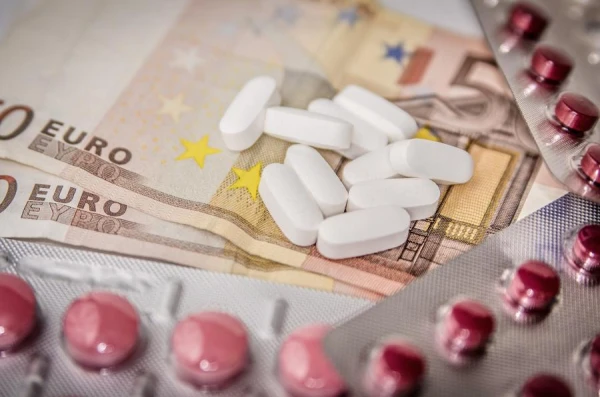
A year after the Ministry of Health introduced a large-scale reform of drug prices, it can be concluded that the industry's grim forecasts of mass pharmacy closures and drug shortages did not come true. The average price of a pack of prescription medicines decreased by 17% last year; however, the opposite trend is observed in the over-the-counter medication segment, where prices continue to rise, reported the 'de facto' program of Latvian Television. Experts are assessing whether stricter controls can be applied to the prices of over-the-counter medicines.
Last year, the state changed the pricing formula for prescription medicines. Firstly, it established that the price set by the drug manufacturer in Latvia should not be higher than the offers in neighboring countries. Secondly, it introduced a fixed markup for both large wholesalers and pharmacies. Additionally, a fee for the pharmacist's service was introduced, which is partially covered by the state, while residents pay 75 cents. In the election atmosphere, politicians agreed that for medicines costing up to ten euros, the pharmacist's fee would be fully covered by the state. Changes are now planned to take effect on July 1.
Opponents of the reform — pharmacies and wholesalers — painted a grim picture of the pharmaceutical industry a year ago.
However, as the latest data from the Ministry of Health shows, chaos did not ensue, and the pharmacy network has held steady.
Of the currently registered 3,635 prescription medicines, the price has decreased for 3,285 medicines (90%), increased for 344 medicines, and remained unchanged for six medicines.
As expected, price increases were observed in the group of the cheapest prices — up to five euros, where prices rose on average by 21%, or by 0.50 euros. Medicines in the price group of 5-10 euros decreased by 0.92 euros. Prices for medicines above 10 euros fell by about one-fifth.
However, industry pressure does not ease. Wholesalers are now demanding an increase in allowable markups for the most expensive medicines. "This is a segment of very expensive medicines, where one package costs thousands, and the allowed markup is 50 cents per box. This does not cover delivery costs, transportation, or the entire cold chain, nothing. Then this segment incurs losses," explained Janis Libkens, a board member of the Latvian National Association of Pharmaceutical Supply, to Latvian TV.
The Ministry of Health admits that these changes could be introduced on July 1. "Markups for those up to five euros may decrease slightly — possibly by 10 cents, and for a patient buying cheap medicines and several drugs at once, this could matter. For the most expensive medicines over 100 euros, markups may become slightly more expensive," suggested Inese Kaupere, director of the Department of Pharmacy at the Ministry of Health.
Currently, it is being assessed whether prices for over-the-counter medicines could also be limited, possibly by introducing a fixed markup for them.