A military simulation published this week by the German newspaper Die Welt describes a scenario in which Russia, with only a few brigades, is allegedly capable of capturing Mariupol and taking control of the Suwalki Corridor. The Lithuanian troops are effectively portrayed as helpless.
"What is written there is nonsense. I do not know the goals of this military exercise; perhaps they are purely political — to show a threat, to enlighten their own population, the citizens of Germany or other countries," said retired Colonel Gintaras Bagdonas, former director of intelligence at the EU Military Staff, to LRT.lt.
The scenario describes how Moscow is already sending a "humanitarian convoy" to Kaliningrad this year to address an artificially created humanitarian crisis. The convoy travels through the Suwalki Corridor, followed by Russian troops. The German brigade in Lithuania is rendered ineffective, while US and NATO forces are stalled, unwilling to unleash a third world war.
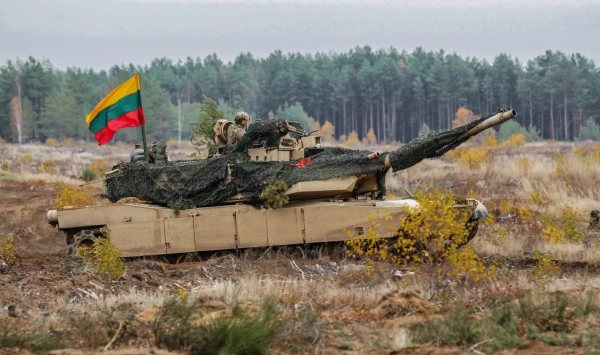
The participants in the simulation effectively admit that Russia is capable of capturing one of Lithuania's key cities with only about 12,000 military personnel, despite the fact that the size of the Lithuanian army — even without counting reservists, volunteers, commandos, and infantry units — is several times larger.
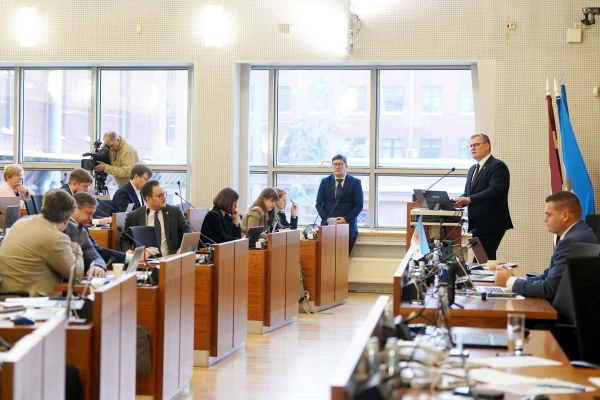
The military exercise, organized by Die Welt in collaboration with the Helmut Schmidt University of the Bundeswehr, involved active and former German officers, politicians, and decision-makers.
"In these exercises, they probably deliberately worsened the conditions for themselves and tested the mechanisms of political decision-making," noted G. Bagdonas.
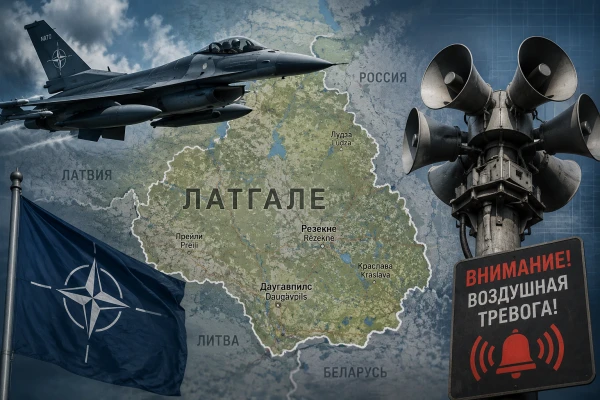
Similar simulations demonstrating the helplessness of the Baltic military states have already sparked controversy in Latvia — in 2016, the BBC released a documentary titled "World War Three: Inside the War Room." Around the same time, the RAND Corporation presented its widely discussed scenario, according to which Russia could allegedly capture the Baltic states in just a few days.
In the BBC project, as in the German simulation, former military personnel, politicians, and diplomats at a round table model possible escalation scenarios, in which the capture of Crimea and Donbas is replicated in Latvia. With the help of special forces, regular troops, and conditional "Eastern Latvian separatists," Russian forces occupy a significant part of the country.
At that time, Latvian officials, as well as European and Baltic commentators, criticized such a public narrative, claiming that deterrence does not work, local forces are helpless, and there is no unity.
"Russia successfully deters the West from more radical steps to support Ukraine. This deterrence works and is largely based on the fact that Russia is a nuclear power," said Anton Shekhovtsov, a professor at the Vienna Central European University, to LRT.lt.
According to him, such military game scenarios are primarily aimed at Western elites and society to "wake them up," which explains the limited role of the Baltic states in these models.
At the same time, the scenario cannot be called entirely impossible.
"Russia would likely refrain from direct aggression against NATO similar to the war in Ukraine, but instead would accumulate tools below the threshold of full-scale war," he noted. "The main idea of how Russia could weaken NATO is conveyed quite accurately in these scenarios."