
“We are constantly warned: be vigilant and cautious, do not fall for the tricks of fraudsters. Yet fraudsters continue to act, and people keep losing money, sometimes their last. I would like to know: has anyone among these criminals been apprehended? Or is the entire fight against them reduced only to warnings? Reader bb.lv”
Elina Priedite, Senior Specialist of the Public Relations Department of the State Police:
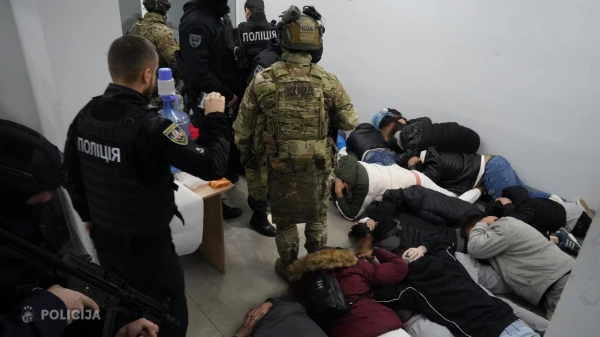
– In early December last year, the State Police (Cybercrime Department) and the Prosecutor's Office of Latvia, together with colleagues from other countries - the Czech Republic, Lithuania, and Ukraine, disrupted the activities of an organized criminal network that operated fraudulent call centers in Ukraine - in Dnipro, Kyiv, and Ivano-Frankivsk.
The network created specially trained mobile groups, whose members committed fraudulent acts against people living in Europe, including Latvia. A total of 58 searches were conducted - in office premises, residential buildings, and vehicles. Law enforcement officers discovered and seized fake police and bank employee IDs, laptops, mobile phones, CPU units, hard drives, dashcams, and more.
Also seized were 21 vehicles, including several luxury cars - Bentley, Hummer, Range Rover, and others. The total value of the cars, according to preliminary estimates, is about 1.5 million euros.
When calling potential victims, the fraudsters posed as mobile operators, bank employees, and police officers. The schemes of fraud were varied. For example, the victim was asked to transfer funds from an allegedly hacked bank account to “safe” accounts (which, of course, were controlled by the fraudsters themselves).
In other cases, victims were ordered to withdraw money from their accounts and hand it over to a “police representative” - that is, in fact, a criminal posing as a police officer. Sometimes a person was informed that their SIM card had expired and needed to be urgently updated. Or that supposedly “someone with a general power of attorney to manage your account has come to the bank, and your account needs to be urgently saved”...
Twelve residents of Latvia were also involved in the criminal activity. When they called Latvian phone numbers, they addressed their potential victims in Latvian, which often convinced the latter that they were indeed receiving a call from an official institution.
In some cases, residents of Latvia were persuaded to download and install remote access software (“AnyDesk”, “HopToDesk”, etc.) and enter their internet banking PIN codes or user ID. This allowed the fraudsters to gain control over the victim's device (computer or mobile phone), and consequently, control the bank accounts of their victims. The fraudsters were paid based on results: the more people they managed to deceive, the more money a specific criminal received.
In total, more than 400 people were affected by the actions of this network, with total damages exceeding 10 million euros. Residents of Latvia suffered material losses of over 2 million euros; the identities of the Latvian victims have been established.
Among others, our local crooks were also arrested. Such criminal offenses in Latvia are punishable by imprisonment for up to ten years.
Although the dismantling of this specific network allowed for the neutralization of a certain group of criminals, the phenomenon itself, of course, has not been eradicated. Other fraudsters remain at large; they continue to operate, devising new schemes to extract money from trusting individuals.












Leave a comment